For foreign travelers, Quang Trung Museum is one of the easiest places to understand Bình Định beyond beaches and island tours. The museum stands in Tây Sơn District, about 45 kilometers northwest of Quy Nhơn, and honors Emperor Quang Trung and the Tây Sơn brothers. It is also built on the former residence area of the three brothers, which gives the visit more weight than a standard history stop.
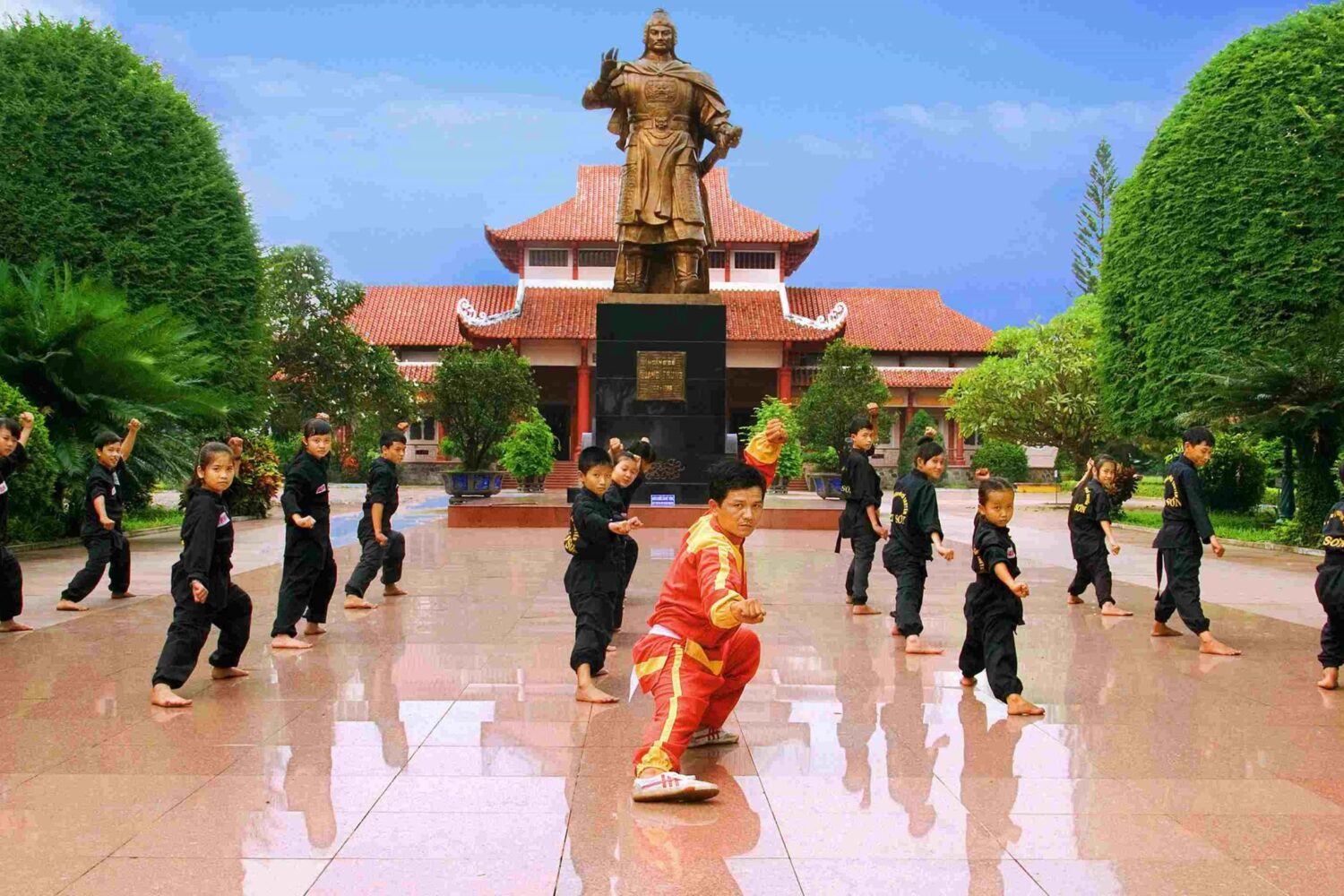
This is why the site matters. It is not only a museum with display cases. It is part memorial, part temple complex, and part cultural venue. Recent official and semi-official travel guides highlight the same core reasons to go: the large Quang Trung statue, the Tây Sơn Tam Kiệt Temple, the exhibition halls, and live martial arts and drum performances.
For first-time visitors, that mix makes the museum easier to enjoy. You do not need deep prior knowledge of Vietnamese history. The site gives you architecture, artifacts, open courtyards, and performance culture in one stop. That is why Quang Trung Museum Binh Dinh works well for travelers who want a practical cultural visit rather than a heavy academic experience.
Where is the Quang Trung Museum, and how do you get there?
Quang Trung Museum is in Phú Phong Town, Tây Sơn District, Bình Định Province. Multiple tourism sources place it about 45 to 50 kilometers from Quy Nhơn. It sits near National Highway 19, so access is straightforward by car or motorbike.
For most tourists, the easiest option is a taxi or private car from Quy Nhơn. Vietnam Airlines’ current travel guide estimates about 40 to 45 minutes each way by car. The same guide says motorbike travel usually takes 60 to 75 minutes, depending on traffic and your route.
That makes a day trip from Quy Nhon to Quang Trung Museum very realistic. The provincial tourism portal also promotes a Tây Sơn day route that includes Quang Trung Museum and nearby attractions such as Kinh Thiên Temple and Ham Ho. In that official plan, Ham Ho is listed right after the museum, and another provincial tourism page places Ham Ho roughly 9 kilometers away.
Why visit this Tay Son history museum?
The strongest reason is context. Many travelers know Quy Nhơn for coastal scenery, but fewer know that Bình Định is deeply tied to the Tây Sơn movement. At Quang Trung Museum, you see the story where it happened, not only on a wall label in a city museum far away. The Vietnam National Authority of Tourism describes it as a museum dedicated to Nguyễn Huệ, or Quang Trung, with nine themed display rooms related to the Tây Sơn movement and his reign.
That local connection changes the experience. The museum is not framed as a generic national monument. It is presented as the birthplace of Emperor Quang Trung and the legendary Tây Sơn brothers. That makes it more meaningful for travelers who want to connect place, history, and memory in one visit.
For that reason, this is one of the more accessible examples of a Tay Son Dynasty museum that visitors to central Vietnam can include on a central Vietnam itinerary. It works especially well for travelers staying in Quy Nhơn who want a half-day or full-day cultural excursion without taking a domestic flight or train.
Things to see at Quang Trung Museum
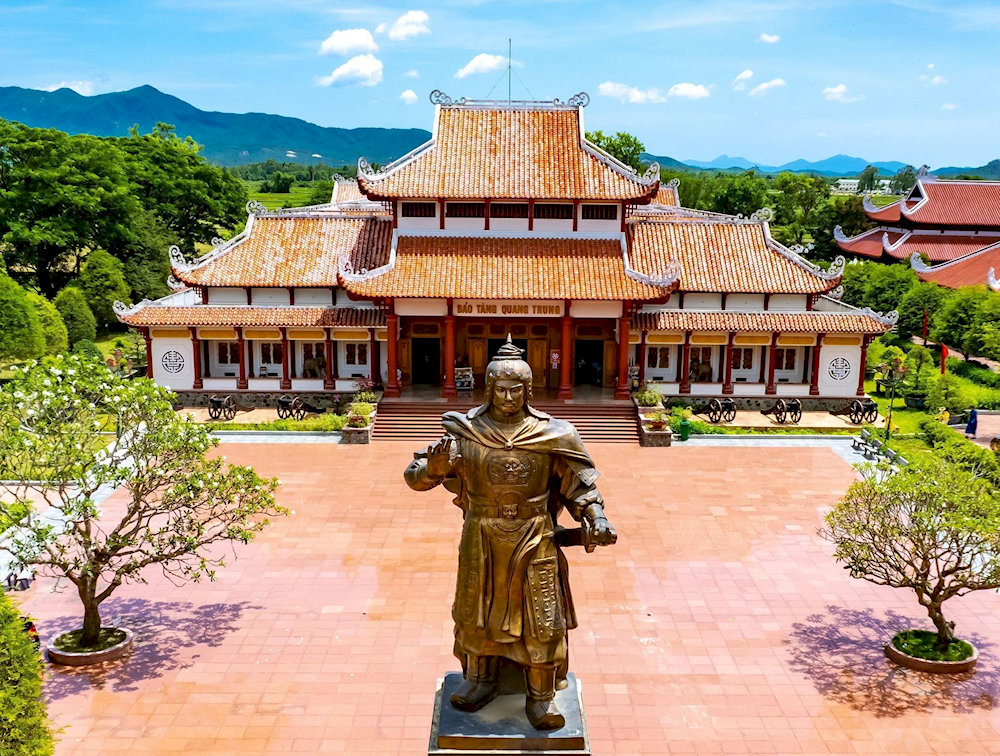
When people search for things to see at Quang Trung Museum, four highlights matter most. First is the monumental statue of Quang Trung in the main courtyard. It is the visual center of the complex and the image most travelers remember. Official travel guides also treat it as the symbolic starting point of the visit.
Second is the Tây Sơn Tam Kiệt Temple. Vietnam Airlines describes it as dedicated to the three Tây Sơn brothers and notes that the temple was inaugurated in 1960 and restored in 1998. The same guide says the complex also includes temples dedicated to Admiral Bùi Thị Xuân, General Võ Văn Dũng, and the parents of the brothers.
Third is the exhibition area itself. Published guides agree that the museum has nine rooms and more than 11,000 documents and artifacts related to the uprising and Emperor Quang Trung. The exhibits are organized by theme, which helps first-time visitors follow the story in order.
Fourth are the original relics in the grounds. Current guides mention the old family garden, an ancient well, and a tamarind tree that has become part of the site’s identity. These features matter because they make the museum feel lived-in and rooted, not just curated.
Traditional martial arts show at Quang Trung Museum
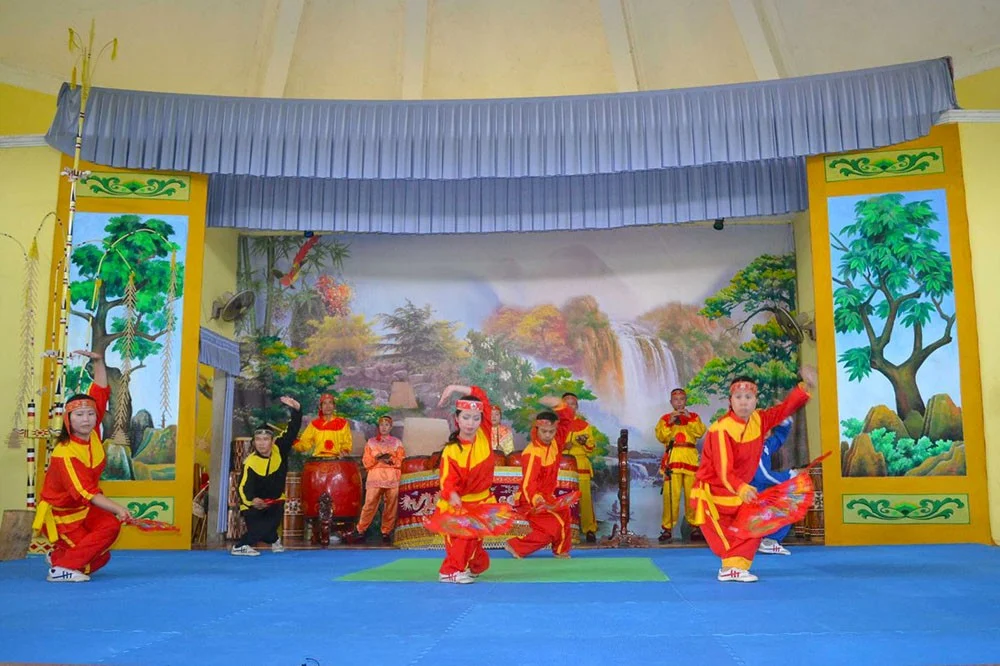
For many travelers, the real surprise is the traditional martial arts show at Quang Trung Museum. This is one of the clearest ways the site connects history with living culture. Official tourism sources and recent travel guides both highlight the martial arts and battle-drum performances as a core part of the experience.
Vietnam Airlines describes the performance hall as a dedicated space for traditional Bình Định martial arts and drum shows, with up to 12 battle drums displayed. The guide also explains that martial training and drum music were linked to the Tây Sơn army’s morale and identity.
This is one of the biggest reasons the museum works well for foreign visitors. Even if you do not read every panel, the performance gives you something immediate and memorable. It also helps the museum feel less static than many small history sites. In practice, that makes this Tay Son history museum easier to recommend to first-time visitors.
Martial Art Performance 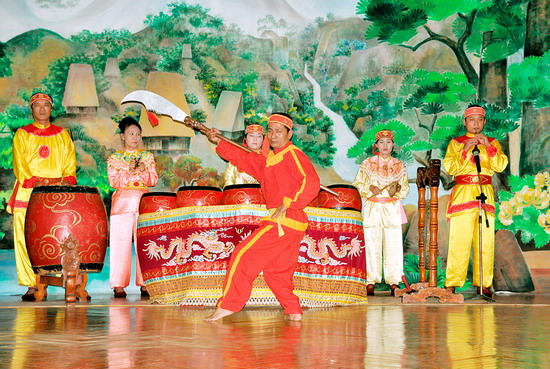
Martial Art Performance 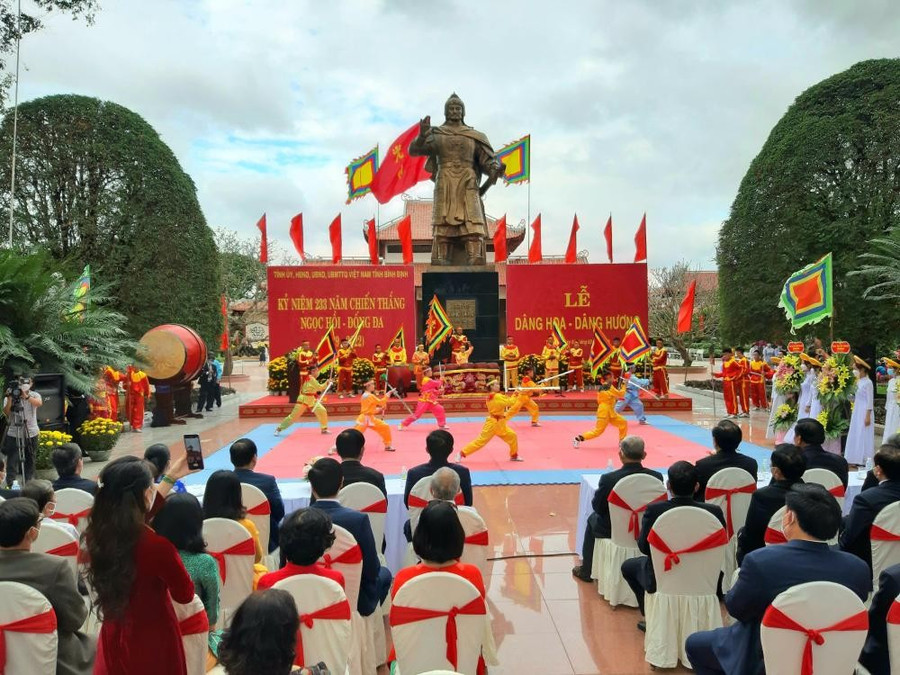
Martial Art Performance
Opening hours and ticket fees
For practical planning, the museum usually opens in two sessions during the day, 7:00 AM to 11:30 AM and 1:30 PM to 5:00 PM. It is best to visit in the morning or early afternoon, so you have enough time to explore the exhibits and the temple grounds.
The current ticket fee is VND 50,000 for the entrance ticket and VND 20,000 for the martial arts ticket. If you want the full experience, plan for VND 70,000 per person in total. For first-time visitors, the martial arts performance is worth adding because it makes the history feel much more vivid and memorable.
How long should you spend there?
Most travelers can enjoy the museum in 60 to 90 minutes if they move at a steady pace. The provincial tourism portal itself suggests about 60 minutes for the visit. If you add a martial arts performance, temple stops, and time for photos, the visit becomes much more comfortable, lasting half a day.
That is why this site fits well into a wider Quang Trung Museum travel guide rather than a stand-alone full-day attraction. It is best seen as the anchor stop on a Tây Sơn route. Pairing it with Ham Ho or another nearby historical site makes the day feel balanced.
Is the Quang Trung Museum worth it for foreign travelers?
Yes, especially if you want to understand the region beyond the beach. Quang Trung Museum is worth visiting because it offers several layers at once: local history, architecture, original relics, and live performance culture. Many smaller museums give you only one of those.
It is especially worthwhile for travelers already based in Quy Nhơn. The travel time is manageable, the museum is easy to pair with other Tây Sơn attractions, and the cultural return is strong for a relatively short outing. For first-time visitors, that balance matters more than having the biggest or most famous museum in Vietnam.
The museum may be less rewarding for visitors who want highly interactive English-language interpretation. Vietnam Airlines’ guide specifically suggests hiring a local guide because English-speaking docents are not available on site. That strongly suggests independent foreign visitors may get more from the visit with some preparation or a guide.
Practical tips before you go
Dress respectfully, especially if you plan to enter the temple areas. Official guidance for visitors also advises against touching artifacts, smoking, or behaving loudly in sacred and exhibition spaces.
Go in the morning if possible. The split hours make midday less convenient, and morning visits are easier to combine with lunch and a second stop. If you are doing the full-day trip from Quy Nhon to Quang Trung Museum, that timing works best.
Consider hiring a guide or joining a local day tour. That is not because the museum is hard to reach. It is because historical context and language support can shape the value of the experience. This is particularly true for travelers who are not already familiar with the Tây Sơn period.
For first-time visitors, Quang Trung Museum Binh Dinh is one of the most useful cultural stops near Quy Nhơn. It is practical, historically important, and easy to combine with a wider Tây Sơn itinerary. The museum also feels more vivid than many historical sites because of its temple setting, preserved relics, and martial arts performances.
So, why visit Quang Trung Museum? Because it gives you a grounded, memorable introduction to Tây Sơn history in the place where that story began. For foreign travelers looking for a reliable Quang Trung Museum travel guide, the simple answer is this: go if you want one of the best short cultural trips from Quy Nhơn.