Every great travel photograph tells a story, and the top Quy Nhon photography spots offer the perfect cinematic backdrop for yours. While crowds flock to the well-trodden paths of Da Nang or Hoi An, visual storytellers are quietly heading to this breathtaking secret in Central Vietnam.
Here, the golden hour light dances across ancient brick walls, and rugged cliffs dramatically contrast with impossibly clear blue water. Whether you are shooting with a high-end DSLR, a drone, or your smartphone, this definitive guide will lead you to the most spectacular, untouched locations in this coastal paradise.
Why Quy Nhon is a Haven for Travel Photographers
Before diving into the specific locations, it helps to understand why this region translates so beautifully on camera. Quy Nhon remains relatively untouched by hyper-commercialized tourism. This means you will not have to fight for tripod space or spend hours editing out crowds in post-production.
The landscapes here are raw and contrasting. Within a 30-kilometer radius, you can shoot arid sand dunes, lush mountainous temples, ancient ruins, and tropical coral reefs. For travelers who believe that we travel to learn and learn to travel, photographing Quy Nhon is a masterclass in capturing authentic Vietnamese coastal life and ancient history.
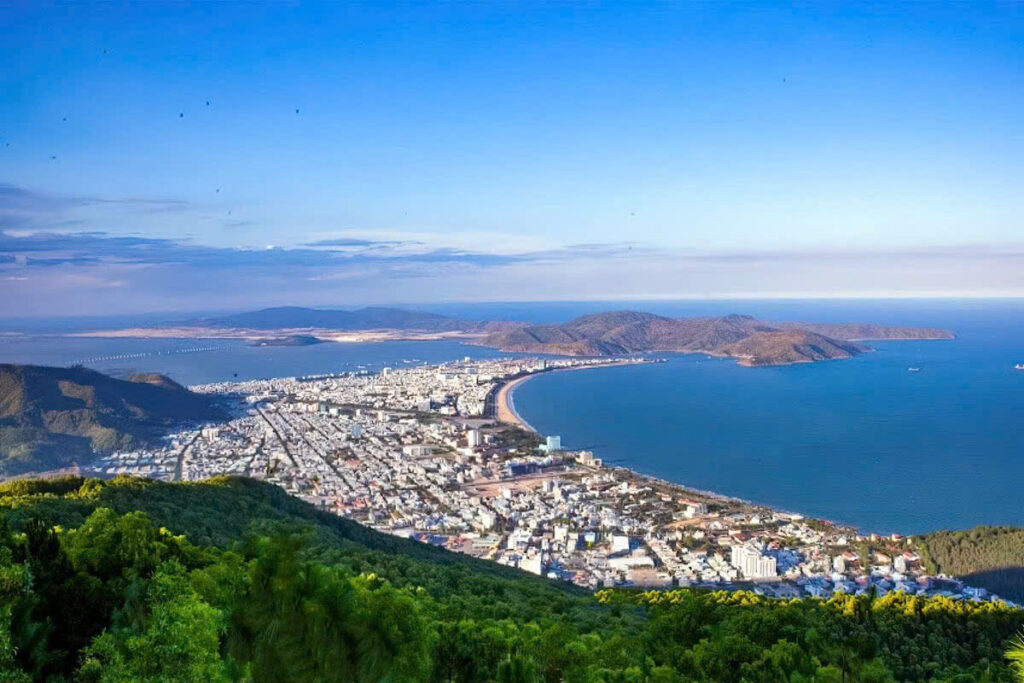
Quy Nhon City Center from Xuan Van Mountain (Source: Collected)
The Top 8 Breathtaking Quy Nhon Photography Spots
1. The Cinematic Cliffs of Eo Gio (The Wind Strait)
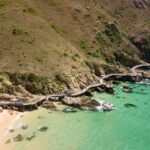
If you only have time to shoot one location, make it Eo Gio – Quy Nhon photography spots. Translated as “The Wind Strait,” this spectacular coastal phenomenon is created by two massive, rocky promontories that curve outward to embrace the wild ocean.
- The Shot: Focus on the iconic paved coastal walkway that hugs the side of the cliff. With its neat wooden fences contrasting against the wild, crashing waves below, it provides brilliant leading lines for your composition. Position your subject looking out toward the horizon to create a sense of scale and wanderlust.
- Best Time to Shoot: Early morning. The sunrise here is legendary. As the sun breaches the horizon, it casts a soft, golden hue over the rugged rocks and turns the violent ocean into a mirror of pastel pinks and oranges.
- Pro Tip: Bring a wide-angle lens (16-35mm) to capture the sweeping majesty of the cliffs and the strait in a single frame.
>> Discover Eo Gio with: Eo Gio Travel Guide: Fees, Hours, and Top Things to Do | Eo Gio Beach | Best sunrise watching place in Quy Nhon.
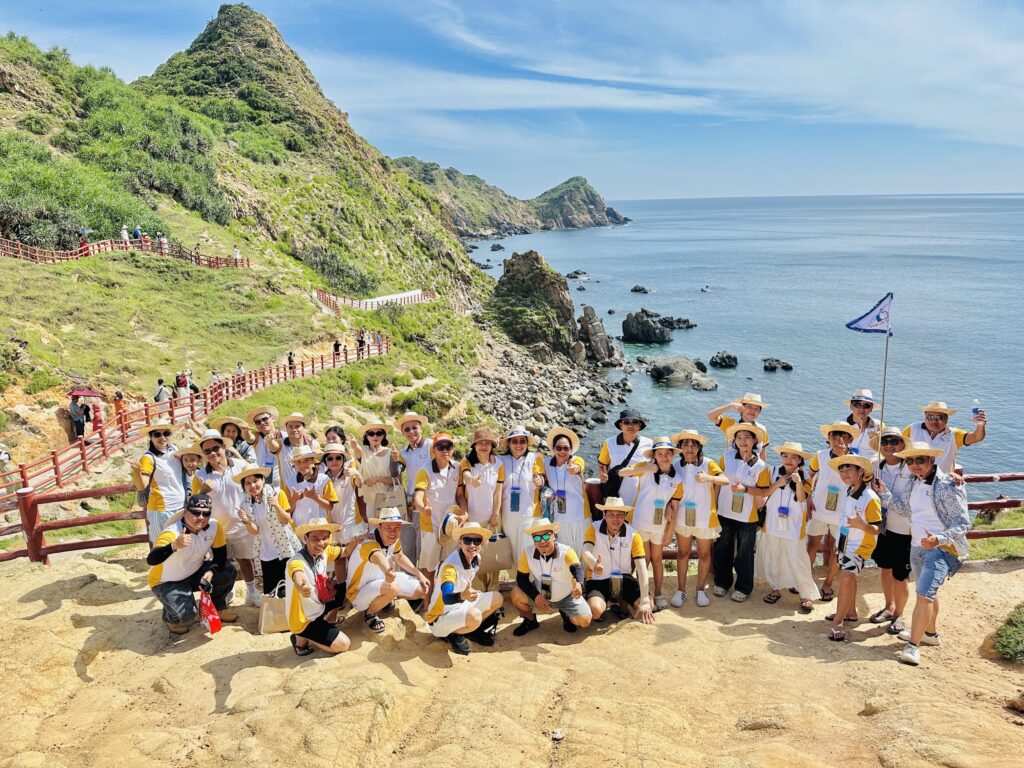
The Cinematic Cliffs of Eo Gio (The Wind Strait)
2. The Pristine Palette of Ky Co Beach
Often dubbed the “Maldives of Vietnam,” Ky Co is where your polarizing filter will truly shine. Accessible by a scenic speedboat ride, this crescent-shaped beach is sheltered by towering mountains, creating a secluded paradise.
- The Shot: The water here transitions from crystal clear at the shoreline to vibrant turquoise and deep navy blue further out. For drone pilots, launching here provides breathtaking aerial shots that highlight the stark contrast between the bright white sand and the vivid ocean.
- Best Time to Shoot: Midday (between 10:00 AM and 1:00 PM). This is one of the rare locations where harsh midday light works to your advantage. The sun directly overhead penetrates the water, illuminating the seabed and making the blue colors pop with incredible intensity.
>> Discover Ky Co Beach with: Ky Co Travel Tips: From A Local’s Guide
>> Join Ky Co Eo Gio 1-day private tour: Ky Co & Eo Gio – Where the Wind Whispers and the Ocean Breathes.
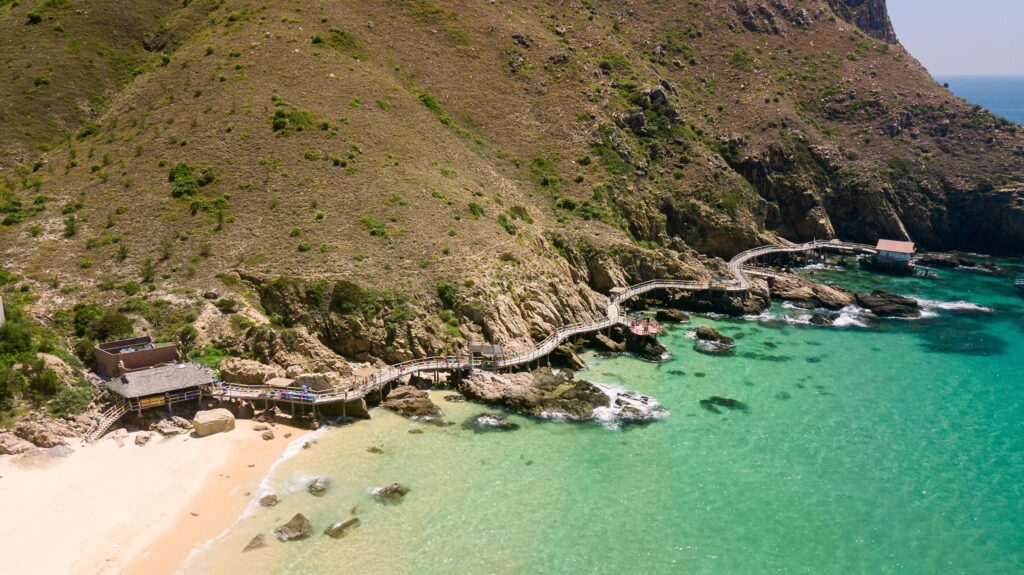
Ky Co Beach – known as “Maldives of Vietnam” (Source: Collected)
3. The Solitary Beauty of Hon Kho Island
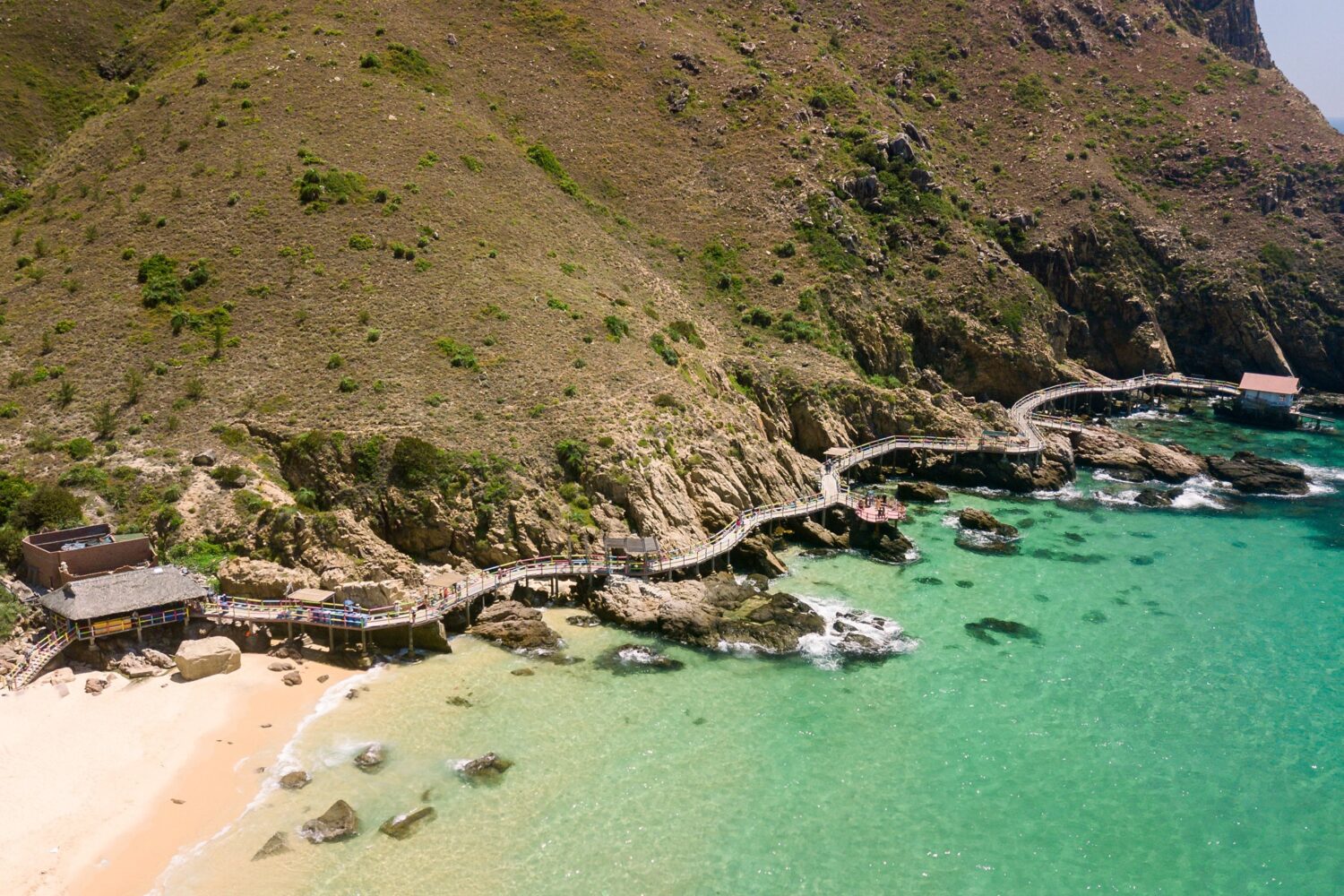
Hon Kho is a rugged, almost entirely rocky island just off the coast, completely devoid of large trees or infrastructure (Quy Nhon photography spots). It is famous for its winding wooden bridge that snakes around the edge of the rocks, hovering just above the shallow coral reefs. It is easily one of the most unique Quy Nhon photography spots.
- The Shot: During low tide, a hidden sandbar emerges, creating a striking, narrow pathway right through the middle of the ocean. Photographing a lone figure walking across this sandbar, surrounded by the vast sea, creates a powerful, minimalist composition.
- Best Time to Shoot: Check the local tide charts and aim for low tide, preferably in the early morning to avoid the harsh glare of the sun on the water and to capture the softest light.
>> Discover Hon Kho Island: Hon Kho Quy Nhon Travel Guide: Seaweed, Coral & Sea Path. | Hon Kho Snorkeling & Island Tour – Unveiling Nature’s Purest Beauty

Hon Kho Island – Best with seaweed season. (Source: Collected)
4. The Coastal Charm of Trung Luong Camping Site
Often compared to the picturesque coastal scenes of Jeju Island, the Trung Luong picnic and camping area is a dream for lifestyle and portrait photographers. Nestled in a small valley surrounded by limestone mountains and facing a tranquil beach, this spot is effortlessly photogenic.
- The Shot: Frame the winding wooden staircase that leads from the elevated camping area down to the ocean. The contrasting aesthetic of the vibrant green grass, the crisp blue and white seaside tents, and the vast ocean in the background creates a bright, modern, and highly inviting composition.
- Best Time to Shoot: Mid-afternoon. The descending sunlight illuminates the entire valley evenly, bringing out the vivid, saturated colors of the landscape without casting harsh shadows.
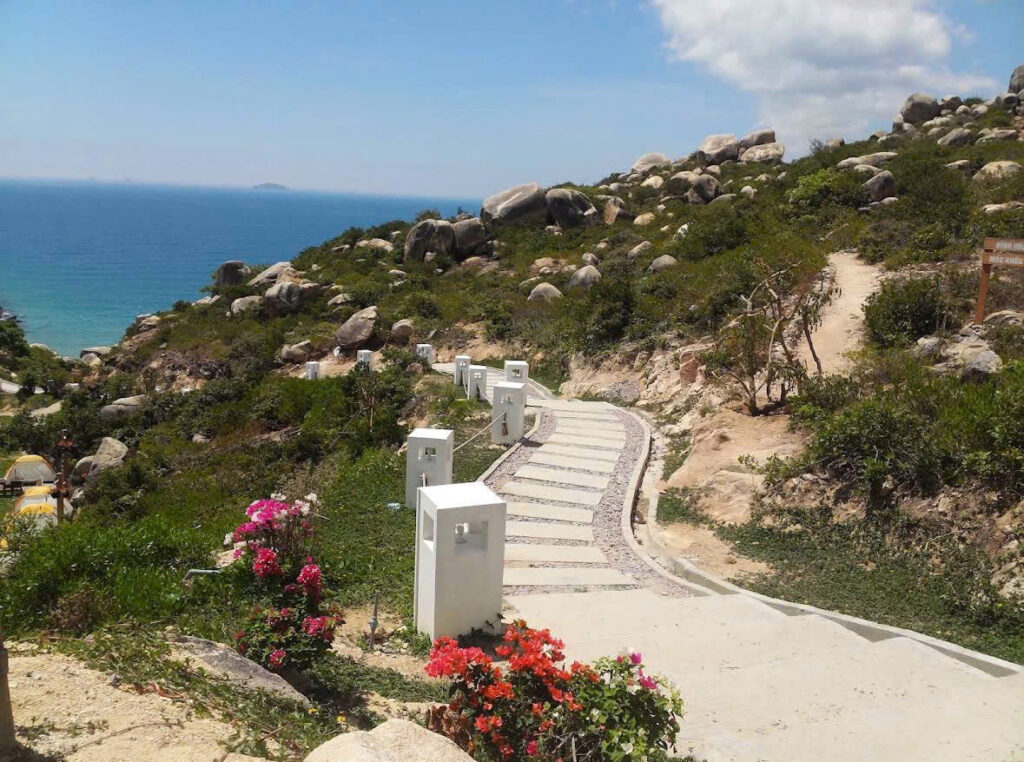
The Coastal Charm of Trung Luong Camping Site. (Source: Collected)
5. The Nostalgic Green Stone Path in Nhon Ly Village
For street and documentary photographers, the authentic coastal villages provide endless inspiration. In the heart of Nhon Ly fishing village lies the “Green Stone Path”—a revitalized alleyway that feels like stepping into a coastal fairytale. This is where the cultural heartbeat of Binh Dinh coastal beauty truly comes alive.
- The Shot: The winding, narrow alley paved with vibrant blue-green stones is flanked by rustic fishermen’s houses and brilliant pink bougainvillea flowers hanging over the walls. It has a deeply nostalgic, almost Mediterranean vibe. Capture locals going about their daily lives against the beautifully painted marine murals.
- Best Time to Shoot: Mid-morning or late afternoon. During these times, the harsh sun is blocked by the narrow houses, creating soft, diffused lighting across the colorful alleyway.
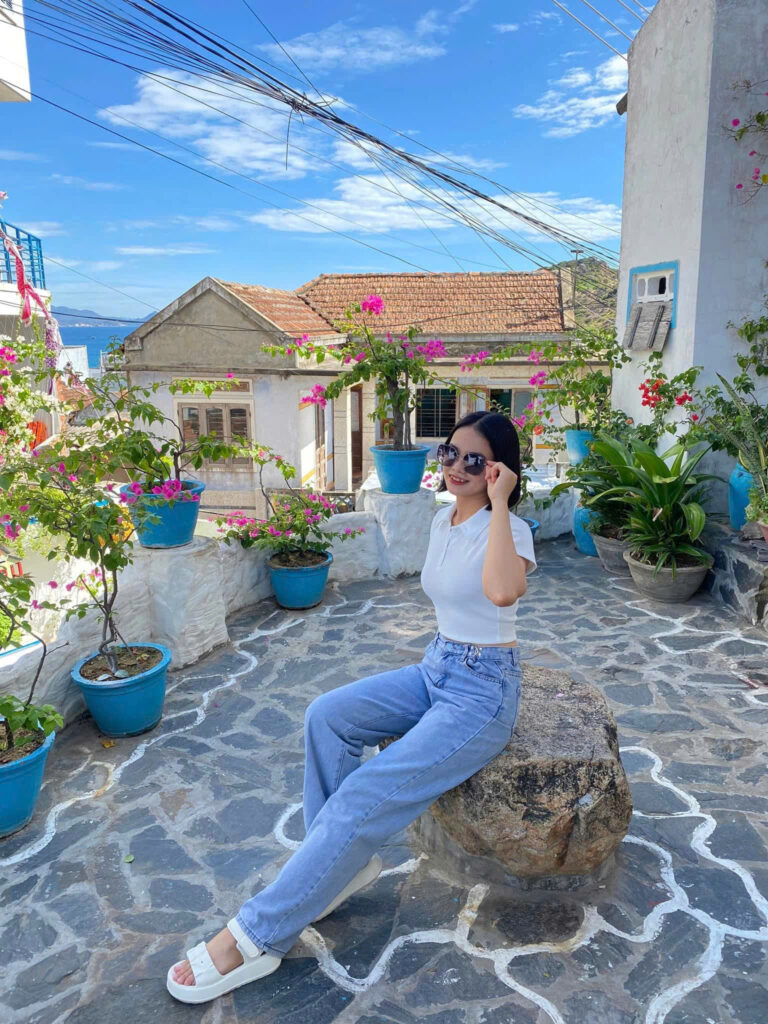
Nostalgic Green Stone Path 
Colorful decorations with local fishing village
6. The Majestic Scale of Ong Nui Temple
Perched high on the majestic Chop Vung mountain, Ong Nui Temple is a site of immense spiritual and visual gravity. It is home to one of the tallest sitting Buddha statues in Southeast Asia, overlooking the ocean.
- The Shot: To capture the true scale of the monument, photograph from the bottom of the grand 600-step stone staircase leading up to the statue. The sheer size of the brilliant white Buddha against the deep green of the mountainside is awe-inspiring. Use a telephoto lens to compress the background and make the statue appear even more dominant.
- Best Time to Shoot: Early morning. The climb is physically demanding, so arriving early helps you beat the tropical heat. More importantly, the morning mist rolling off the mountain adds a highly mystical, ethereal quality to your images.
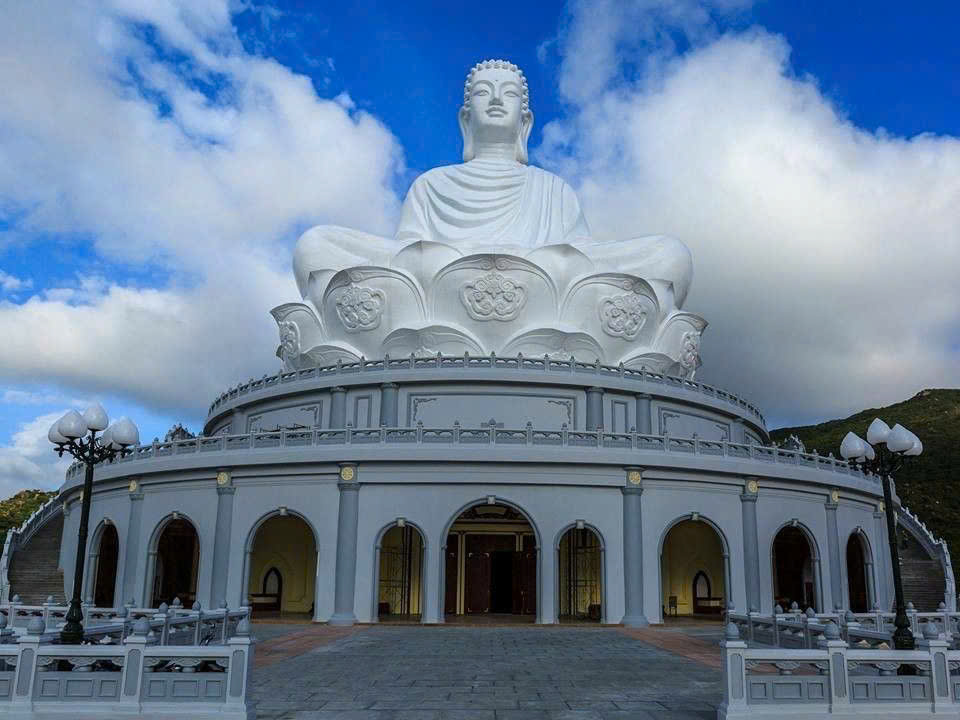
Linh Phong Thien Tu and its Signature Buddha Statue. (Source: Collected)
7. The Ancient Mystique of Banh It Towers
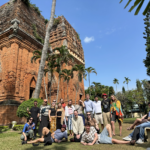
To capture the soul of the region, you must photograph its history. Perched high on a sweeping green hill, the Banh It Towers offer one of the most majestic historical backdrops in all of Central Vietnam, dating back to the ancient Champa Kingdom. This location perfectly embodies the philosophy that every journey should be an educational experience.
- The Shot: Frame the steep, ancient stone staircase leading up to the towering main temple. If you have a drone, orbiting the main tower reveals the breathtaking architectural layout against the backdrop of the entire valley and distant rivers. On the ground, focus your macro lens on the intricate sandstone carvings of Garuda birds and divine dancers.
- Best Time to Shoot: Late afternoon during the golden hour. The setting sun hits the ancient red bricks, making them glow with an intense, fiery warmth that brings the history to life.
>> Explore Champa Towers and traditional village: The River of Time: Champa Heritage & Handicraft Villages
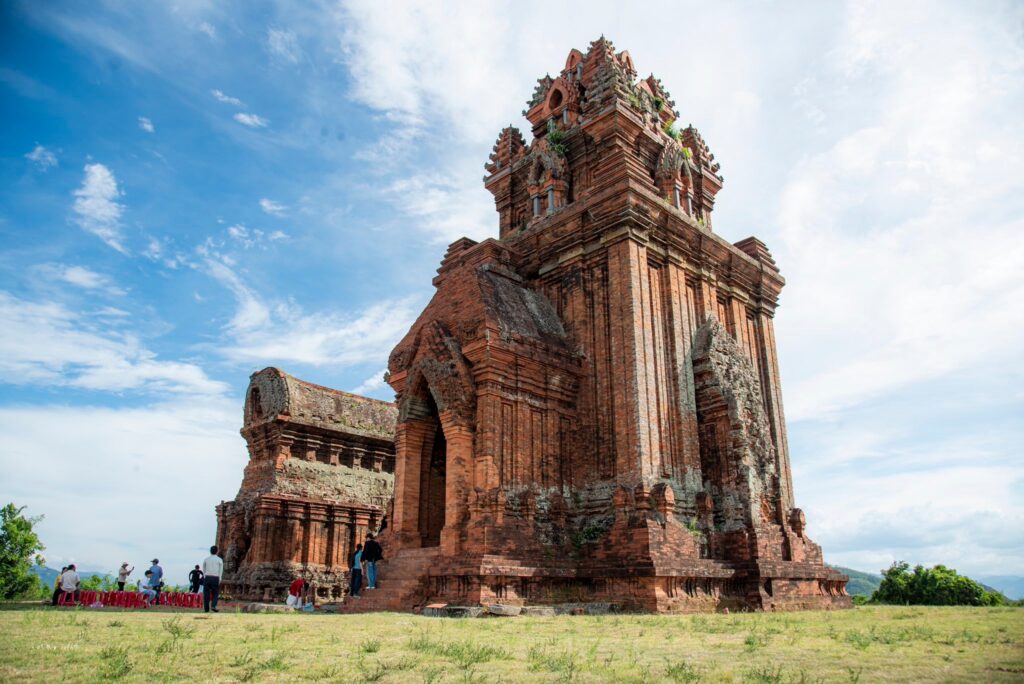
Banh It Towers – The Majestic Relics of the Ancient Champa Kingdom.
8. The Golden Curves of Phuong Mai Sand Dunes
Just a short drive across the Thi Nai Bridge, the landscape dramatically transforms into a vast, Saharan-like expanse. The Phuong Mai Sand Dunes offer a striking visual contrast to the deep blues of the ocean you just photographed, rounding out the ultimate Central Vietnam travel photography portfolio.
- The Shot: Look for the minimalist beauty of wind-swept sand ripples against a clear, cloudless sky. Have a subject walk along the sharp ridge of a dune to capture an epic sense of scale, allowing the low sun to cast long, dramatic shadows.
- Best Time to Shoot: Late afternoon. The low angle of the setting sun creates deep, dramatic shadows along the ridges of the dunes, adding immense texture and depth to your images.

The Golden Curves of Phuong Mai Sand Dunes (Source: Collected)
Planning Your Visual Journey
To make the most of these Instagrammable places in Quy Nhon, timing and logistics are key. The best time to visit Quy Nhon for photography is between February and August. During these months, the weather is incredibly clear, the ocean is calm and vividly blue, and natural lighting is at its peak.
Photography Gear Checklist for Quy Nhon:
- Wide-angle lens (14-24mm or 16-35mm): Essential for capturing the vastness of Eo Gio and the scale of Ong Nui Temple.
- Polarizing filter: A must-have for Ky Co Beach and Hon Kho to cut through the glare on the water and reveal the vibrant coral reefs below.
- Drone: If you are a licensed pilot, aerial photography will completely transform your portfolio here, especially at the sand dunes and coastal cliffs.
Craft Your Visual Story With Us
Capturing the perfect travel portfolio requires more than just a good camera; it requires deep local knowledge, perfect timing, and seamless logistics. You need to be in the right place at the exact right time, without worrying about navigation or transport.
At Thichtours, we believe that you travel to learn and learn to travel. Our team understands the subtle rhythms of the region—from the shifting daily tides of Hon Kho to the exact moment the golden hour light hits the ancient Champa ruins at Banh It. We handle the logistics so you can focus entirely on your craft and creativity.
Let us guide you to the most breathtaking, off-the-beaten-path Quy Nhon photography spots.
👉 Ready to shoot the trip of a lifetime? Contact the Thichtours team today to book a customized, visually stunning journey through Central Vietnam. Let’s create visual magic together!