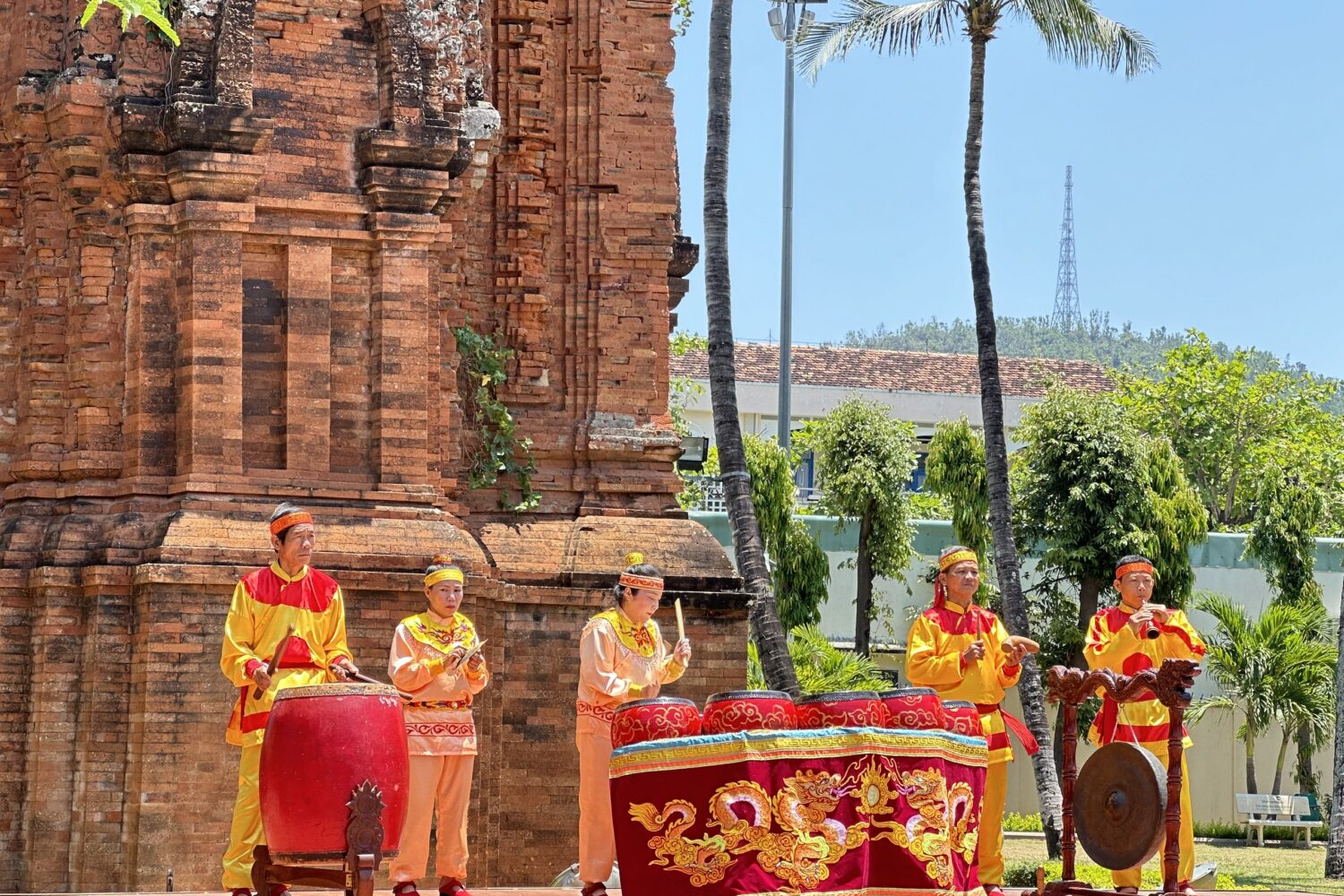
Most visitors know Quy Nhon, Binh Dinh for its stunning beaches. But beyond the golden coastline lies another world entirely – one of thousand-year-old terracotta towers, quiet craft villages, weathered fishing communities, and stories that have shaped this region for centuries. Let’s explore Quy Nhon heritage sites with Thích Tours.
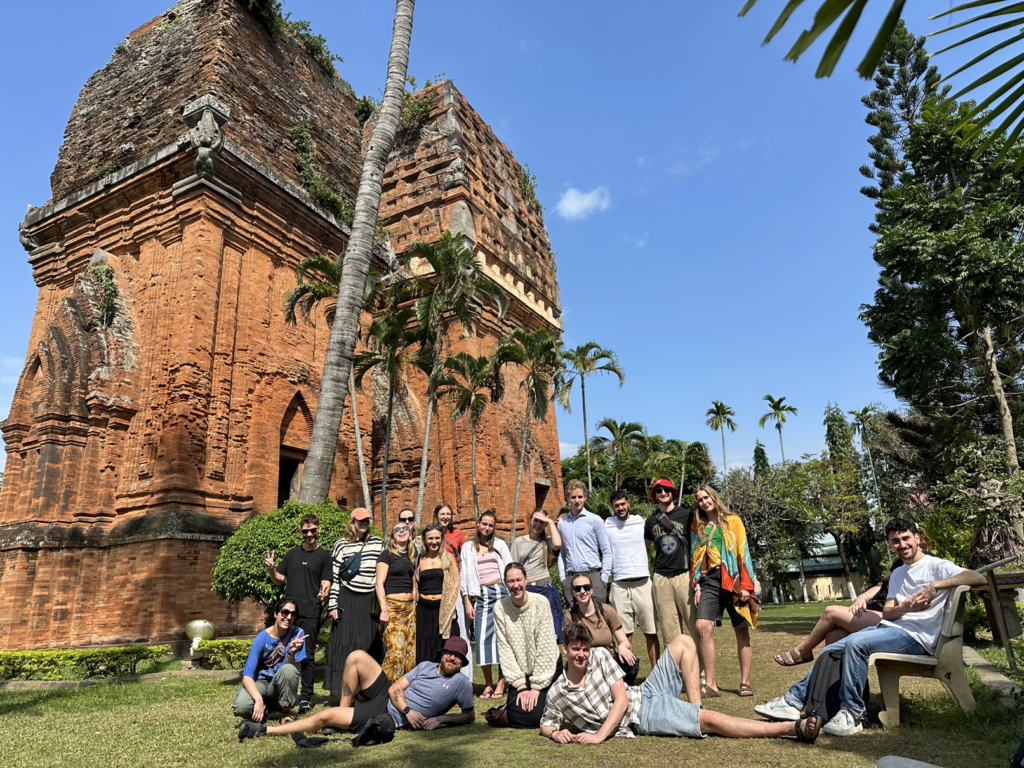
Home to 8 remaining Cham towers, enduring reminders of the ancient Champa Kingdom.
After living and breathing this region for over three decades, I can tell you that the true soul of the city is not found on a sun lounger. It is found in the calloused hands of an artisan, the smell of ancient bricks after the rain, and the morning chants at a coastal shrine. If you want a profound travel experience, let’s explore the Quy Nhon cultural attractions that most tourists completely miss.
Why Quy Nhon Is More Than a Beach Destination
Long before it became a coastal getaway, this land was Vijaya, the political and cultural center of the ancient Champa Kingdom from the 11th to the 15th century. Today, Binh Dinh cultural heritage is arguably the richest in central Vietnam, boasting the highest concentration of standing Cham ruins outside of My Son.
Choosing to explore Quy Nhon history means stepping away from commercial tourism and walking into living, breathing antiquity.
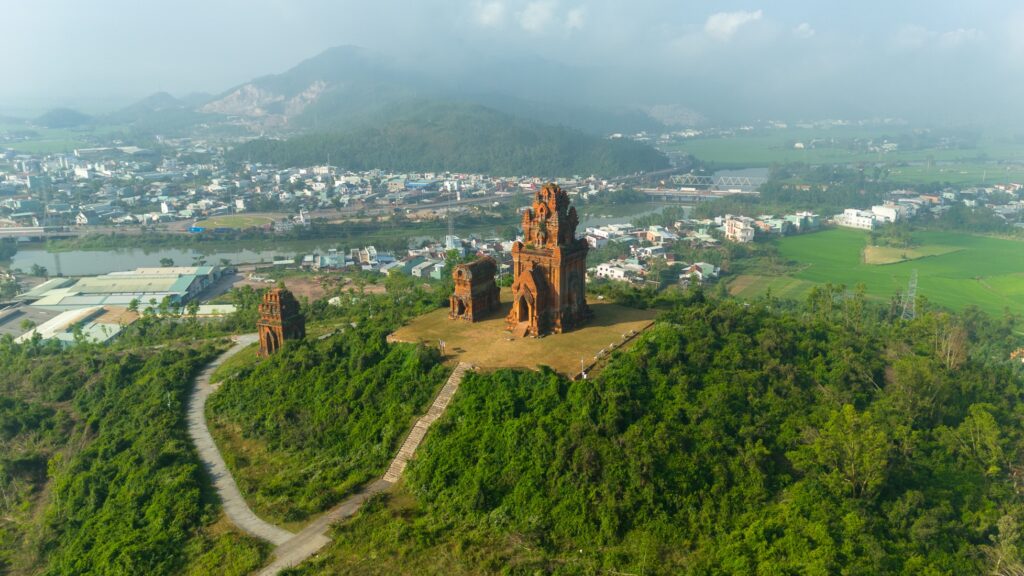
Each Cham tower has its own unique meaning and architectural style.
Discover the Legacy of the Cham Kingdom
To understand Cham heritage Vietnam, you must understand the Champa people. They were a powerful, seafaring civilization heavily influenced by Hinduism. Their legacy is etched into the landscape through their distinct architecture: towering structures built from red clay bricks. The mystery of these towers is how they were constructed without any visible mortar, yet have withstood centuries of tropical storms and wars.
Twin Towers (Tháp Đôi): Cham Heritage in the Heart of the City
Unlike most ruins perched on distant hilltops, the Twin Towers sit right in the bustling center of the city.
Built in the late 12th century, these two parallel towers represent a fascinating architectural shift, heavily influenced by Khmer art.
- Best time to visit: Late afternoon. As the sun sets, the red bricks glow brilliantly against the sky.
- What to look for: Look closely at the curved roofs and the corners of the towers, where you will see intricate carvings of Garuda (a mythical bird) and dancing Shiva deities holding up the heavens.
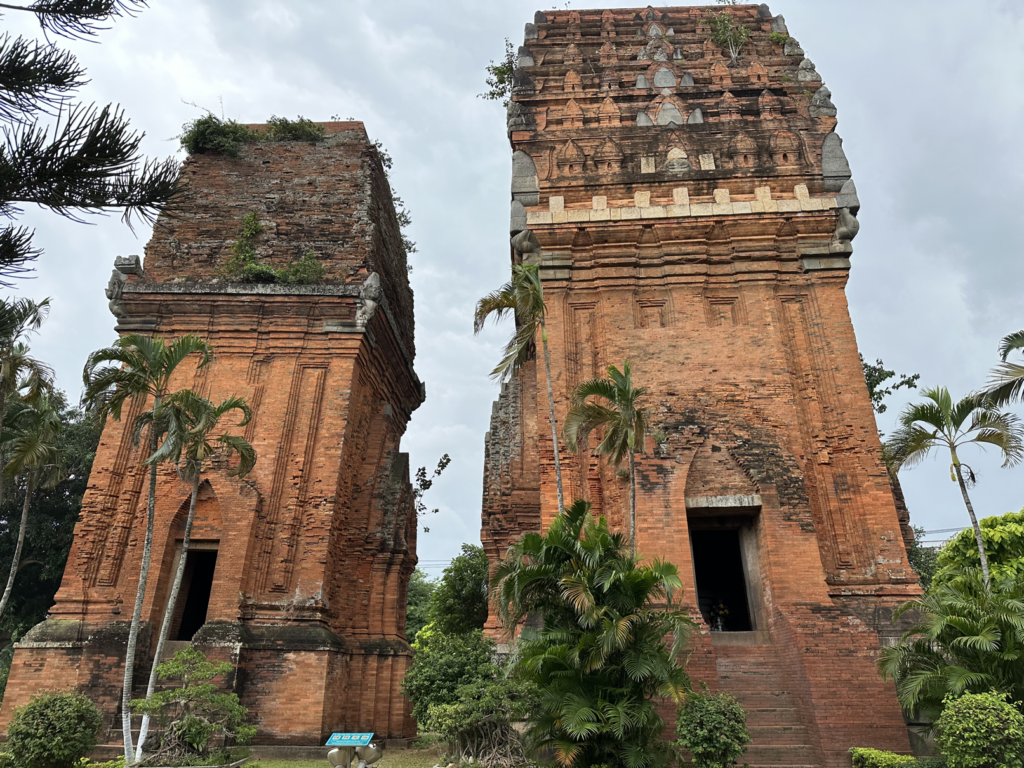
Tháp Đôi (The Twin Towers): Ancient 12th-century Cham twin towers with unique architecture.
Bánh Ít Towers: Ancient Architecture Above the Rice Fields
If you are looking for cultural things to do in Quy Nhon, a short drive out of town brings you to the majestic Banh It Towers.
Perched on a high hill, this complex of four towers looks out over an endless expanse of vibrant green rice fields and winding rivers. It is one of the most well-preserved Cham towers Quy Nhon has to offer. Standing at the peak, listening to the wind sweep through the valley, you can almost hear the echoes of the ancient kingdom.
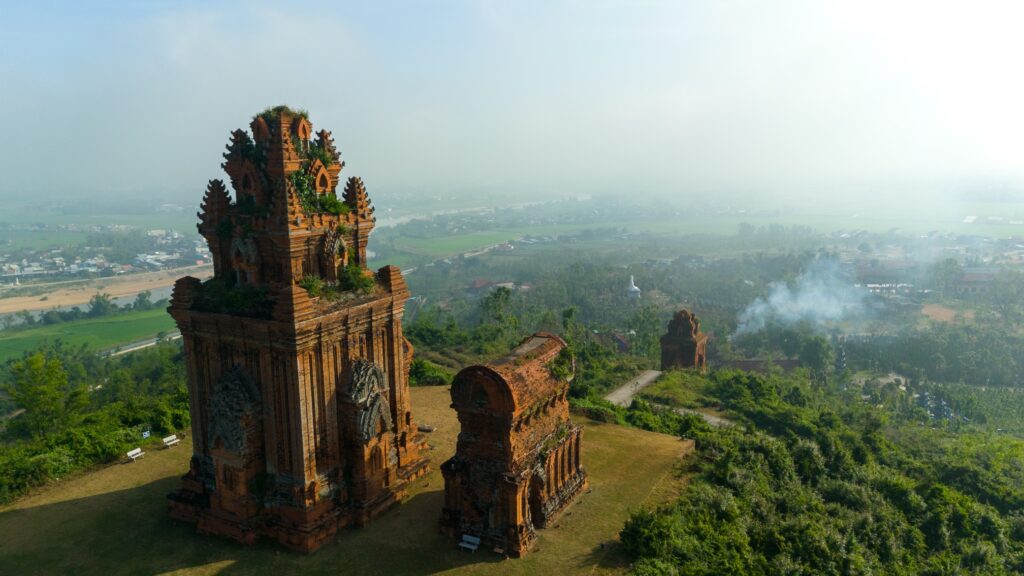
Tháp Bánh Ít (Banh It Tower): Majestic 11th-century Champa temple complex on a hill.
Beyond the Towers: Traditional Villages That Keep History Alive
The history of this province isn’t just in its monuments; it is actively preserved in its traditional villages in Binh Dinh.
Phú Gia Conical Hat Village
For over 300 years, the artisans of Phu Gia have been weaving the famous nón ngựa Phú Gia (horse hats). Unlike the standard conical hats seen elsewhere, these were historically crafted for mandarins and wealthy horsemen. They feature incredibly intricate, hand-embroidered patterns of dragons, unicorns, and birds inside the brim. Watching a village elder masterfully weave the bamboo frames is a privilege.
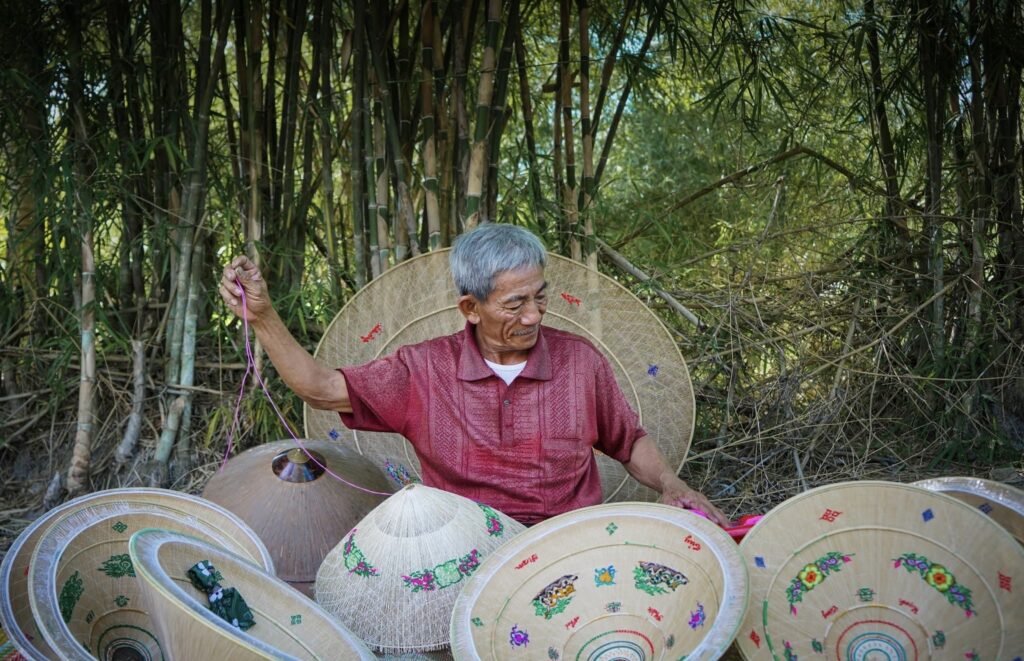
Traditional craft village crafting intricate embroidered horse conical hats.
Bàu Đá Rice Wine Village
If you want to understand local culture Quy Nhon, you must understand its rice wine. Bau Da wine is legendary across Vietnam. Brewed using ancient methods, specific local groundwater, and cooked slowly in terracotta pots over a wood fire, it is a potent, aromatic spirit that plays a central role in every local festival, wedding, and family gathering.
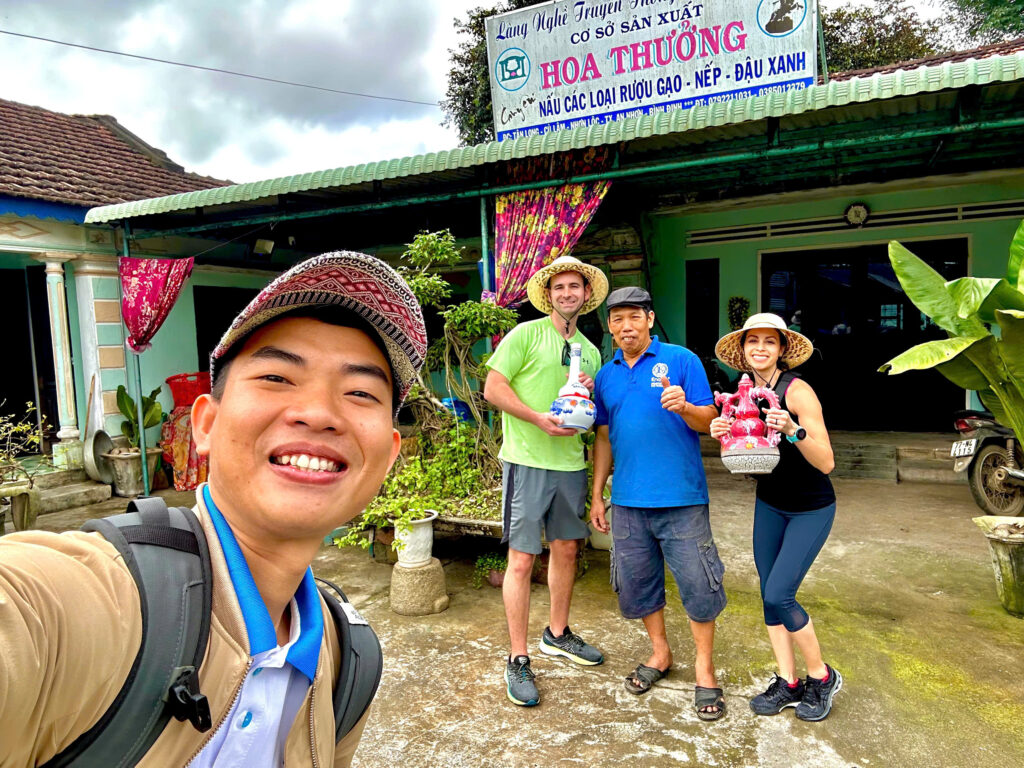
Legendary traditional distilled rice wine with exceptional potency.
Rice Paper & Noodle Villages
In the quiet inland communes, whole families dedicate their lives to making rice paper and noodles. It is an heirloom trade. You will see thin sheets of rice paper drying on bamboo racks under the blazing sun in front of nearly every house. Visitors can often sit with the locals to try their hand at pouring and peeling the delicate batter.
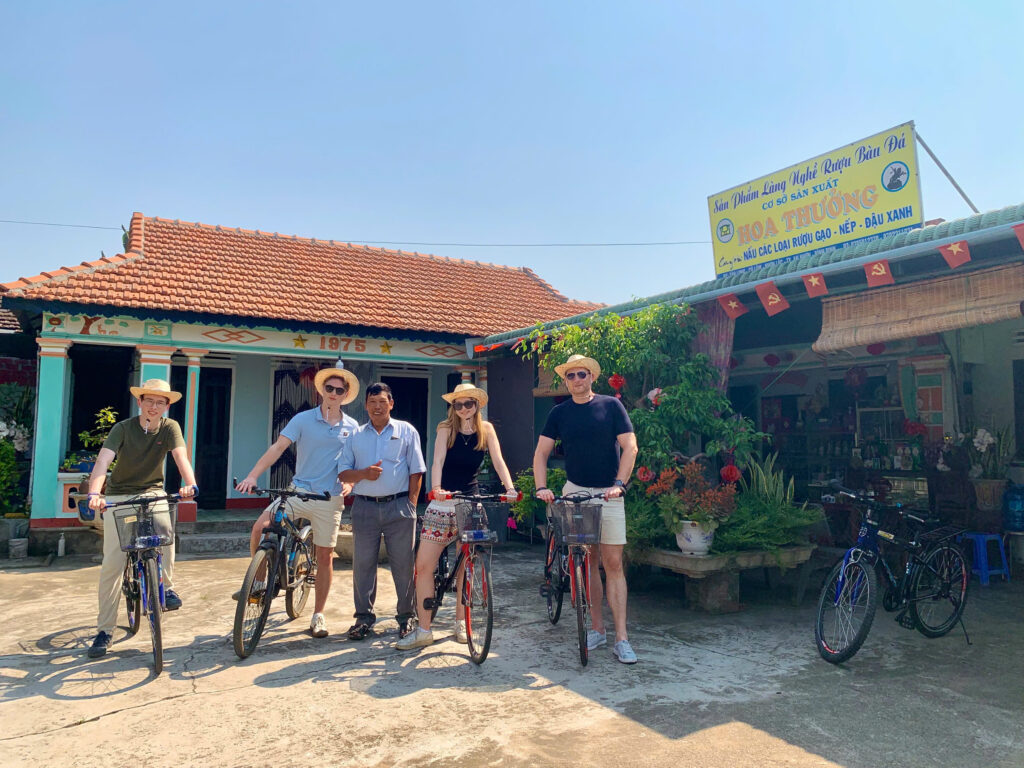
Cycle through the countryside. 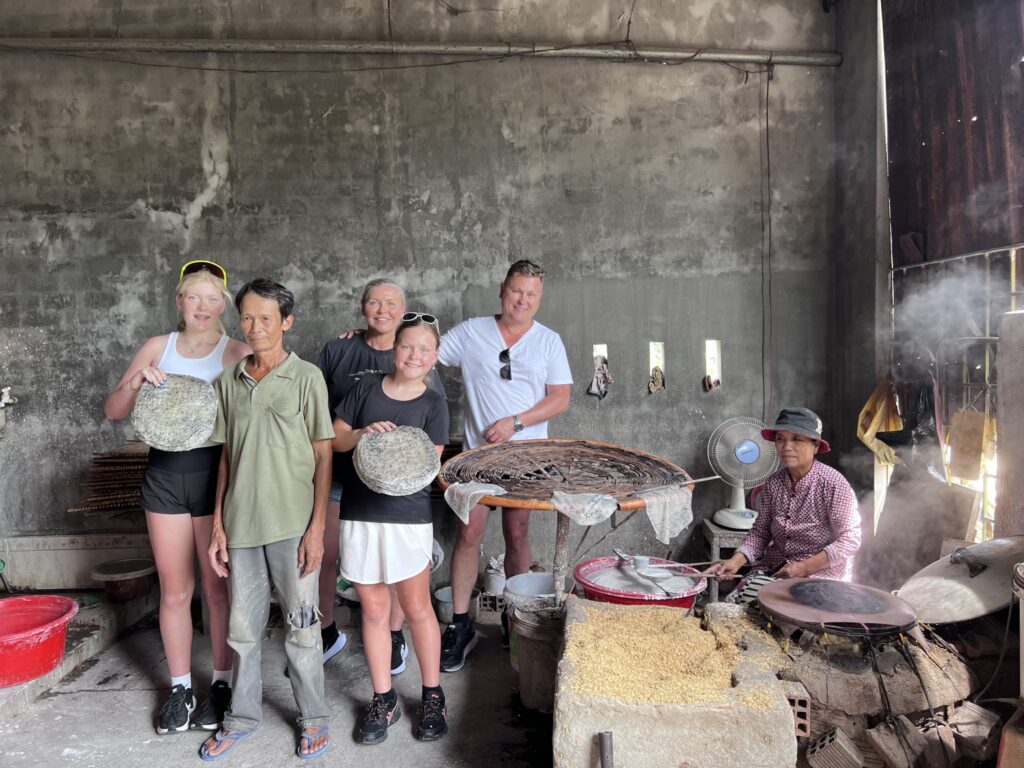
Try making traditional rice paper. 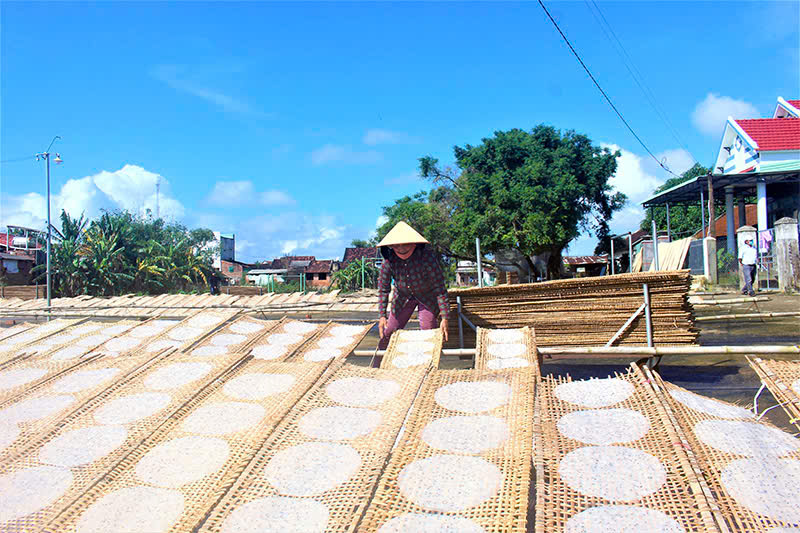
Dry rice paper in the sun.
Fishing Villages Along the Coast
The hidden gems Quy Nhon guards most fiercely are its fishing communities: Nhon Hai, Nhon Ly, Bai Xep, and Hai Minh.
These are not just beautiful backdrops. They are rugged, hard-working communities governed by the tides. Visit at dawn to witness the chaotic beauty of the fish markets as the round coracle boats return. Look for the local shrines dedicated to Cá Ông (the Whale God), a deeply held coastal belief where whales are revered as the ocean’s protectors.
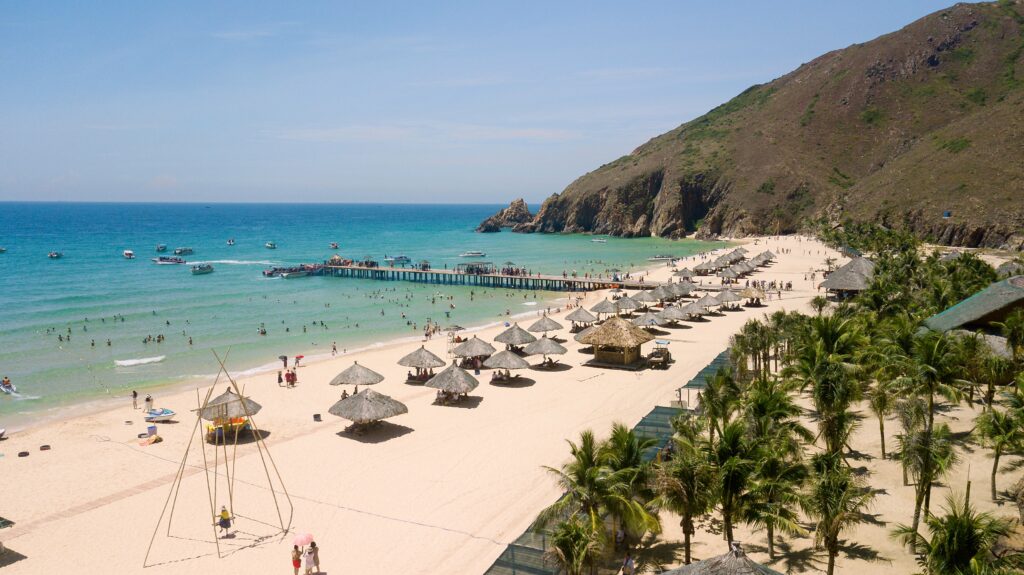
Ky Co Beach, known as the “Maldives of Vietnam,” is located in Nhon Ly Fishing Village.
Local Stories That Shape Bình Định
This region is famous nationwide as the cradle of traditional Vietnamese martial arts (Võ Bình Định). The locals here are known for their resilience, a trait born from fighting off invaders and surviving harsh coastal weather.
But alongside that toughness is an overwhelming hospitality. The stories you will remember most won’t be from a plaque in a museum; they will come from the multi-generational artisans who invite you into their homes for a cup of tea, eager to share their life’s work despite the language barrier.
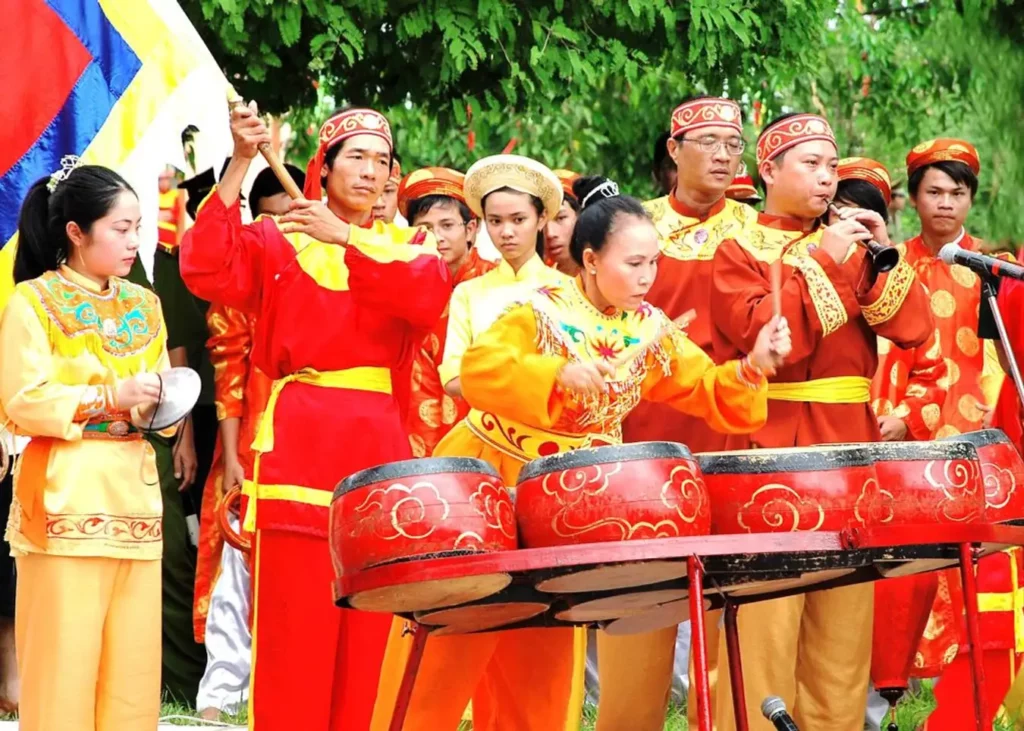
Binh Dinh Traditional Martial Arts
How to Explore These Cultural Treasures Respectfully
Quy Nhon Travel Tips: Common Mistakes to Avoid
To truly appreciate these sites, travel with intention:
- Dress modestly: Always cover your shoulders and knees when visiting Cham towers, temples, and conservative rural villages.
- Ask before photographing: A simple smile and pointing to your camera goes a long way before taking a portrait of an artisan.
- Buy directly: Support the local economy by purchasing crafts (like a nón ngựa Phú Gia) directly from the makers.
- Respect quiet village life: These are not tourist parks; they are people’s homes. Keep your volume down and be polite.
- Leave no litter behind: Help preserve the pristine nature of these ancient sites.
Suggested One-Day Cultural Itinerary
- The River of Time: Champa Heritage & Handicraft Villages
- Binh Dinh Cultural Bicycle Tour – Discover Traditional Craft Villages
- Binh Dinh Culture & History Tour: Tây Sơn Dynasty, Champa Towers, and Martial Arts
- Quy Nhon Traditional villages 1 day tour with local guide
- Discover 1 day Champa Tower tour in Binh Dinh
Final Thoughts
Quy Nhon’s greatest treasures aren’t only found along its soft, sandy beaches. They are hidden in the quiet reverence of ancient brick towers, in the rhythmic hands of village craftspeople, and in the stories passed from one generation to the next. Take the time to slow down and explore them, and you will discover a profound side of Vietnam that many travelers never get to see.
Ready to explore the soul of the city? Join a local-guided cultural tour with THICHTOURS and experience the history, traditions, and local life that make Quy Nhon, Binh Dinh truly unforgettable.