The best markets in Quy Nhon are not simply places to shop. They are where you can watch seafood arrive for the day, see herbs and vegetables piled into small baskets, hear vendors greeting regular customers, and understand how food fits into everyday life in this coastal city.
For first-time international visitors, each market offers a slightly different experience. Chợ Đầm is the strongest all-round introduction to local market life, Chợ Khu 2 is especially useful for fresh seafood, while Quy Nhon Night Market is easier for evening browsing, snacks, clothing, and souvenirs. Smaller neighborhood markets such as Chợ Khu 6 and Chợ Tháp Đôi show a more practical, resident-focused side of the city.
Quy Nhon Markets at a Glance
| Market | Best for | Address | Best time to visit |
| Chợ Đầm Quy Nhơn | Local life, seafood, produce, dried foods | 124 Phạm Hồng Thái, Quy Nhon, Gia Lai | Morning |
| Chợ Khu 2 | Fresh seafood | 110 Nguyễn Huệ, Quy Nhon, Gia Lai | Afternoon |
| Chợ Đêm Quy Nhơn | Souvenirs, clothing, snacks, evening browsing | 86 Lê Duẩn, Quy Nhon, Gia Lai | Evening |
| Chợ Khu 6 | Dried seafood, groceries, everyday shopping | Võ Lai Street, Quy Nhon Nam, Gia Lai | Morning to late afternoon |
| Chợ Tháp Đôi | Neighborhood life and combining shopping with Cham heritage | Đặng Xuân Phong, Quy Nhon, Gia Lai | Morning or late afternoon |
A useful map note: older websites and maps may still show these addresses under Bình Định Province. Bình Định and Gia Lai were merged in 2025 into the current Gia Lai Province, and the former Quy Nhon city area was reorganized into several wards.
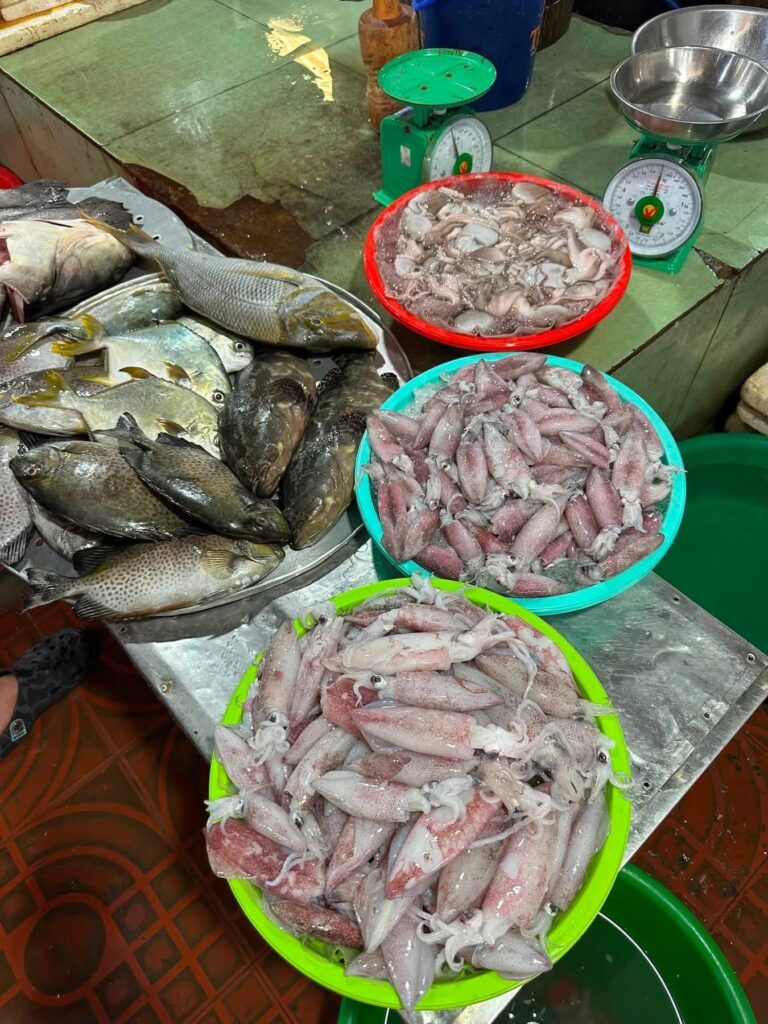
Fresh seafood in Cho Dam 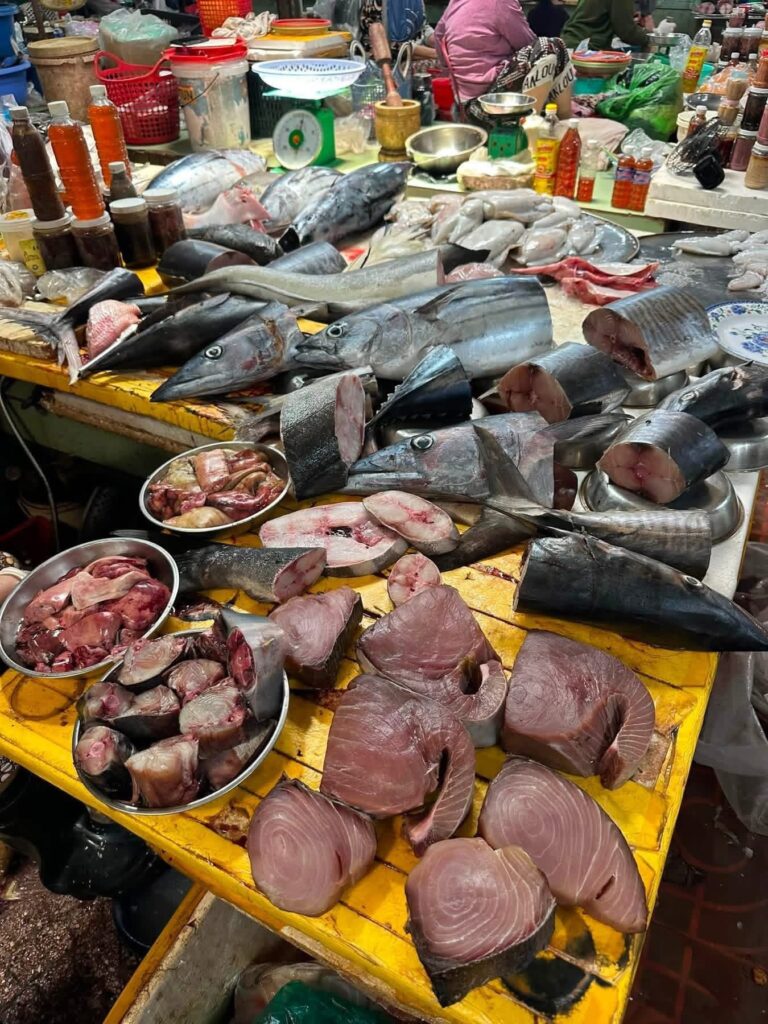
Fresh seafood in Cho Dam 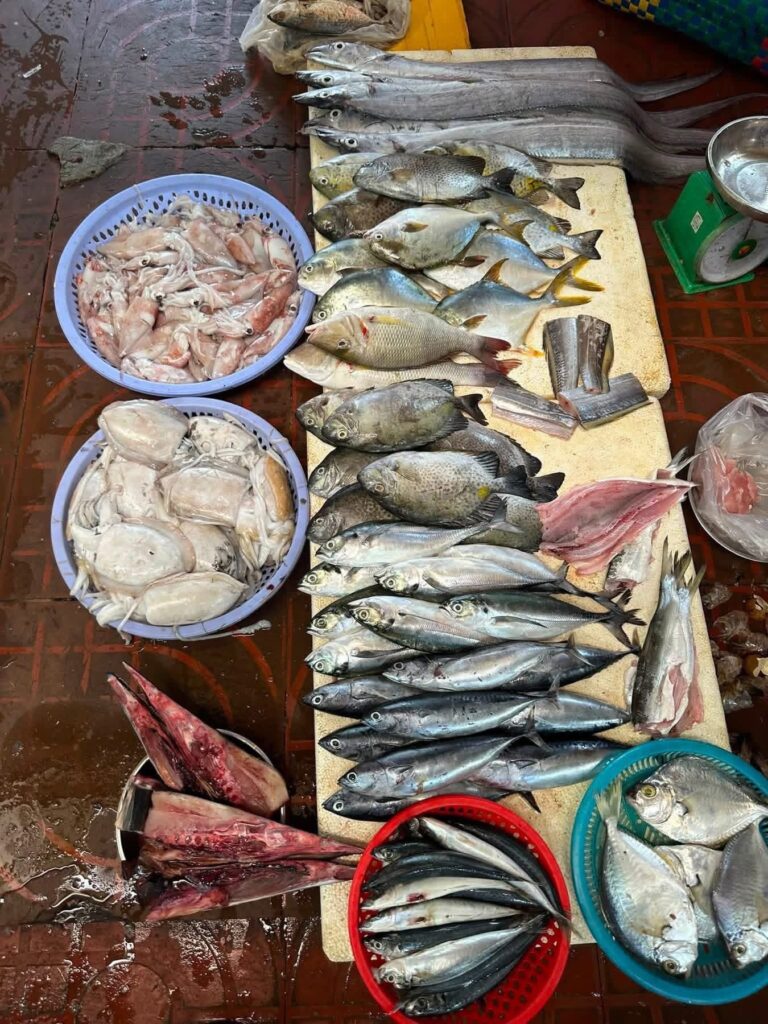
Fresh seafood in Cho Dam
1. Chợ Đầm – Best for a First Look at Local Market Life
Chợ Đầm is the market I would suggest first if you want one place that captures several sides of everyday Quy Nhon. The market sells fresh seafood, meat, vegetables, herbs, dried goods, household products, and other ingredients used in local kitchens. It becomes particularly lively in the morning, when food shopping is at its most active. Current listings place the market at 124 Phạm Hồng Thái, and its seafood section remains one of the features most often associated with the market.
Walking through Chợ Đầm also helps make local dishes easier to understand later. Fish, squid, herbs, spices, dried seafood, and vegetables that might appear unfamiliar on a restaurant menu make more sense when you first see them in their raw form. The experience can feel busy and slightly chaotic if this is your first Vietnamese wet market, but that is part of its everyday character.
Come in the morning if you want the fullest atmosphere. If crowded spaces feel overwhelming, arriving slightly after the busiest early-morning trading period can give you more room to look around.
Best for: First-time visitors, food lovers, photographers who enjoy everyday scenes, and travelers interested in local life.
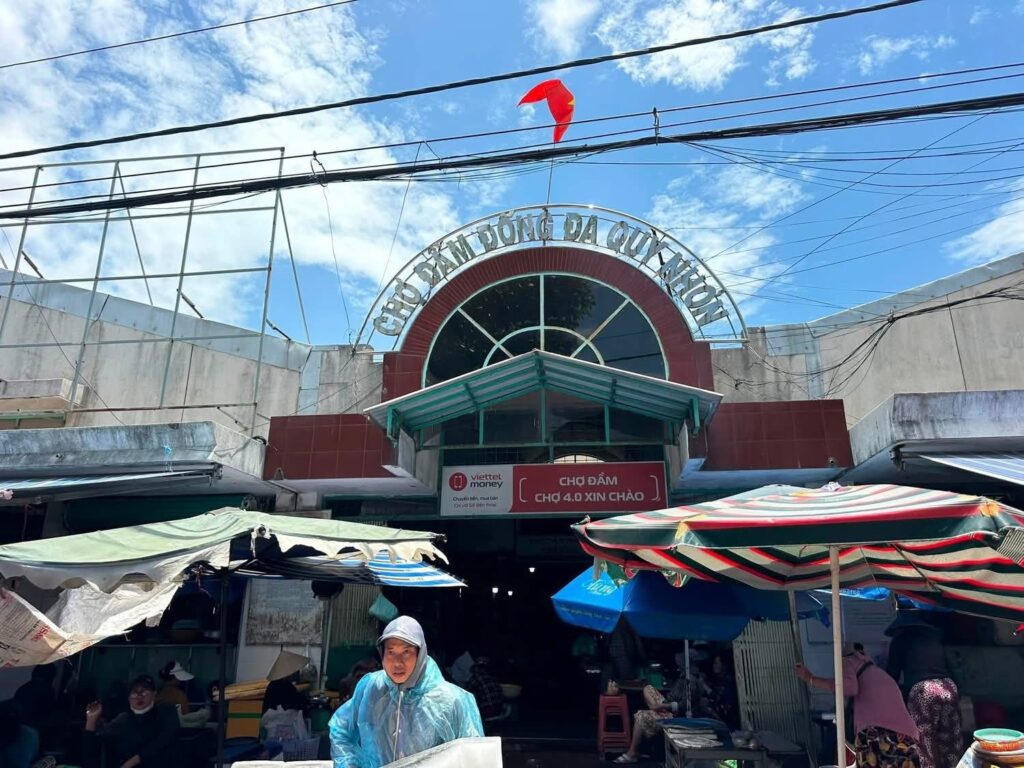
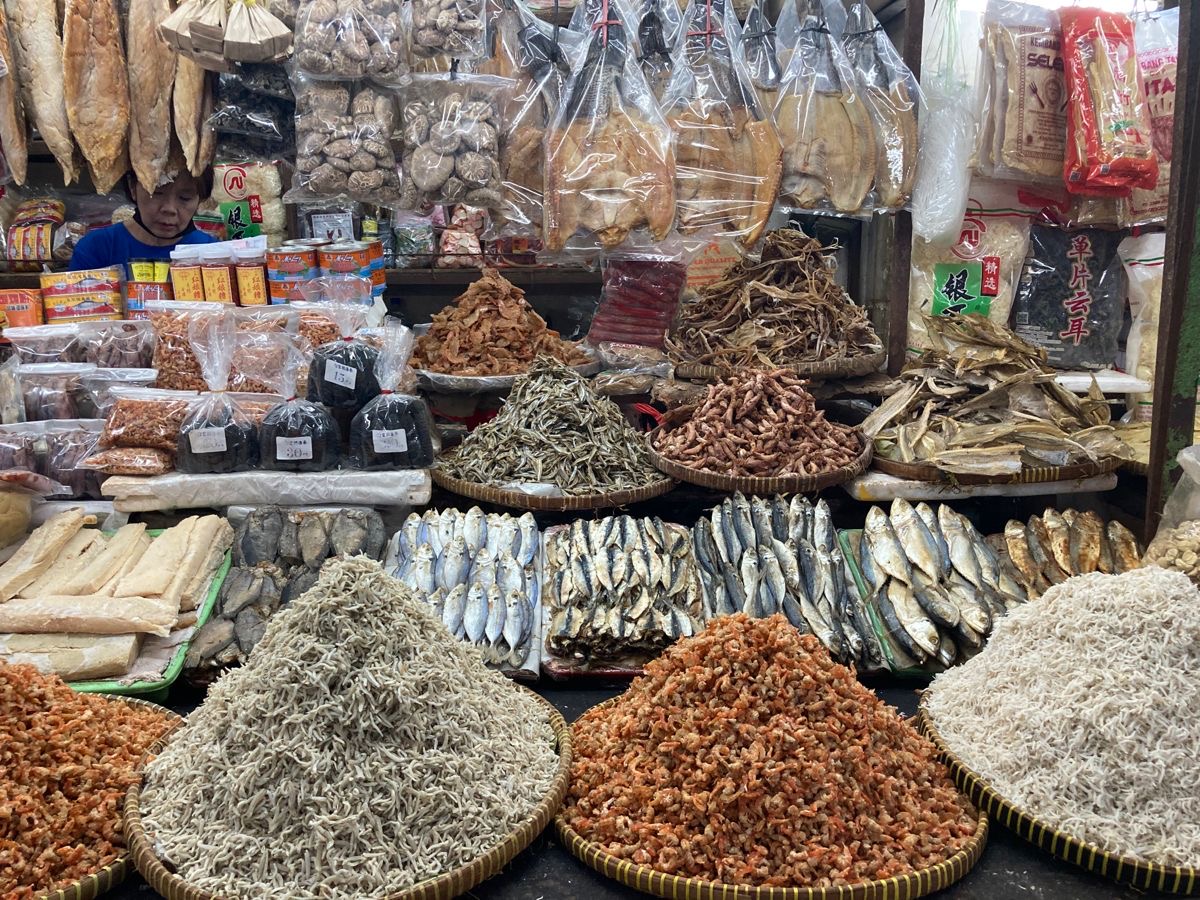
Cho Dam is one of Quy Nhon’s traditional markets, known for fresh seafood, produce, dried foods and everyday local shopping.
2. Chợ Khu 2 – Best for Fresh Seafood in the Afternoon
Chợ Khu 2 is particularly relevant if seafood is your main reason for visiting a market. It sits at 110 Nguyễn Huệ and is widely associated with fish, squid, shrimp, crab, shellfish, and other fresh catch. Although current listings show broader daily operating hours, local travel sources consistently describe the seafood trade as especially active later in the day.
This makes Chợ Khu 2 a useful alternative for travelers who do not want an early-morning market visit. A mid- or late-afternoon stop allows you to see seafood laid out in trays, tubs, and tanks while residents and restaurant buyers choose ingredients for evening meals.
Prices can change according to species, size, season, and the day’s supply. If you are buying seafood, confirm whether the quoted amount is per kilogram, per piece, or for the entire selection before agreeing.
For visitors staying in an apartment or villa with cooking facilities, the market can also be a practical place to shop for dinner. If you are simply observing, keep clear of narrow working areas and wet floors while sellers handle seafood.
Best for: Seafood lovers, apartment stays, food-focused travelers, and visitors looking for an afternoon market.
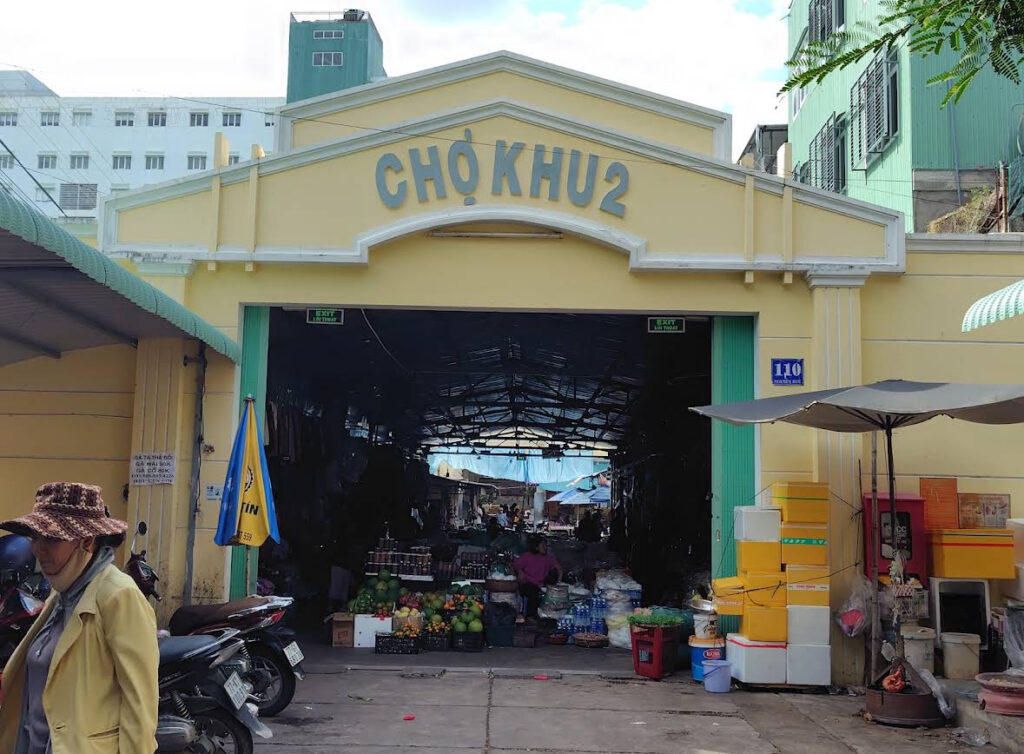
Khu 2 is a local market in Quy Nhon known for fresh seafood, produce and everyday food shopping.
3. Quy Nhon Night Market – Best for Easy Evening Shopping
Quy Nhon Night Market offers a very different experience from the wet markets. Located on Lê Duẩn near the Labor Culture House area, it focuses more on clothing, footwear, accessories, souvenirs, inexpensive goods, and casual food than on daily grocery shopping. It is therefore easier to combine with dinner or an evening walk around central Quy Nhon.
You can browse beach clothing, small accessories, inexpensive keepsakes, and snack stalls without waking up early or navigating a busy seafood section. The atmosphere becomes more animated after sunset, especially when families and younger local visitors come out in the evening.
This is the better choice if your idea of “market shopping” means browsing rather than watching people buy ingredients for dinner. It is also more straightforward for travelers searching for small gifts, although not everything sold here should automatically be considered locally made.
If authenticity of origin matters, ask whether a souvenir was produced locally rather than assuming a Quy Nhon market location guarantees Quy Nhon craftsmanship.
Best for: Couples, families, casual shopping, evening snacks, beachwear, and inexpensive souvenirs.
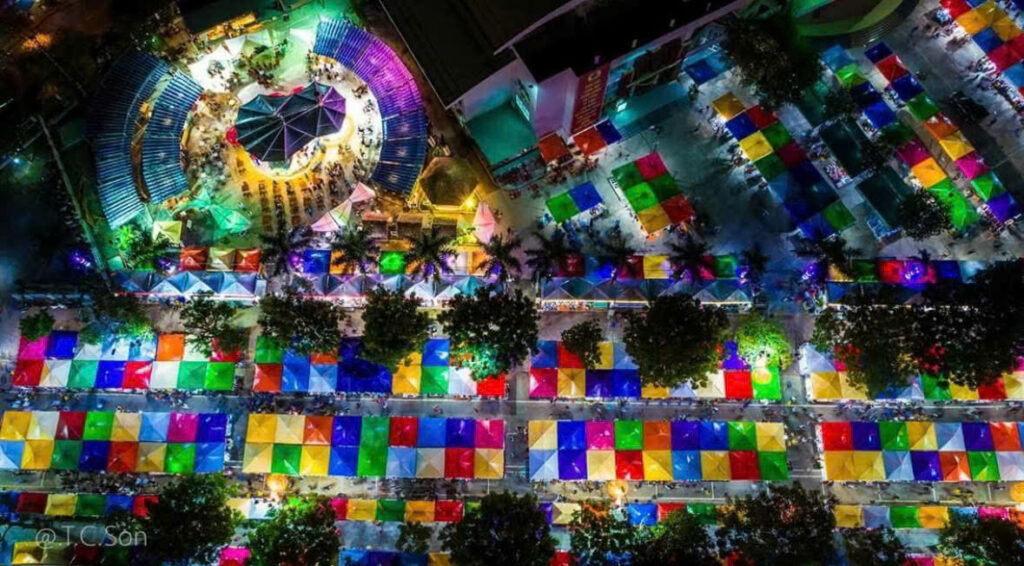
Quy Nhon Night Market – must visit place in Quy Nhon.
4. Chợ Khu 6 – Best for Dried Seafood and Everyday Groceries
Chợ Khu 6 feels more like a working neighborhood market than a tourist attraction. Vietnam’s tourism database currently lists it on Võ Lai Street and highlights the market particularly for dried seafood, alongside a wider range of everyday goods.
For international visitors, the dried-food section can be more practical than buying fresh seafood. Dried squid, fish, shrimp, and other products are easier to transport when properly sealed, although travelers should still check their destination country’s customs rules before packing animal products.
The market also gives you a useful look at ordinary food shopping outside Quy Nhon’s better-known visitor areas. Rather than arriving with a long sightseeing checklist, spend some time simply looking at what residents are buying and how products are displayed.
This is also a reasonable place to explore Bình Định-style food gifts, but choose professionally packaged products if you intend to take them on an international flight.
Best for: Dried seafood, local groceries, food gifts, and travelers interested in a less tourist-oriented market.
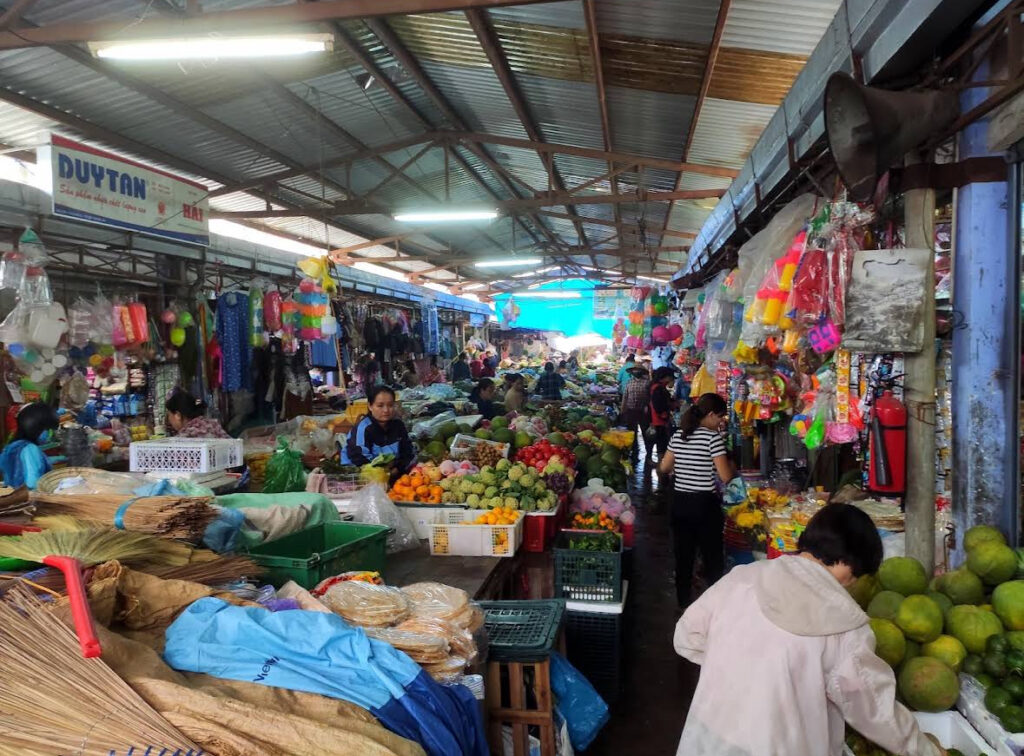
Cho Khu 6 is a neighborhood market in Quy Nhon where locals shop for fruit, vegetables, groceries and everyday goods.
5. Chợ Tháp Đôi – Best for Combining a Market with Cham Heritage
Chợ Tháp Đôi sits on Đặng Xuân Phong, close to Quy Nhon’s Twin Cham Towers area. Current local listings describe it as a neighborhood market selling fresh produce, meat, seafood, clothing, fabrics, and household goods, with activity generally strongest around the morning and later part of the day.
It is not a market I would cross the city solely to visit if you have very limited time. Its advantage is location: you can add a short market walk when you are already exploring the nearby Cham heritage area.
Compared with the night market, shopping here feels more functional. Most customers are buying normal household ingredients and daily necessities rather than browsing souvenirs.
That makes it useful for travelers who enjoy seeing ordinary neighborhood routines without needing a large or famous destination market. English may be limited, but simple purchases are usually manageable with prices displayed on a calculator or translation app.
Best for: Independent travelers, local-life observation, and combining a market stop with the Twin Towers area.
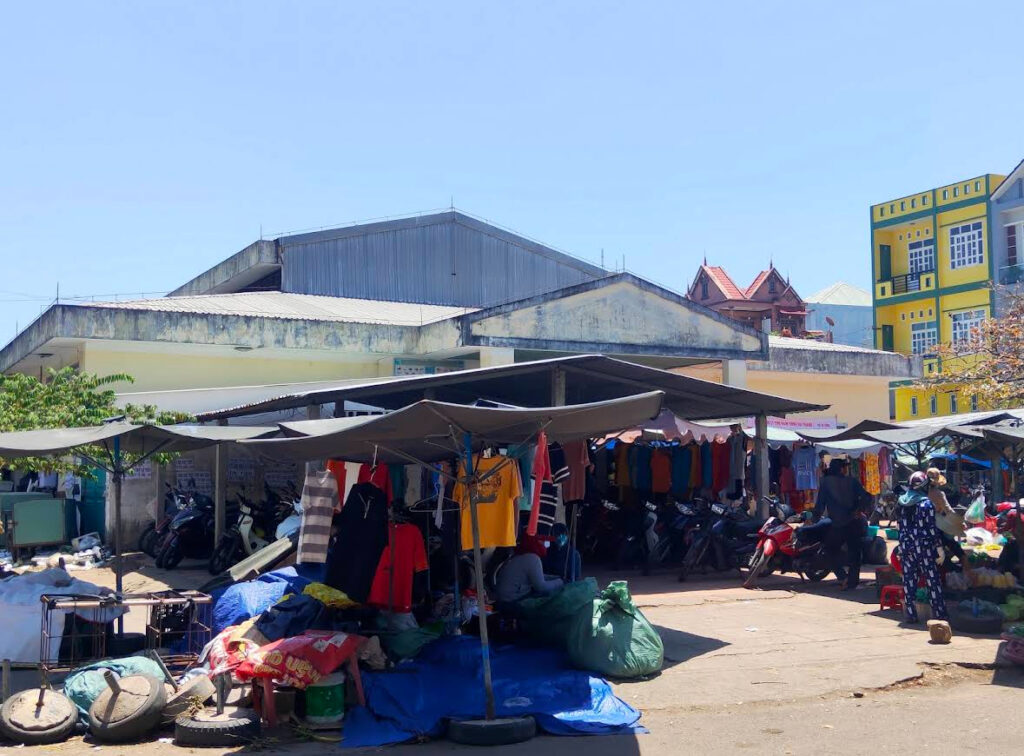
Cho Thap Doi is a neighborhood market in Quy Nhon where local residents shop for clothing, groceries and everyday goods.
What Should You Buy at Quy Nhon Markets?
What you buy should depend on the type of market rather than expecting every market to offer the same things.
At Chợ Đầm and Chợ Khu 2, seafood and fresh ingredients are the main attraction. Fresh fish, squid, shrimp, shellfish, herbs, fruit, vegetables, spices, and everyday cooking ingredients give the clearest picture of local food culture.
Chợ Khu 6 is more relevant if you want dried seafood or packaged products that are easier to take away. Quy Nhon Night Market shifts the focus toward clothing, beach items, accessories, small souvenirs, and snacks.
Travelers shopping for gifts can also look for regional specialties such as coconut rice paper, dried seafood, traditional sweets, or other packaged Bình Định products. For international flights, sealed commercial packaging is easier to manage, but packaging alone does not guarantee that a product can legally enter your destination country.
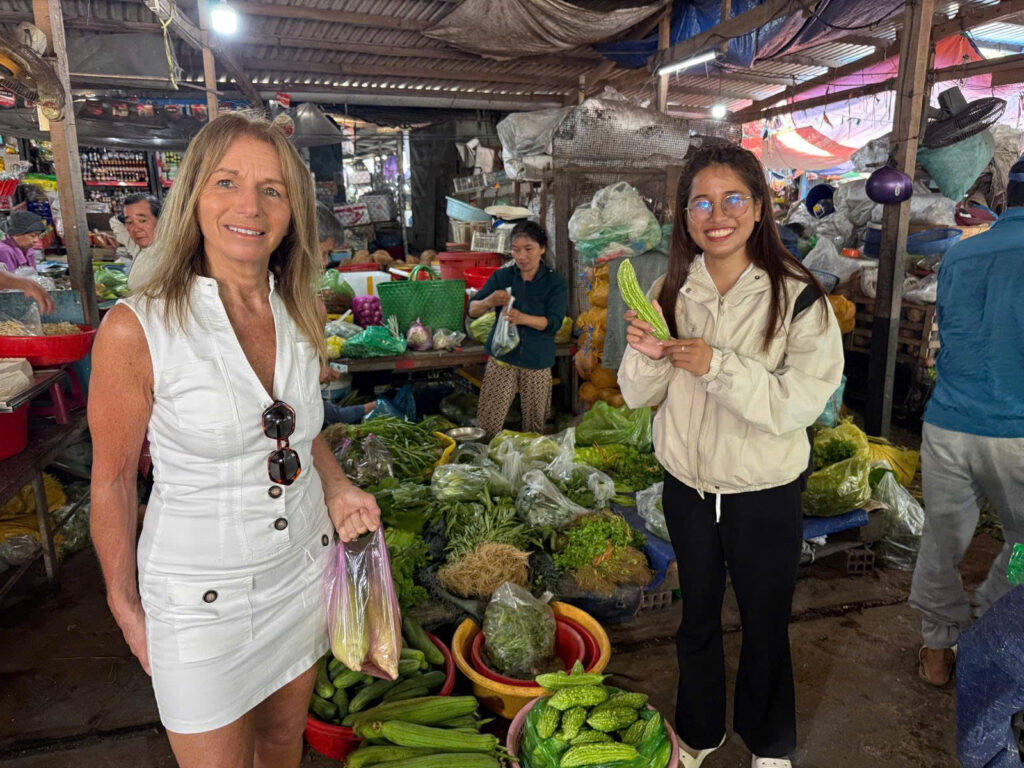
Dam Market – biggest local market in Quy Nhon. 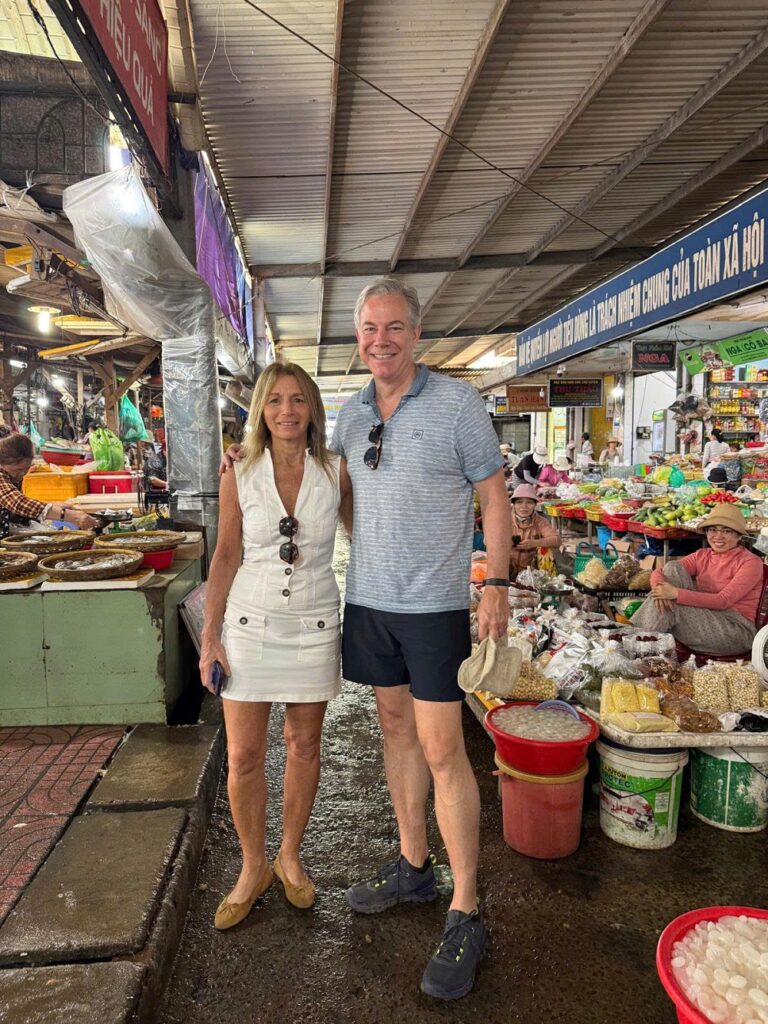
Dam Market 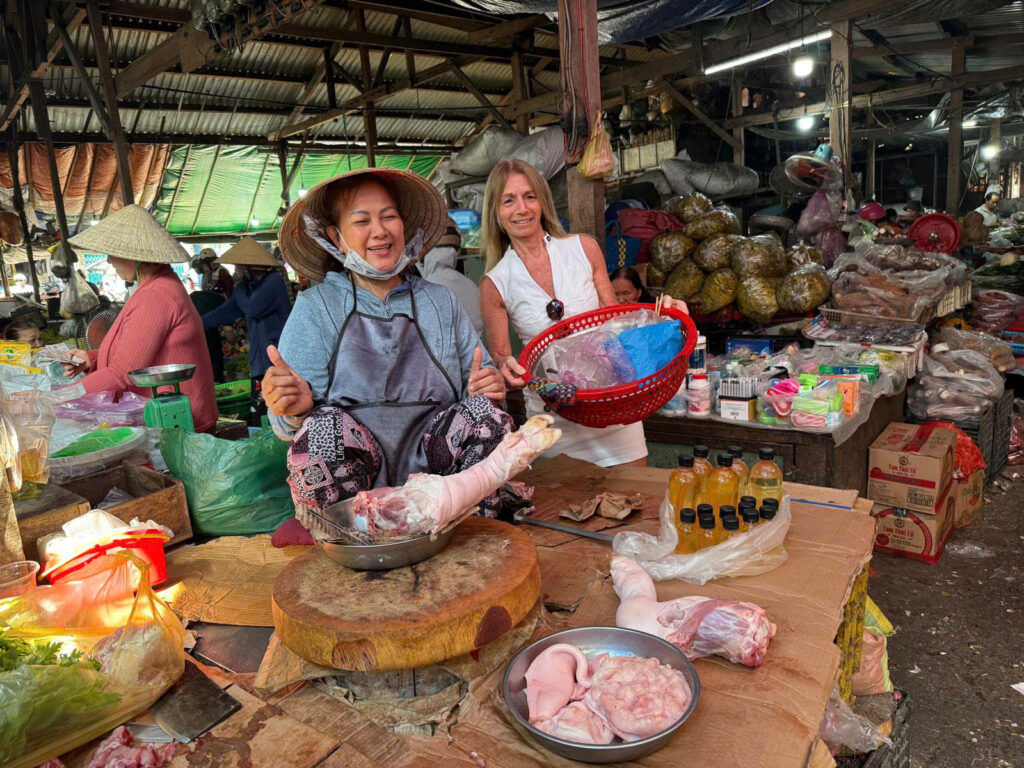
Discover the local market to see what the local has
Practical Tips for Visiting Markets in Quy Nhon
A few small habits make traditional Vietnamese markets much easier to enjoy:
- Carry Vietnamese dong, preferably including smaller notes, because many stalls do not accept international cards.
- For wet markets, wear shoes or sandals with secure, non-slip soles; floors around seafood stalls can be wet.
- Ask the price before buying, particularly when seafood is sold by weight.
- Bargaining is more natural with some clothing and souvenir items than with every plate of vegetables or simple food purchase.
- Ask before taking close-up photographs of individual vendors.
- Keep your phone and wallet secure in crowded aisles, as you would in any busy public place.
- Use a calculator or translation app when language becomes a barrier; numbers and quantities usually matter more than long conversations.
- Check import rules before buying dried seafood, meat products, fresh produce, or other animal and agricultural products to take overseas.
One important timing detail: “go early” is good advice for Chợ Đầm, but not for every market. Chợ Khu 2 is particularly associated with afternoon seafood trading, while the night market only becomes relevant after the daytime markets are winding down.
Recommended Local Experiences
If you want more context rather than walking through a market without knowing what you are looking at, several experiences from Thích Tours Quy Nhơn – Quy Nhơn Private Tours – Land Tour Cồn Chim – Land tour inbound Quy Nhơn – Hòn Khô – Flycam – SUP connect naturally with this topic.
QUY NHƠN HERITAGE & LOCAL LIFE TOUR
This is the strongest match for a market-focused article because Chợ Đầm is an actual stop in the current itinerary. The half-day program also includes Quy Hòa Village, the local museum, Twin Cham Towers, and a meal featuring regional food. At Chợ Đầm, the guide introduces the rhythms of local trading rather than treating the market simply as a shopping stop.
Best for: First-time visitors, couples, families, and travelers who feel unsure about exploring a traditional Vietnamese market independently.
If understanding the market matters more than simply photographing it, this is the most directly relevant tour to consider.
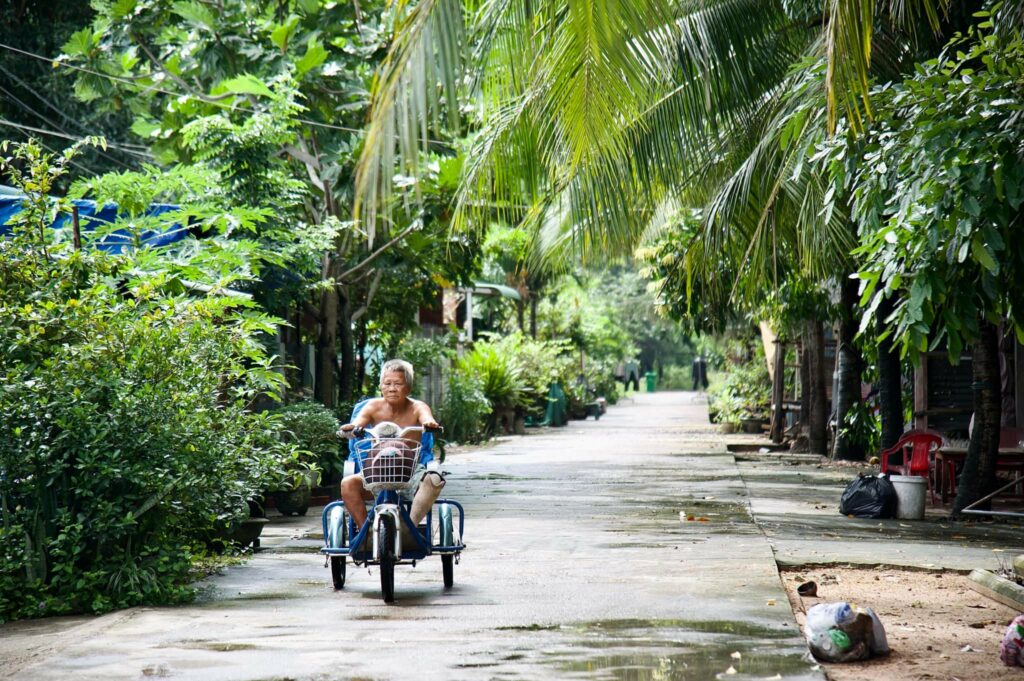
Leprosy Village 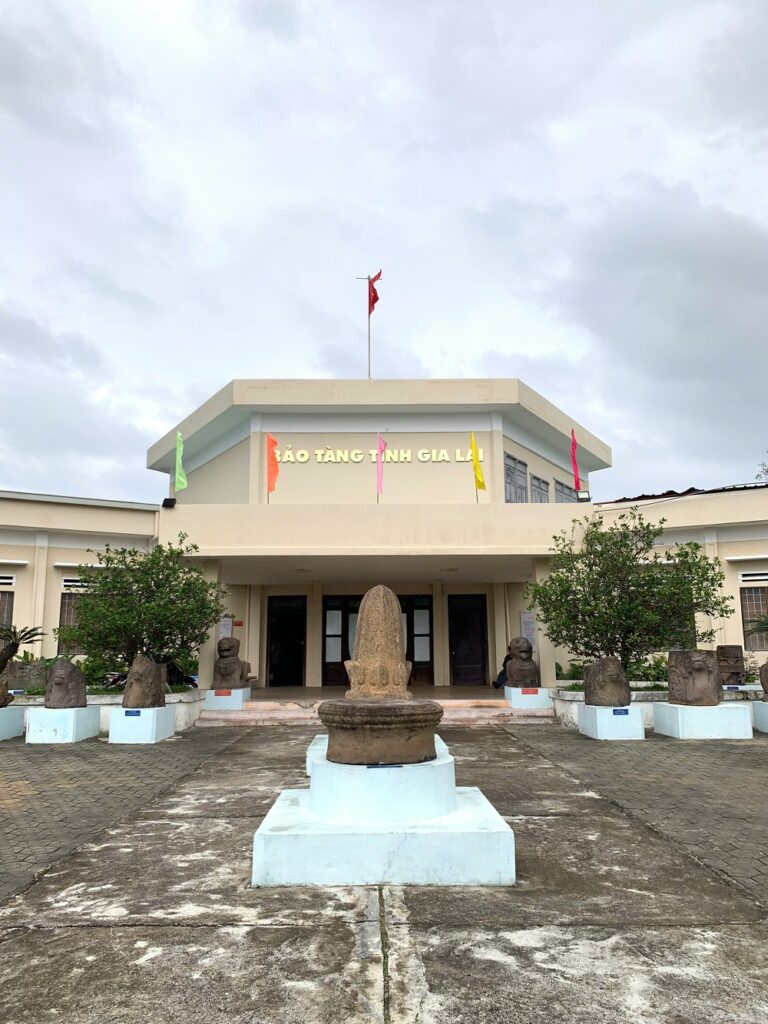
Gia Lai General Museum 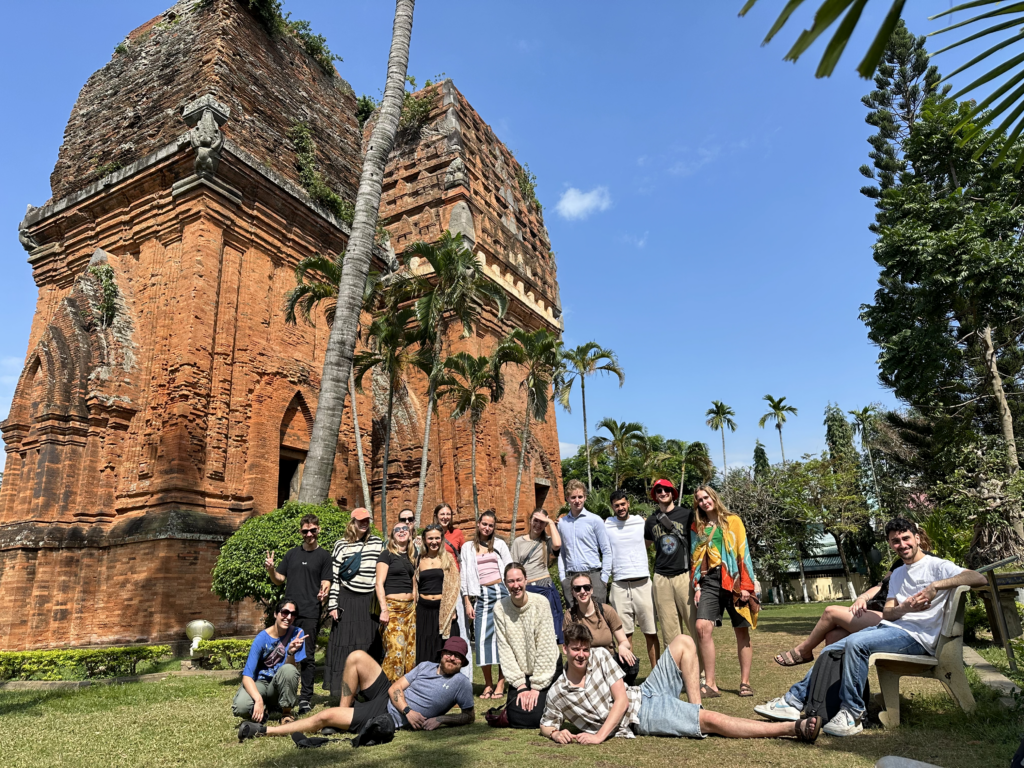
Twin Towers in Quy Nhon City Center – group photo
The Taste of Heritage: From Sacred Banh It Towers to Local Flavors
This experience does not center on a market, but it connects strongly with the food side of the topic. The current program combines Bánh Ít Cham Towers with Bình Định-style rice pancakes, fermented pork and beef dishes, fresh herbs, rice paper, and other regional flavors.
Best for: Food lovers who want to understand how ingredients seen in markets eventually appear in local dishes.
It works particularly well after a market visit because the connection between raw ingredients and finished food becomes much easier to recognize.

Banh It Champa towers 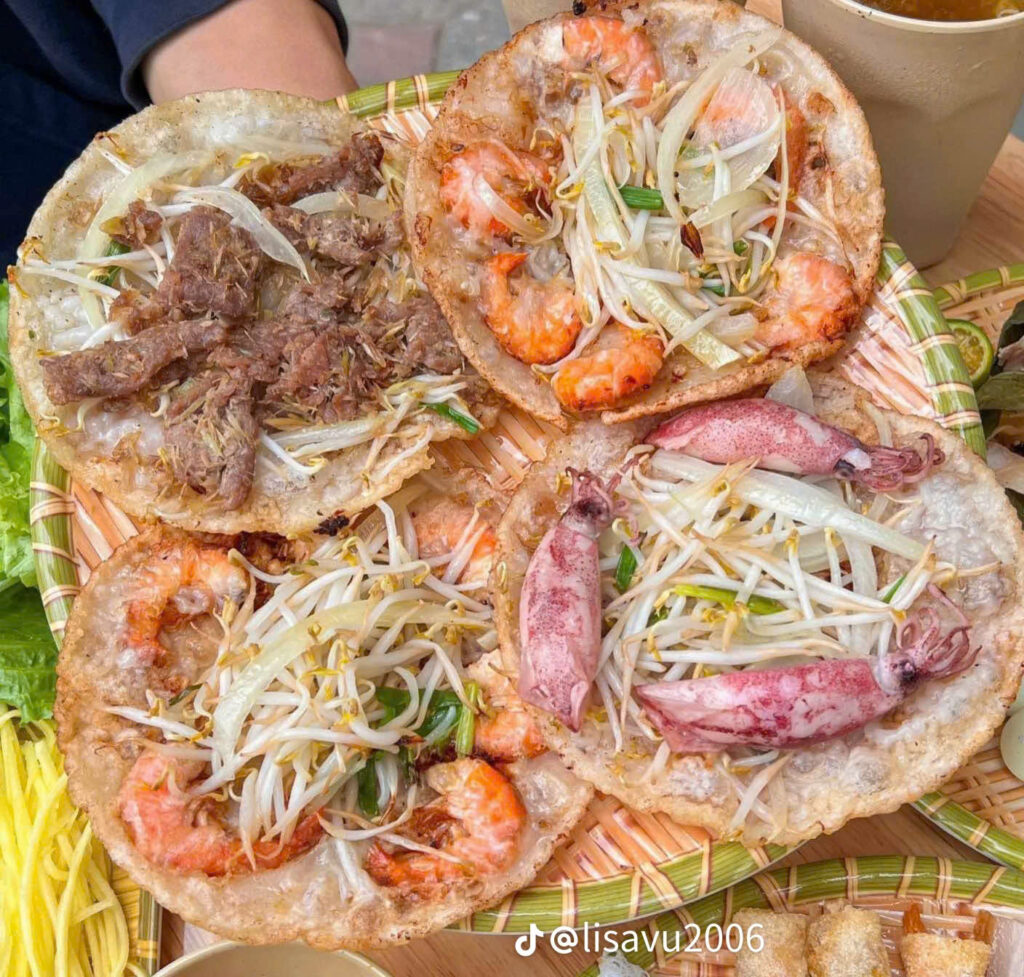
Banh Xeo – Rice pancake in Quy Nhon (Must try) 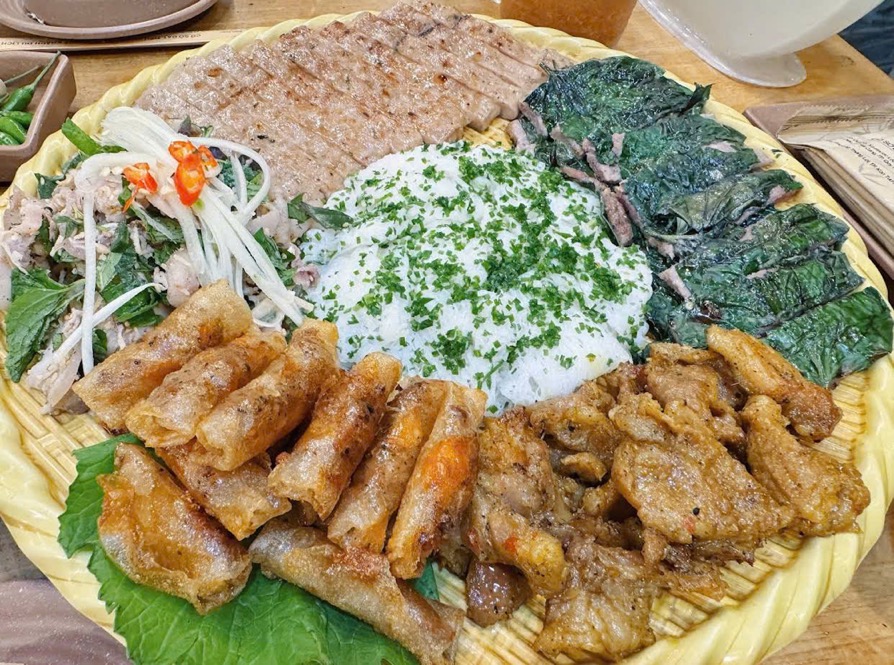
Nem Cho Huyen – set of beef and pork (loca specialty) in Quy Nhon.
Binh Dinh Culture & History Tour: Tây Sơn Dynasty, Champa Towers, and Martial Arts
For travelers interested in the broader cultural background of the region, this tour goes beyond shopping and food. The current itinerary includes Quang Trung Museum, a traditional martial arts performance, Dương Long Champa Towers, Thập Tháp Pagoda, and regional cuisine.
Best for: History lovers, families, and visitors spending several days in Quy Nhon.
It is less directly connected with markets than the Heritage & Local Life Tour, but it provides useful context for travelers who want to understand the historic Bình Định identity behind the area’s food and traditions.

Quang Trung King Statue 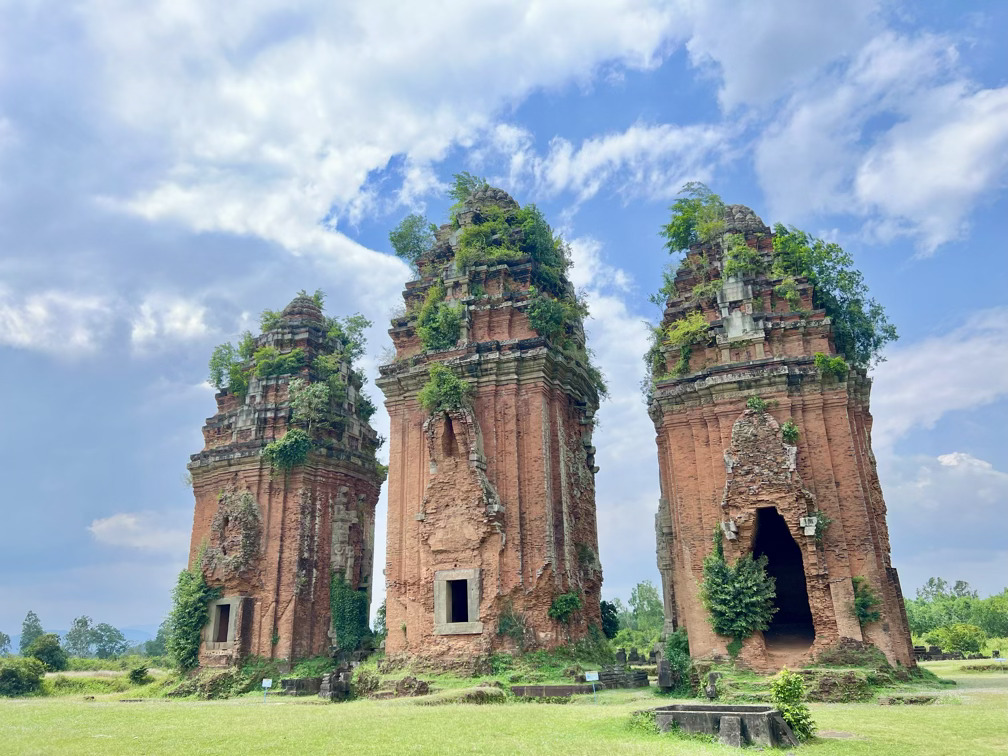
Duong Long Champa towers 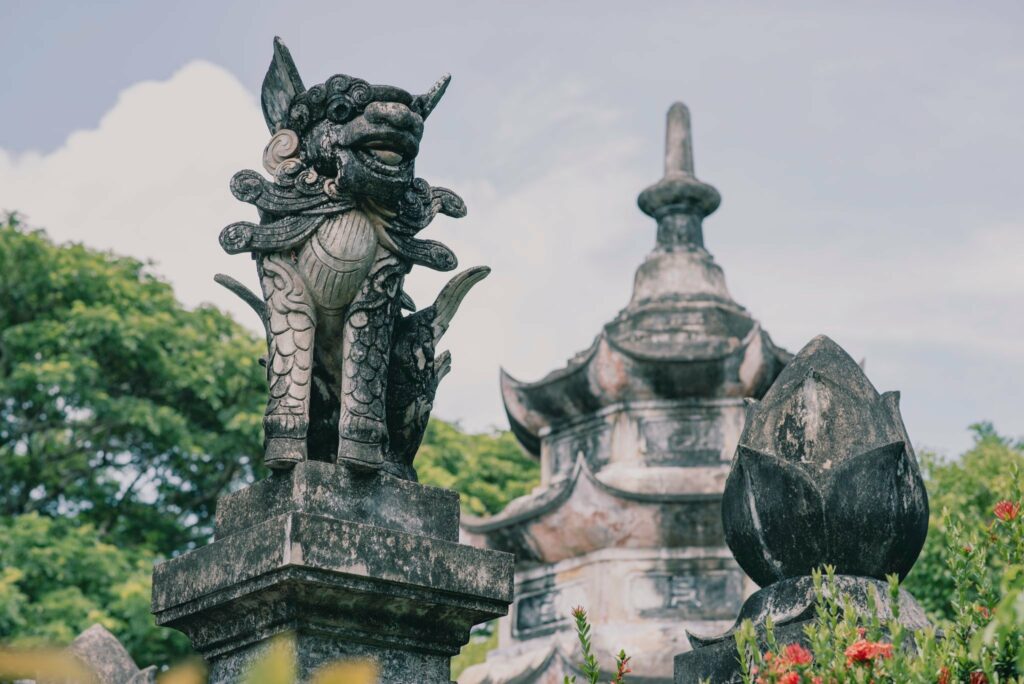
Thap Thap Pagoda
FAQ – Visiting Markets in Quy Nhon
1. Which is the best market in Quy Nhon for first-time visitors?
Chợ Đầm is the most practical starting point because it combines seafood, produce, dried foods, and everyday local trading in one place. Visit in the morning for the most active atmosphere.
2. Where should I go for fresh seafood in Quy Nhon?
Chợ Khu 2 is a strong option, especially in the afternoon, while Chợ Đầm also has a substantial seafood section. Seafood availability and prices naturally vary with the catch and season.
3. Is there a night market in Quy Nhon?
Yes. Quy Nhon Night Market is on Lê Duẩn and focuses on evening shopping, snacks, clothing, accessories, and souvenirs rather than traditional grocery shopping.
4. Do I need to bargain at Quy Nhon markets?
Not for every purchase. Bargaining may occur with clothing, accessories, and some souvenir items, but for everyday food it is better to ask the price clearly first rather than assuming everything should be negotiated.
5. Can I bring dried seafood from a Quy Nhon market back home?
Possibly, but import regulations differ by country. Choose sealed, labeled products and check official customs rules for your destination before buying seafood or other animal products.
Which Quy Nhon Market Should You Choose?
If you only have one morning, Chợ Đầm gives you the most complete introduction to traditional market life. If seafood is the priority and your morning is already full, visit Chợ Khu 2 later in the day. For relaxed shopping after dinner, Quy Nhon Night Market is the easiest option, while Chợ Khu 6 and Chợ Tháp Đôi suit travelers who enjoy smaller neighborhood markets.
The best markets in Quy Nhon are valuable not because they are polished attractions, but because they are still working parts of the city. Walk slowly, stay out of vendors’ working space, ask before photographing people closely, and buy something small if it genuinely interests you. A market visit can add context to almost every meal you eat afterward.
If you would prefer to explore Chợ Đầm with someone who can explain unfamiliar ingredients and everyday market customs, consider checking availability for the Quy Nhon Heritage & Local Life Tour or asking the local team which experience best fits your itinerary.