

If you are looking for an ancient citadel near Quy Nhon, Hoang De Citadel is one of Bình Định’s most fascinating historical discoveries. About 27 kilometers northwest of the city, the site carries the remains of two powerful periods separated by several centuries. It first belonged to the Champa capital of Vijaya, known in Vietnamese history as Do Ban. Later, the Tây Sơn movement rebuilt the old stronghold and transformed it into the capital of Emperor Thai Duc Nguyen Nhac.
Today, visitors will not find a perfectly preserved imperial city filled with intact palaces and defensive walls. What remains is quieter: gateways, foundations, stone sculptures, archaeological traces, later Nguyễn-period memorials, and nearby Cham architecture. That incomplete landscape is precisely what makes the site rewarding for travelers who enjoy discovering history rather than simply photographing famous monuments.
Note: Binh Dinh is the former provincial name. Since July 2025, the area has been part of Gia Lai Province following Vietnam’s administrative reorganization.
1. Before Hoang De Citadel, This Was the Champa Capital of Vijaya
Long before the Tây Sơn period, this landscape formed part of Vijaya, one of the most important political centers of the Champa Kingdom. The fortified capital developed around the end of the tenth century and remained closely associated with Cham rulers for several centuries. In Vietnamese historical sources, the citadel is commonly known as Do Ban.
Its position was strategic, with surrounding plains, rivers, mountains, and routes linking the interior with the coast. Champa rulers built religious and political monuments throughout the wider region, many of which still survive around modern Bình Định. Canh Tien Tower, standing close to the former citadel, is one of the most visible reminders of that earlier civilization.
Understanding this first layer changes the way visitors see Hoang De Citadel. The site was not created from an empty landscape by the Tây Sơn rulers; they inherited and reshaped a place that had already carried political importance for centuries.

Pathway leading to a historic pavilion in Hoang De Citadel (Source: Collected)
2. Nguyen Nhac Turned the Old Citadel into a Tây Sơn Capital
The second major chapter began during the Tây Sơn uprising in the eighteenth century. In 1776, Nguyen Nhac began rebuilding the former Do Ban Citadel as an important Tây Sơn stronghold. Two years later, after proclaiming himself Emperor Thai Duc, he officially named the complex Hoang De Citadel.
From the late 1770s into the early 1790s, the citadel became both a major Tây Sơn military base and the capital of Nguyen Nhac’s government. The rebuilt complex incorporated three principal defensive zones: the Outer Citadel, Imperial Citadel, and Forbidden Citadel.
For visitors searching for an ancient citadel near Quy Nhon, this layered history is what makes Hoang De particularly unusual. You are standing on a site where an earlier Cham capital was later transformed into a Vietnamese imperial and military center. Few attractions around Quy Nhon reveal two major historical periods so directly within the same landscape.

Ancient tomb complex in Hoang De Citadel (Source: Collected)
3. The Citadel Was Once Much Larger Than What You See Today
It can be difficult to imagine the original scale when walking through the surviving remains. Historical descriptions indicate that the Outer Citadel extended for several kilometers, enclosing a much larger defensive area than the visible central ruins suggest. Inside stood the Imperial Citadel, with the smaller Forbidden Citadel forming the most restricted core.
Centuries of warfare, destruction, rebuilding, agriculture, and settlement have dramatically changed the original appearance. After the Tây Sơn period ended, much of the complex was destroyed or altered under the Nguyễn Dynasty. Archaeological excavations have since uncovered architectural foundations, semicircular ponds, and other traces belonging to earlier phases.
This means Hoang De should be explored with imagination rather than expectations of a complete palace complex. Look at walls, earthworks, stone elements, and foundations as fragments of a larger city that once extended far beyond the obvious monuments.

Decorative wall at a historic site in Hoang De Citadel (Source: Collected)
4. Look for the Stone Elephants, Lions and Archaeological Details
Some of the most memorable details at Hoang De Citadel are smaller than the site itself. Surviving stone sculptures include elephants and other carved elements connected with the older Cham cultural landscape. Square wells, fragments of fortifications, paved sections, and archaeological foundations provide additional evidence of earlier occupation.
The site also contains memorial structures associated with Vo Tanh and Ngo Tung Chau, two Nguyễn Dynasty figures connected with battles fought here. Their presence adds another historical layer after both Champa and Tây Sơn rule. Visitors therefore encounter traces from different periods rather than one neatly preserved moment in time.
Do not rush directly from one obvious structure to another. The value of this ancient citadel near Quy Nhon comes from noticing how different historical layers overlap throughout the same ground. A knowledgeable guide can be particularly useful because many archaeological details are easy to overlook without explanation.

Stone elephant statue at a historic site in Hoang De Citadel (Source: Collected)
5. Canh Tien Tower Makes the Heritage Area Even More Interesting
Canh Tien Tower stands only a short distance from Hoang De Citadel and should be included in the same visit. The tall Cham sanctuary rises prominently above the surrounding landscape and provides a much more visible connection with the Vijaya period. Its brick architecture contrasts strongly with the fragmentary remains of the former citadel below.
For first-time visitors, seeing the tower helps make Champa history feel more tangible. Instead of imagining an ancient capital only through ruined walls, you can still see a substantial religious monument from the civilization that once ruled this region.
Combining Canh Tien with Hoang De also makes the journey from Quy Nhon more worthwhile. The two sites explain different dimensions of the same historical landscape: one religious and architectural, the other political, defensive, and later imperial.
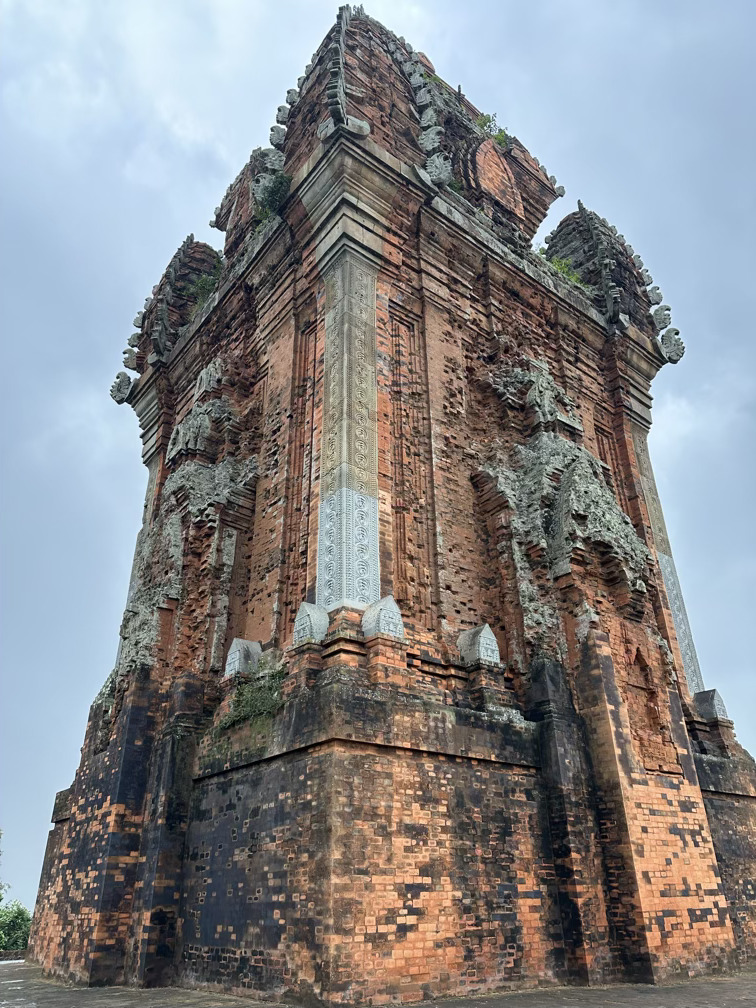
Canh Tien tower
6. Hoang De Is Best for Travelers Who Enjoy History Beyond Famous Landmarks
Hoang De Citadel is not a destination designed around entertainment, shopping, or polished tourist infrastructure. It rewards visitors who enjoy archaeology, military history, Champa culture, the Tây Sơn period, and quieter heritage landscapes. Travelers expecting something comparable to Hue Imperial City may initially find the surviving structures modest.
That comparison, however, misses what makes the site distinctive. Hoang De allows you to see how one strategic location was repeatedly reused by different powers across centuries. Its value lies in continuity, destruction, adaptation, and the traces left behind.
For history lovers, this makes it one of the most rewarding historical places outside central Quy Nhon. For travelers with only one day and little interest in cultural heritage, beaches or closer attractions may remain a higher priority.

Traditional pavilion surrounded by gardens in Hoang De Citadel (Source: Collected)
What to See at Hoang De Citadel
The Citadel Remains
Best for: archaeology, military history, Tây Sơn history, and travelers interested in ancient capitals.
Walk slowly around the surviving walls, foundations, gateways, and archaeological areas rather than expecting one dominant monument. The site becomes more interesting when you understand the original three-layer structure of the ancient citadel near Quy Nhon.
The contrast between surviving remains and the original scale helps reveal how much this landscape has changed.
Stone Elephant and Lion Sculptures
Best for: Champa heritage, photography, sculpture, and archaeological detail.
Stone animal sculptures provide one of the strongest visual connections with the earlier cultural history of the site. They also remind visitors that the Tây Sơn citadel was built over an existing Cham political center.
Take time to observe these details rather than using them only as photo props.
Vo Tanh and Ngo Tung Chau Memorial Area
Best for: travelers interested in the Nguyễn–Tây Sơn conflict.
Memorial structures associated with these Nguyễn figures were later established within the former citadel area. Their presence adds another chapter to a place already shaped by Champa and Tây Sơn history.
This is a useful reminder that heritage sites often preserve the memories of opposing sides within the same landscape.
Canh Tien Tower
Best for: Cham architecture, photography, history, and first-time visitors.
Canh Tien Tower stands roughly half a kilometer from Hoang De Citadel, making it an easy companion stop. Its surviving brick structure provides a visually powerful connection with the former Champa capital.
If you visit only the citadel without Canh Tien, you miss one of the clearest surviving architectural links to Vijaya.
Thap Thap Pagoda
Best for: Buddhist heritage, architecture, and a quieter cultural stop.
Thap Thap Pagoda lies around 1.7 kilometers from Hoang De Citadel and belongs to the wider heritage landscape of the area. It can be combined easily when building a half-day or full-day cultural route.
Dress modestly and remember that this remains a religious site rather than only a tourist attraction.
Practical Visitor Guide
How Far Is Hoang De Citadel from Quy Nhon?
Hoang De Citadel is approximately 27 kilometers northwest of central Quy Nhon. Travel time depends on traffic, your starting location, and transportation method.
Current Entrance Fee
The official tourism listing currently describes entry to Hoang De Citadel as free.
How Long Should You Spend There?
Around one to two hours is reasonable for travelers interested in history and archaeology. Visitors combining Hoang De with Canh Tien Tower, Thap Thap Pagoda, craft villages, or other nearby heritage sites should allow at least half a day. A full cultural day becomes worthwhile when traveling farther toward other Tây Sơn or Cham attractions.
Best Time to Visit
Morning is generally the most comfortable option, especially during Quy Nhon’s hotter months. The archaeological areas have limited shade, and midday heat can make slow exploration less enjoyable. Late afternoon can also provide softer light for photography.
A Good Half-Day Heritage Route from Quy Nhon
A simple route could begin with Hoang De Citadel, allowing enough time to understand the former Champa and Tây Sơn capitals.
Continue to Canh Tien Tower, only a short distance away, to see one of the surviving religious monuments associated with the wider Vijaya landscape.
Then visit Thap Thap Pagoda for a quieter Buddhist heritage experience. Travelers with additional time can continue toward traditional craft or food villages around An Nhon.
This approach creates a much richer journey than driving from Quy Nhon only to photograph the citadel and immediately returning.
Other Places to Combine with Hoang De Citadel
Canh Tien Tower
Best for: Champa architecture and photography.
This is the easiest addition because it lies very close to the citadel. The combination helps visitors understand the Champa layer of the site more clearly.
Thap Thap Pagoda
Best for: Buddhist culture and slower heritage travel.
Located nearby, the pagoda adds another historical and spiritual dimension to the route.
Nhon Hau Wood-Turning Village
Best for: traditional crafts and local community experiences.
The wider Nhon Hau area is associated with traditional wood-turning craftsmanship. Adding a village experience helps balance archaeological sightseeing with living local culture.
An Thai Traditional Food Village
Best for: local food traditions and travelers interested in regional products.
An Thai is associated with traditional noodle and food production, including the well-known Song Than noodles of Bình Định.
Combining food and heritage creates a more varied day than visiting several monuments consecutively.
Banh It Towers
Best for: visitors wanting more Cham architecture.
Banh It lies roughly ten kilometers from Hoang De according to the local tourism destination network. Its elevated setting offers a very different architectural experience from Canh Tien.
Recommended Thich Tours Experiences
Discover 1 Day Champa Tower Tour in Binh Dinh
This is the strongest current Thich Tours product for travelers who become interested in the Champa history behind Hoang De Citadel. The itinerary visits Twin Towers, Banh It Towers, and Duong Long Towers while following the historical landscape of the former Champa kingdom.
Best for: architecture lovers, history enthusiasts, photographers, and visitors wanting to understand Champa beyond one monument.
The current itinerary does not list Hoang De Citadel as a stop. Travelers specifically wanting to include the citadel can ask the local team about a customized cultural route.
>> Discover Half-day Private Tour: Discover 1 day Champa Tower tour in Binh Dinh
Binh Dinh Culture & History Tour: Tây Sơn Dynasty, Champa Towers, and Martial Arts
This full-day experience is particularly useful for understanding the second historical layer behind Hoang De Citadel. It combines Quang Trung Museum, traditional Tây Sơn martial arts, Duong Long Towers, Thap Thap Pagoda, and local cuisine.
Best for: first-time visitors who want both Champa and Tây Sơn history within one organized day.
The tour helps explain the Tây Sơn movement and Emperor Quang Trung before travelers explore related historical places independently.
>> Discover Half-day Private Tour: Binh Dinh Culture & History Tour: Tây Sơn Dynasty, Champa Towers, and Martial Arts
Binh Dinh Cultural Bicycle Tour – Discover Traditional Craft Villages
Travelers who prefer living culture can combine historical sightseeing with Bình Định’s rural communities and traditional crafts. The current experience includes cycling through countryside villages, rice-paper making, local rice wine traditions, and family interactions.
Best for: active travelers, couples, photographers, and visitors interested in everyday local life.
It works particularly well as a complement to archaeological sites rather than another monument-heavy day.
>> Discover Half-day Private Tour: Binh Dinh Cultural Bicycle Tour – Discover Traditional Craft Villages
Is Hoang De Citadel Worth Visiting?
Yes, if history is an important part of your Quy Nhon trip. This is not the most visually complete heritage site in Central Vietnam, but that should not be mistaken for a lack of significance.
The site allows visitors to trace the transition from Champa’s Vijaya capital to the Tây Sơn capital established by Nguyen Nhac. Nearby Canh Tien Tower makes that earlier Champa history much easier to visualize.
If you are searching for an ancient citadel near Quy Nhon, come expecting archaeological fragments, layered history, and a quiet landscape rather than a perfectly restored palace complex. That expectation will make the experience far more rewarding.