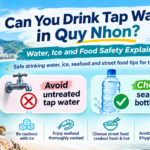
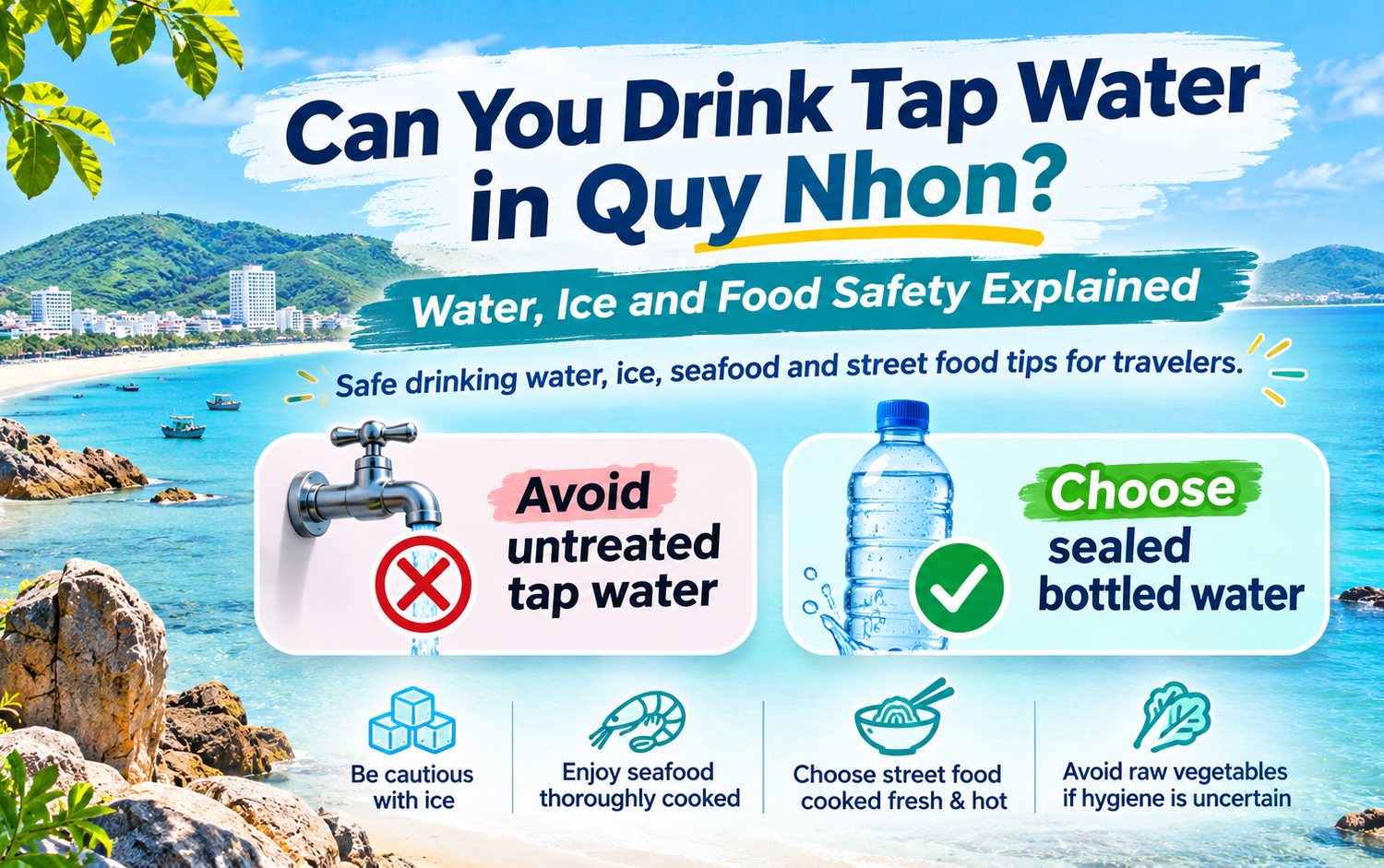
Wondering can you drink tap water in Quy Nhon? The short answer is no. Although tap water is commonly used for washing, cleaning and everyday household activities, international travelers should avoid drinking it directly. Sealed bottled water or properly treated drinking water is a safer choice. But what about the ice in your Vietnamese iced coffee, fresh seafood by the beach or street food served at local markets?
Quy Nhon is known for its seafood, fish cake noodle soup and traditional dishes, and exploring these flavors is part of the travel experience. With a few sensible precautions, you can enjoy the local food scene while reducing the risk of stomach problems.
Is Tap Water Safe to Drink in Quy Nhon?
No. Drinking untreated tap water in Quy Nhon is not recommended. According to the US Centers for Disease Control and Prevention (CDC), tap water in Vietnam should not be considered safe for travelers to drink. Even clear-looking water can contain microorganisms that cause digestive illness.
This doesn’t mean the city’s water supply is unsuitable for everyday household use. The important distinction is between water supplied for domestic activities and water that has been verified as safe to drink directly. For international visitors, the easiest approach is to use bottled or adequately treated water throughout the trip.
Quick water and food safety guide:
| Food or drink | Recommendation |
| Tap water | Do not drink untreated |
| Sealed bottled water | Generally a safer option |
| Properly boiled water | Suitable after cooling, provided there is no chemical contamination |
| Ice cubes | Avoid unless made and handled with safe drinking water |
| Hot tea and coffee | Generally safer when freshly prepared with boiling water |
| Fresh seafood | Choose thoroughly cooked dishes |
| Street food | Prefer food cooked fresh and served hot |
| Raw vegetables | Avoid if washing water and hygiene are uncertain |
What Water Should You Drink in Quy Nhon?
Bottled Water – The Easiest Option
Factory-sealed bottled water is generally the most convenient choice for travelers. You can find bottled drinking water at supermarkets, convenience stores, hotels and many small shops around Quy Nhon. Before drinking, check that the bottle is properly sealed and hasn’t been opened or refilled. If you’re heading to Ky Co Beach, Eo Gio or attractions outside the city, bring enough water for the journey rather than assuming drinking water will always be available along the way.
Boiled or Filtered Water
Boiling is an effective way to kill disease-causing bacteria, viruses and parasites. The CDC recommends bringing clear water to a full rolling boil for at least one minute before allowing it to cool. However, boiling does not remove harmful chemicals, and not every household water filter makes untreated water safe to drink.
Some hotels and accommodations provide purified drinking water through refill stations or filtration systems. If you’re unsure how the water is treated or maintained, ask the staff or choose sealed bottled water.
Practical tip: Carry a reusable water bottle and refill it only from a verified drinking-water source.
- 25 Essential Travel Tips for First-Time Visitors to Quy Nhon
- Quy Nhon Travel Tips: Common Mistakes to Avoid
- Where to Exchange Money in Quy Nhon: Banks, ATMs & Tips for Foreign Travelers
Is Ice Safe in Quy Nhon?
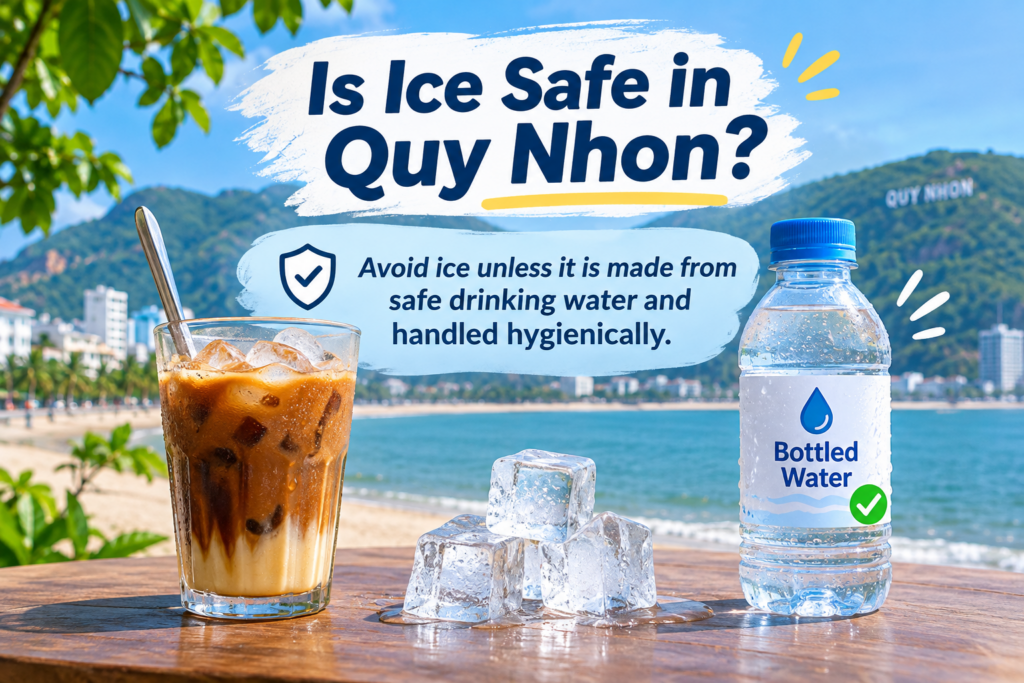
Ice is one of the most common concerns among international travelers visiting Vietnam. On a warm afternoon in Quy Nhon, a glass of cà phê sữa đá (Vietnamese iced coffee with condensed milk) can be particularly tempting. But the safety of the drink depends partly on the water used to make the ice.
Some food businesses use commercially produced drinking ice, while others may have different preparation and storage practices. You cannot reliably determine whether ice is safe just by looking at its shape or clarity. The safest approach is to avoid ice unless you have confidence that it was made from safe drinking water and handled hygienically.
If you’re unsure, order your drink without ice.
Useful Vietnamese phrases:
- Không đá – No ice
- Cho tôi nước đóng chai – Please give me bottled water
- Nước này uống được không? – Is this water safe to drink?
These simple phrases can be helpful at cafés, restaurants and small local eateries.
Can You Eat Street Food Safely in Quy Nhon?

Street food is an important part of Quy Nhon’s food culture, from early-morning noodle shops to small eateries serving traditional snacks. The main concern is not whether food comes from a street stall or a restaurant, but how it is prepared, cooked, handled and stored.
A busy food stall preparing dishes fresh in front of customers may be a more reassuring choice than a place where cooked ingredients have been sitting uncovered for hours. However, popularity alone does not guarantee food safety.
Choose Freshly Cooked, Hot Food
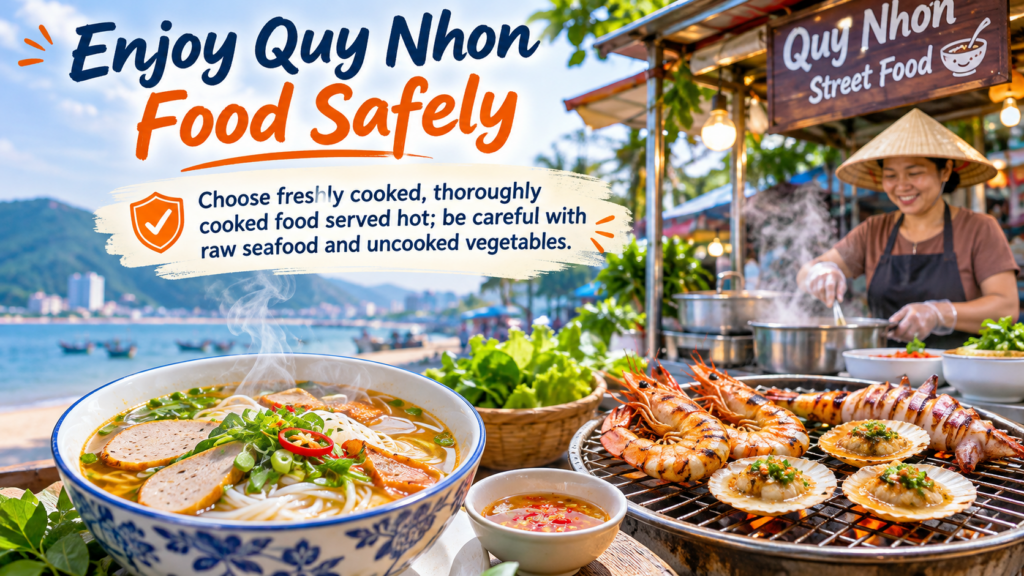
Look for food prepared to order and served steaming hot. For example, bún chả cá, Quy Nhon’s popular fish cake noodle soup, can be a practical choice when the broth is boiling hot and the ingredients are handled hygienically. Grilled seafood and freshly cooked rice dishes are also worth considering, provided the ingredients are thoroughly cooked.
Be Careful with Raw Vegetables and Sauces
Many Vietnamese dishes come with fresh herbs, lettuce, bean sprouts and dipping sauces. These additions bring flavor and texture, but raw vegetables may have been washed with water of uncertain quality.
If you have a sensitive stomach or are concerned about foodborne illness, skip uncooked garnishes unless you’re confident they have been washed safely. Also pay attention to sauces and condiments left uncovered or sitting in the heat for long periods.
Don’t Assume Every Busy Restaurant Is Safe
A steady flow of customers can suggest that food is being prepared frequently, but it isn’t proof of proper hygiene. Observe whether staff handle raw and cooked ingredients separately, keep food protected and maintain clean preparation areas. A few minutes of observation can help you make a more informed choice.
Eating Seafood in Quy Nhon: What Should You Know?


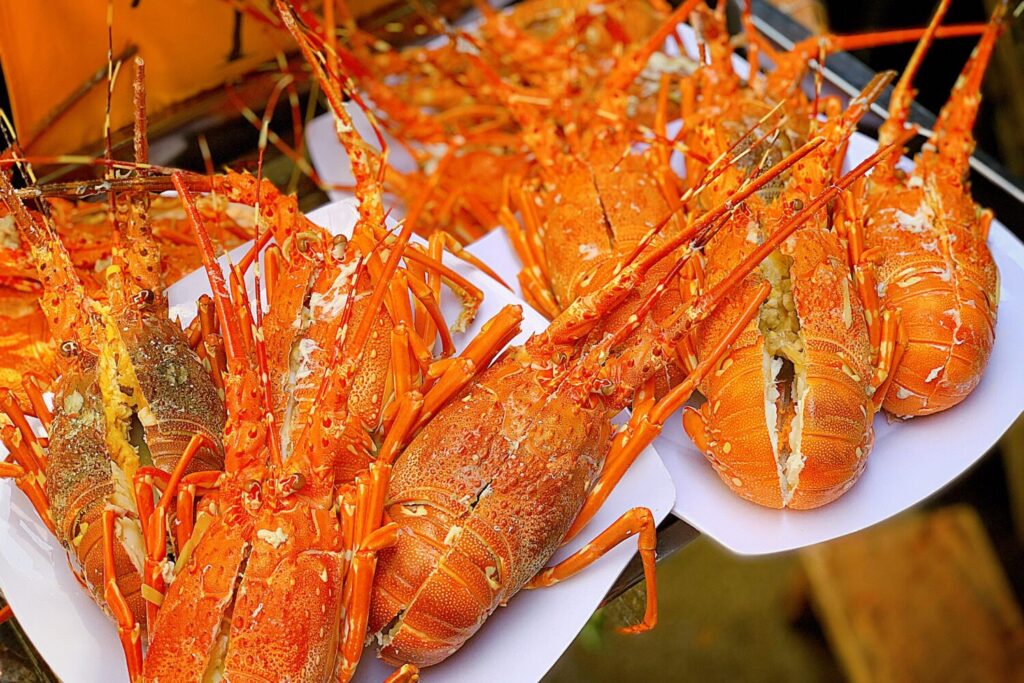
Quy Nhon’s coastal location makes fresh seafood one of the highlights of visiting the city. Restaurants serve a variety of fish, squid, shrimp, clams and other regional seafood dishes, often prepared with simple ingredients that allow the natural flavors to stand out.
However, seafood requires particular care because improper storage or undercooking can cause foodborne illness.
When choosing a seafood restaurant:
- Prefer seafood that is thoroughly cooked and served hot.
- Avoid raw oysters, undercooked shellfish and raw seafood dishes.
- Look for seafood stored properly on ice or under suitable refrigeration.
- Avoid prepared seafood left sitting at room temperature.
- Tell restaurant staff about shellfish or other food allergies before ordering.
Local food tip: Grilled squid, steamed shrimp and freshly cooked fish dishes can be enjoyable ways to experience Quy Nhon’s seafood cuisine without choosing raw preparations.
Can You Brush Your Teeth with Tap Water in Quy Nhon?
Travelers sometimes worry about brushing their teeth or accidentally swallowing water while showering. For the lowest-risk approach, use bottled or properly treated water for brushing your teeth, especially if you have a weakened immune system or are traveling with young children.
Tap water can generally be used for ordinary washing and showering, but avoid swallowing it. If you’re staying in a hotel, you can also ask whether drinking water is provided specifically for bathroom use. A small accidental splash is not the same as regularly drinking untreated tap water, so there’s no need to panic if it happens. However, minimizing exposure is sensible.
What If You Get an Upset Stomach in Quy Nhon?
Even careful travelers can occasionally experience digestive problems while visiting a new destination. Travelers’ diarrhea may involve loose stools, stomach cramps, nausea or vomiting. It can result from contaminated food or water, although not every stomach problem is caused by infection.
For mild symptoms, the immediate priority is to stay hydrated using safe drinking water. Oral rehydration salts (ORS), available from pharmacies, can help replace fluids and electrolytes lost through diarrhea. Always prepare them according to the packet instructions using safe water.
Seek medical care if you experience bloody diarrhea, high fever, severe abdominal pain, persistent vomiting or signs of dehydration such as dizziness and very little urine. Young children, older travelers, pregnant women and people with underlying health conditions may need medical attention sooner. Avoid taking antibiotics without appropriate medical advice.
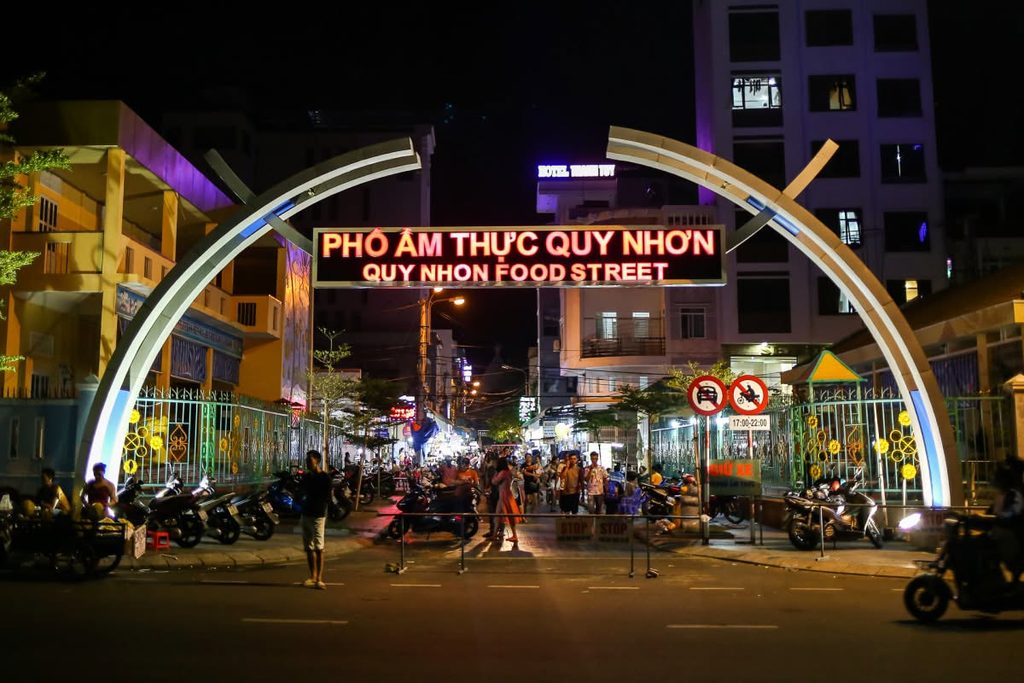
Practical Food and Water Safety Tips for Quy Nhon
A few simple habits can make eating and drinking in Quy Nhon more comfortable:
- Carry sealed bottled water when sightseeing or joining day trips.
- Avoid untreated tap water and ice from uncertain sources.
- Choose meals that are freshly cooked and served hot.
- Peel fruit yourself when possible.
- Wash your hands before eating, or use hand sanitizer when soap and water are unavailable.
- Take particular care with raw seafood, shellfish and uncooked vegetables.
- Store takeaway food properly rather than leaving it in the heat.
- Bring any essential medication and discuss a travel health kit with your healthcare professional before departure.
Local tip: If you’re exploring Quy Nhon’s food scene for the first time, start with freshly prepared cooked dishes rather than ordering several unfamiliar raw or cold foods at once. It is a simple way to become familiar with local flavors while taking sensible precautions.
Frequently Asked Questions
1. Can tourists drink tap water in Quy Nhon? No. International travelers should avoid drinking untreated tap water in Quy Nhon. Factory-sealed bottled water or properly treated drinking water is a safer choice.
2. Is bottled water safe in Quy Nhon? Factory-sealed bottled water from a reputable supplier is generally considered safe. Check that the seal is intact before drinking.
3. Can I have ice in drinks in Quy Nhon? The safest option is to avoid ice unless you’re confident it was produced from safe drinking water and stored hygienically. Ice appearance alone doesn’t establish safety.
4. Is Vietnamese iced coffee safe to drink? It depends on how the drink is prepared, particularly the safety of the ice and water. If you’re uncertain, order coffee without ice or choose a freshly prepared hot coffee.
5. Is seafood safe to eat in Quy Nhon? Seafood can be enjoyed with appropriate precautions. Choose reputable establishments serving properly stored, thoroughly cooked dishes, and avoid raw or undercooked seafood.
6. Is Quy Nhon street food safe for tourists? Street food safety varies between vendors. Choosing freshly cooked, steaming-hot dishes and avoiding raw ingredients of uncertain hygiene can reduce the risk of foodborne illness.
7. What should I do if I get food poisoning in Quy Nhon? Stay hydrated with safe drinking water and consider oral rehydration solution. Seek medical attention for severe symptoms, high fever, bloody stools, persistent vomiting or dehydration.
Enjoy Quy Nhon’s Food Scene with Confidence
Knowing whether you can drink tap water in Quy Nhon is a small but important part of preparing for your visit. While untreated tap water is best avoided, safe drinking options are readily available, and thoughtful food choices can help reduce health risks.
Interested in exploring Quy Nhon’s local cuisine and cultural traditions? Contact THICHTOURS to ask about available experiences and local travel arrangements that suit your interests.