Looking for an authentic guide to Phu Gia conical hats? The story begins in a quiet village courtyard in Binh Dinh. Here, master artisans manually weave vibrant silk threads and forest roots. They turn raw materials into 300-year-old crowns. Most travelers only know the standard agricultural Non La. However, this legendary horse hat (Non Ngua) represents a rare, aristocratic martial history.
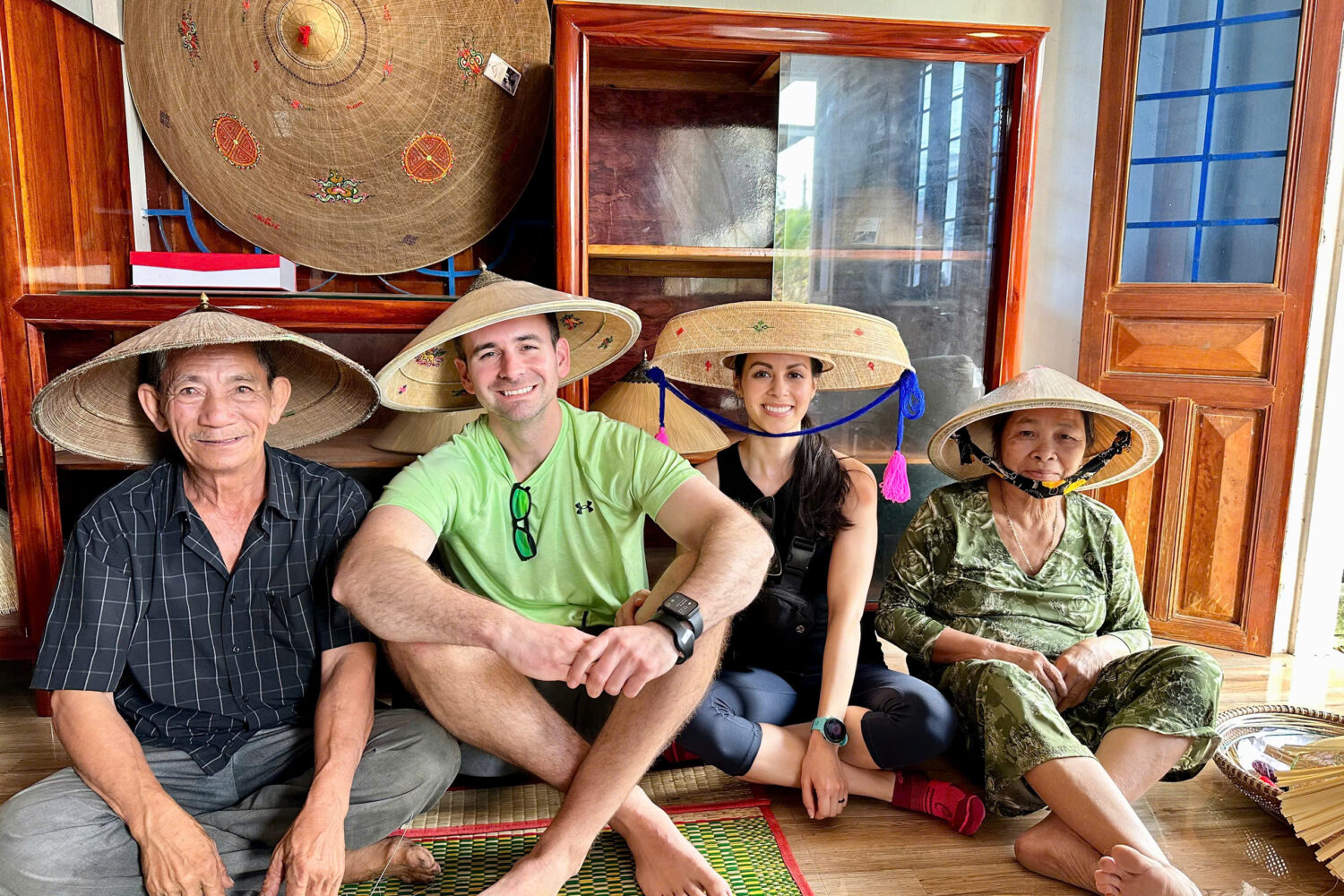
Discovering the 300-year-old craft heritage at Phu Gia village.
Here at Thichtours, we believe that you travel to learn and learn to travel. We want you to immerse yourself deeply in local craft traditions. Are you craving a unique journey that goes far beyond the beaches? Discovering the heritage of Phu Gia conical hats is easily one of the best things to do in Quy Nhon. Let’s dive in!
An Overview of the Phu Gia Horse Hat
The Phu Gia horse hat is a highly specialized variation of traditional Vietnamese headwear. It originates exclusively from Phu Gia village. This village is located in Cat Tuong Commune, Phu Cat District, Binh Dinh Province. The location is roughly 40 kilometers north of Quy Nhon city center.
These items are different from mass-produced, lightweight hats found in standard souvenir markets. These Phu Gia conical hats are bona fide works of museum-quality art. They serve as enduring symbols of regional martial history. Historically, artisans did not design them for ordinary agricultural workers. Instead, they custom-engineered them for aristocrats, military generals, and royal mandarins. These elites required headwear that was exquisitely beautiful. The hats also had to be rugged enough to withstand high speeds on horseback.
Today, visiting this ancient craft village is a key part of any high-quality Quy Nhon cultural tour. It gives global explorers a rare glimpse into a living creative tradition.
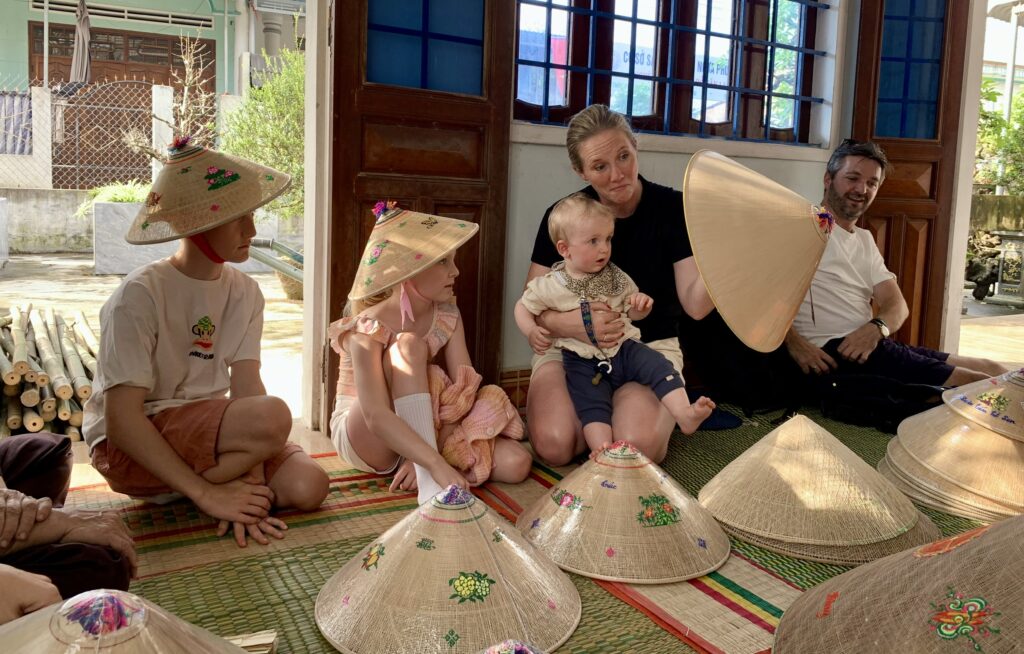
A deeply authentic cultural experience at Phu Gia craft village.
>> Discover:
- Quy Nhon Traditional villages 1 day tour with local guide
- Top 5 Traditional Craft Villages Near Quy Nhon Worth Exploring
- Binh Dinh Cultural Bicycle Tour – Discover Traditional Craft Villages
- Vietnam Countryside Life: Farmers & Villages
The Unique Anatomy: What Makes It So Special?
Place a standard agricultural conical hat next to a masterpiece from Phu Gia. The differences are immediately striking. Every single component of the horse hat is amplified in strength and detail.
- The Metallic Apex (Chop): This is the most distinct external feature. It is a gleaming metallic cap placed at the very top of the hat. Historically, artisans made it out of pure silver or hammered copper for royal officials. This cap reflects the harsh tropical sun. It adds a touch of regal elegance and secures the framework.
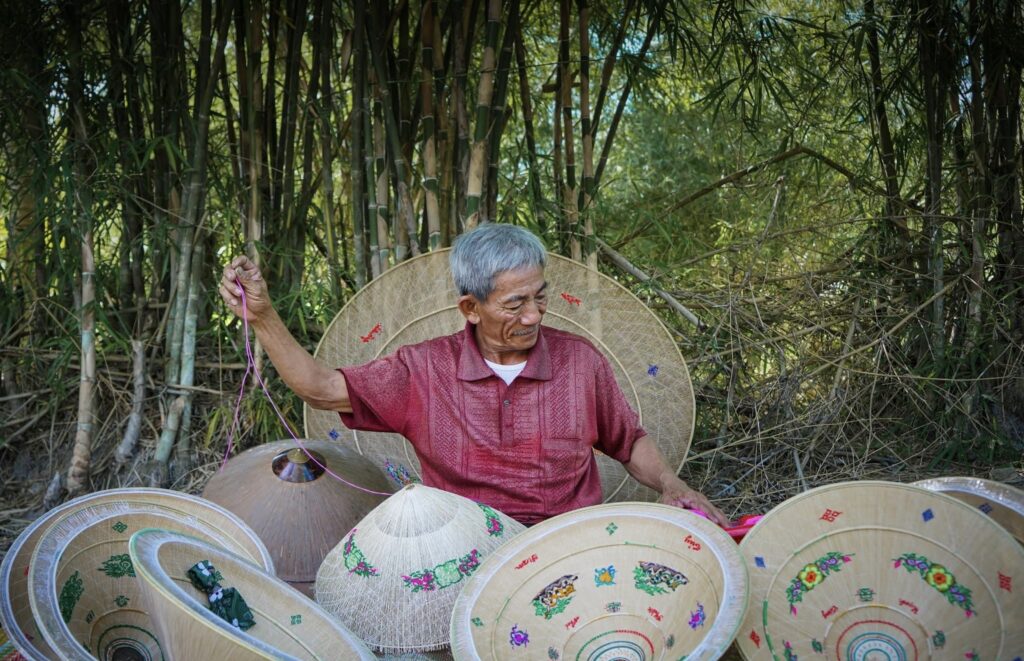
- Intricate Silk Embroidery: The true beauty of these hats is hidden on the inside. Artisans use vibrant, multi-colored silk threads. They embroider complex, symbolic motifs directly onto the interior bamboo frame. Look up into the hat to see stunning depictions of dragons, unicorns, tortoises, and phoenixes. These are the four sacred mythical creatures of Vietnam.
- Incredible Durability: The hat features a reinforced, multi-layered bamboo frame. Artisans stitch the frame with immense tension. Therefore, this hat can withstand strong ocean winds and heavy monsoonal downpours. It lasts for decades of wear without ever losing its structural shape.
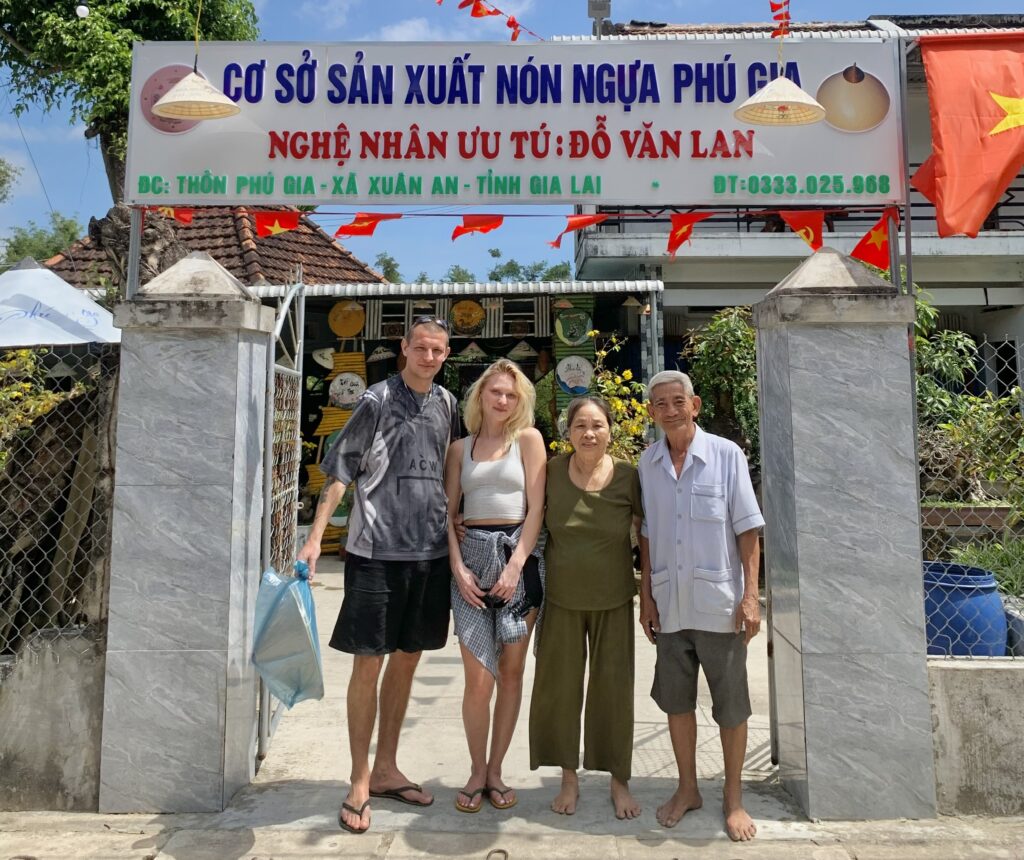
An artisan meticulously weaving a traditional Phu Gia horse hat.
A Warrior’s Crown: The Martial History of the Horse Hat
To truly appreciate Phu Gia conical hats, you must understand their powerful origin story. This craft was not born out of agricultural necessity. It is a piece of art forged in the crucible of revolution and warfare.
During the late 18th century, Binh Dinh province was the epicenter of the famous Tay Son Rebellion. The legendary military genius Emperor Quang Trung (Nguyen Hue) led this movement. Artisans explicitly adapted the Phu Gia horse hat to equip the Tay Son cavalry troops and high-ranking mandarins. They built it for speed, visibility, and fierce combat.
| Historical Rank | Apex Material | Interior Embroidery Motifs |
| High-Ranking Generals | Pure Silver / Gold | Coiling Dragons & Flying Phoenixes |
| District Mandarins | Polished Copper | Sacred Tortoises & Pine Trees |
| Wealthy Elites | Treated Brass | Elegant Flowers & Literary Symbols |
In ancient times, you could instantly discern a person’s exact military rank. You just had to look at the metals on the peak. The complexity of the needlework inside the hat also showed social standing. The era of sword-wielding generals has long passed. However, the village of Phu Gia continues to preserve this aristocratic craft. They keep the memory of the Tay Son dynasty alive through every stitch.
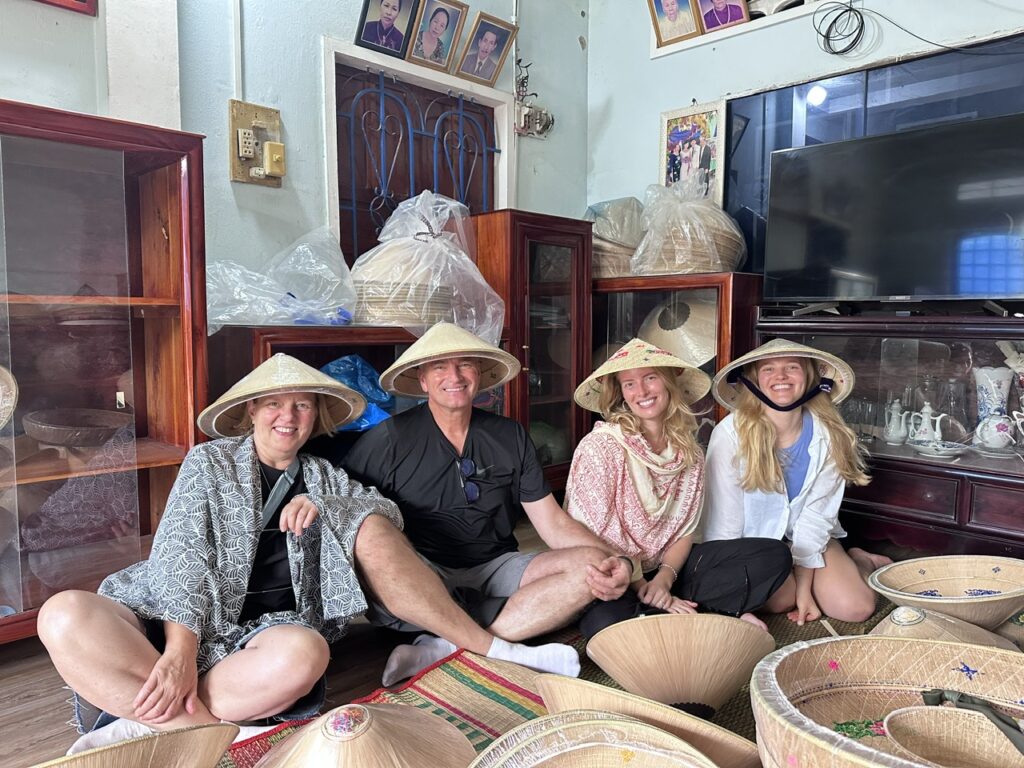
Beautifully crafted Phu Gia conical hats on display in Binh Dinh.
>> Discover 1 day private tour in Quy Nhon: The River of Time: Champa Heritage & Handicraft Villages
The Art of Creation: How These Masterpieces are Made
What justifies the premium value of these Phu Gia conical hats? The secret lies in the grueling, painstakingly detailed process. A regular Non La can be assembled in a few hours. In contrast, a master artisan in Phu Gia takes 3 to 5 days of intense concentration to complete one horse hat.
- Sourcing the Materials: Artisans travel deep into the high mountainous regions of Central Vietnam. They harvest specific Giang roots for the inner rings. They also gather La Ky palm leaves for the smooth exterior skin.
- Preparing the Leaves: The green palm leaves must dry under the sun at specific temperatures. This process creates a perfect, pale ivory hue. It keeps the leaves from becoming brittle. Artisans then manually flatten them over a warm iron fire plate.
- Constructing the Architecture: The core consists of multiple concentric bamboo rings and radiating ribs. Artisans tie them together with durable threads made from boiled forest roots. This steps creates an incredibly dense, cage-like netting.
- The Hidden Needlework: Next, the artisan weaves vibrant silk threads across the frame. This step creates the hidden interior murals. It requires immense spatial awareness because they embroider backwards onto a curved surface.
- The Final Weaving and Crowning: Artisans meticulously sew the protective outer leaves onto the frame using a tiny needle. Finally, they firmly rivet the customized metallic cap to the apex.
Why Cultural Preservation Matters in Binh Dinh
Today, the production of Phu Gia conical hats represents far more than just commercial folk art. It is the physical embodiment of the famous Binh Dinh martial arts spirit. The craft is resilient, proud, and deeply elegant. It showcases the pinnacle of Binh Dinh traditional crafts. It proves that true luxury lies in human patience rather than automated factory lines.
For the local villagers, passing down these specialized skills is vital. It honors their ancestors’ legacy. In a rapidly modernizing world, the survival of these endangered art forms relies heavily on mindful travelers. We need travelers who value heritage, slow travel, and cultural preservation over mass tourism.
When you purchase an authentic horse hat, you support the livelihoods of master artisans. You fund the transmission of ancient skills. You help keep a 300-year-old art form alive for generations to come.
Experience the Heritage with a Quy Nhon Cultural Tour
At Thichtours, our guiding philosophy is clear: “Travel to learn and learn to travel.” The most unforgettable travel memories are not just about taking photos of beautiful landscapes. They are about deep human connections, cultural insights, and stories.
Navigating rural provinces can be challenging for independent international travelers. Language barriers are also a common hurdle. That is why our custom-curated Quy Nhon cultural tour experiences handle all the logistics for you.
We will take you off the beaten path in private air-conditioned comfort. We guide you into the authentic heart of Phu Gia village. You will have the exclusive opportunity to sit down and drink local tea. You can listen to historic legends and watch the master weavers construct these ancestral crowns right before your eyes.
Frequently Asked Questions (FAQ)
Q1: Where exactly is Phu Gia village, and how do I get there from Quy Nhon?
Phu Gia village is located in Cat Tuong Commune, Phu Cat District. It sits about 40 kilometers north of Quy Nhon city center. The most seamless way to visit is by booking a private cultural excursion with Thichtours. This option includes an English-speaking guide and private transport.
Q2: How much does an authentic Phu Gia Horse Hat cost?
These hats are completely handmade over several days using rare forest materials. Therefore, authentic horse hats are priced higher than standard conical hats. Depending on the complexity of the silk embroidery, prices typically range from $15 USD to over $100 USD.
Q3: Are these hats easy for international travelers to pack and transport home?
Yes! They are much more rigid and durable than standard agricultural hats, but they are still lightweight. Our team at Thichtours can assist you in sourcing specialized protective travel boxes. We ensure it arrives at your home country in perfect condition.
Q4: Can I try weaving or embroidering a hat myself when visiting the village?
Absolutely! When you join our guided cultural tours, our partner artisans are delighted to welcome you. Under their patient guidance, you can try your hand at preparing the palm leaves or weaving the foundational bamboo rings.
Ready to Step Into History?
The rhythmic sound of weaving needles is waiting for you in Binh Dinh. The brilliant flash of silver peaks and the ancient stories of the Tay Son warriors are ready to be discovered. Don’t just view Vietnam from the surface. Dive deep into the artistic traditions that define its soul.
Let us take care of the transportation, translation, and itinerary planning. You can focus entirely on the experience.
[Contact the Thichtours team today] to book your immersive, private Quy Nhon cultural tour! We are here to help you craft an unforgettable travel story.