Robusta coffee in Vietnam is more than just a daily drink—it is the heart of the country’s coffee culture. The first sip often surprises visitors: bold, rich, unapologetically strong, and completely unforgettable. Behind that intense flavor lies a remarkable story of resilience, history, and a humble coffee bean that helped shape one of the world’s most distinctive coffee traditions.
Sit on a small plastic stool at a bustling sidewalk café, watch dark coffee slowly drip through a traditional phin filter, and you’ll quickly realize you’re experiencing far more than a morning ritual. You’re taking part in a centuries-old tradition that defines Vietnamese coffee culture.
In this guide, we’ll explore the story of Robusta coffee in Vietnam, its unique flavor, traditional brewing methods, and why every cup tells a uniquely Vietnamese story.
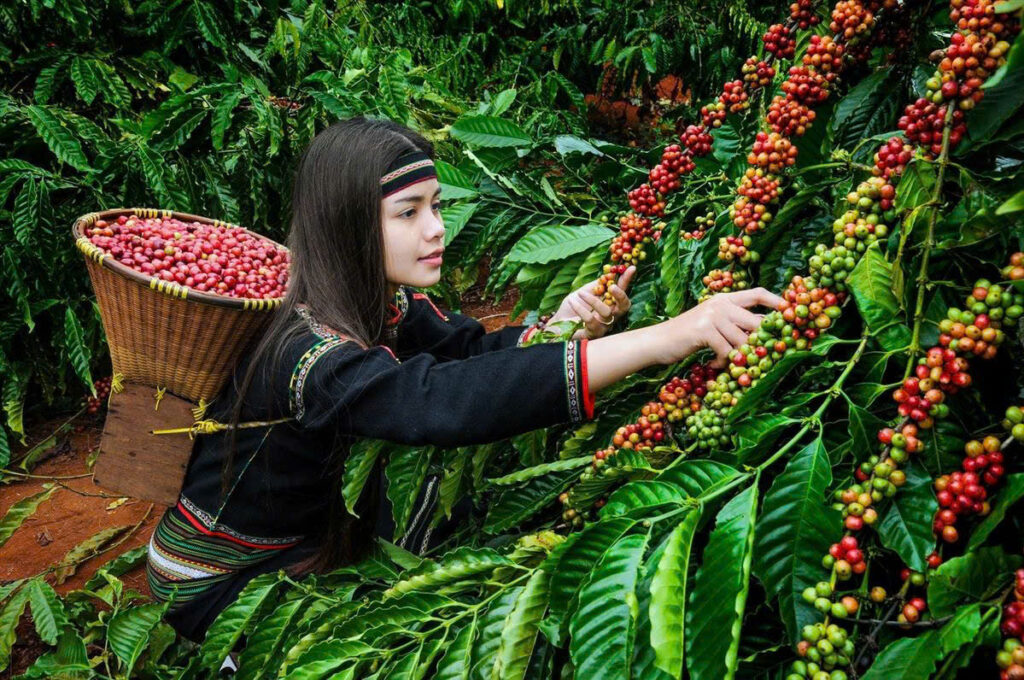
Vietnam: The World’s No. 1 Robusta Coffee Exporter. (Source: Collected)
What Is Robusta Coffee?
To understand Vietnamese coffee, you first have to understand the bean. The world’s coffee production is dominated by two main species: Arabica and Robusta. While Arabica is often celebrated in Western specialty coffee shops for its light, fruity notes, Robusta is a completely different beast.
Robusta (Coffea canephora) is a hardy, resilient plant that grows at lower altitudes and resists diseases far better than its fragile cousin. The result is a bean with nearly double the caffeine content, lower acidity, and a robust, heavy-bodied flavor profile that packs a serious punch.
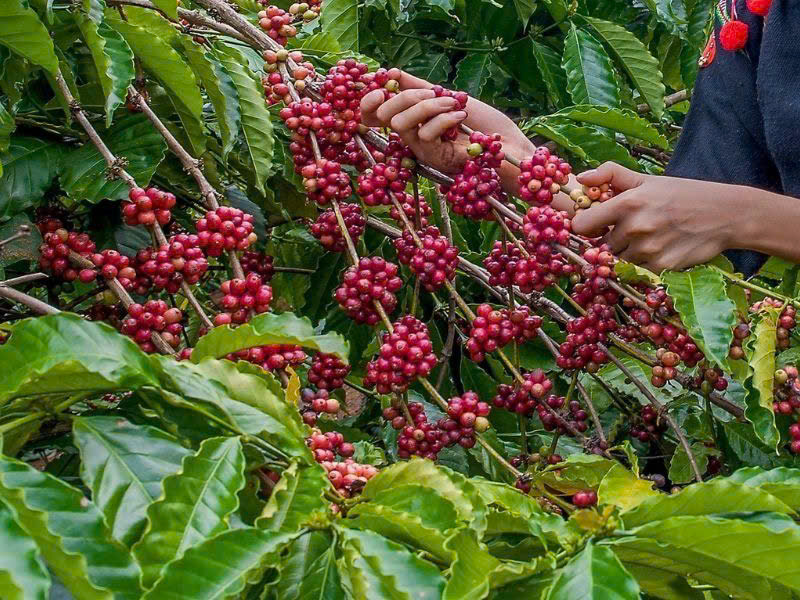
Coffee Harvest in Vietnam’s Central Highlands. (Source: Collected)
Robusta vs Arabica: A Quick Comparison
| Feature | Robusta | Arabica |
| Caffeine Content | Higher (approx. 2.7%) | Lower (approx. 1.5%) |
| Flavor Profile | Bold, earthy, chocolatey | Fruity, floral, sweet |
| Body | Heavy, full body | Lighter body |
| Acidity | Lower acidity | Higher acidity |
| Growing Conditions | Low altitudes, resilient | High altitudes, sensitive |
How Coffee Arrived in Vietnam
The story of Vietnamese coffee history begins in the late 19th century. French colonists brought the first coffee trees to Vietnam in 1857, hoping to establish a lucrative cash crop.
Initially, they planted Arabica beans in the northern regions and central coastal areas. However, Arabica proved to be incredibly sensitive to the local pests and tropical weather. Realizing they needed a stronger plant, they introduced Robusta beans in the early 20th century. This decision changed everything. The Robusta plant didn’t just survive in Vietnam; it thrived, taking root in the fertile soil and forever altering the country’s agricultural destiny.
Why Robusta Thrives in Vietnam
Robusta found its perfect home in the Central Highlands coffee regions. The secret lies in a flawless combination of geography and climate:
- Basalt Soil: The red, volcanic basalt soil of the Central Highlands is incredibly rich in nutrients and offers excellent drainage, creating the ultimate foundation for coffee trees.
- Climate: The region features distinct dry and rainy seasons, high humidity, and stable tropical temperatures—exactly what the Robusta plant needs to flourish.
Today, provinces like Dak Lak, Gia Lai, Dak Nong, and Lam Dong form the undisputed “coffee capital” of the country. Driving through these highland regions, you will see endless rolling hills blanketed in deep green coffee plantations, a testament to how perfectly the land and the bean are matched.
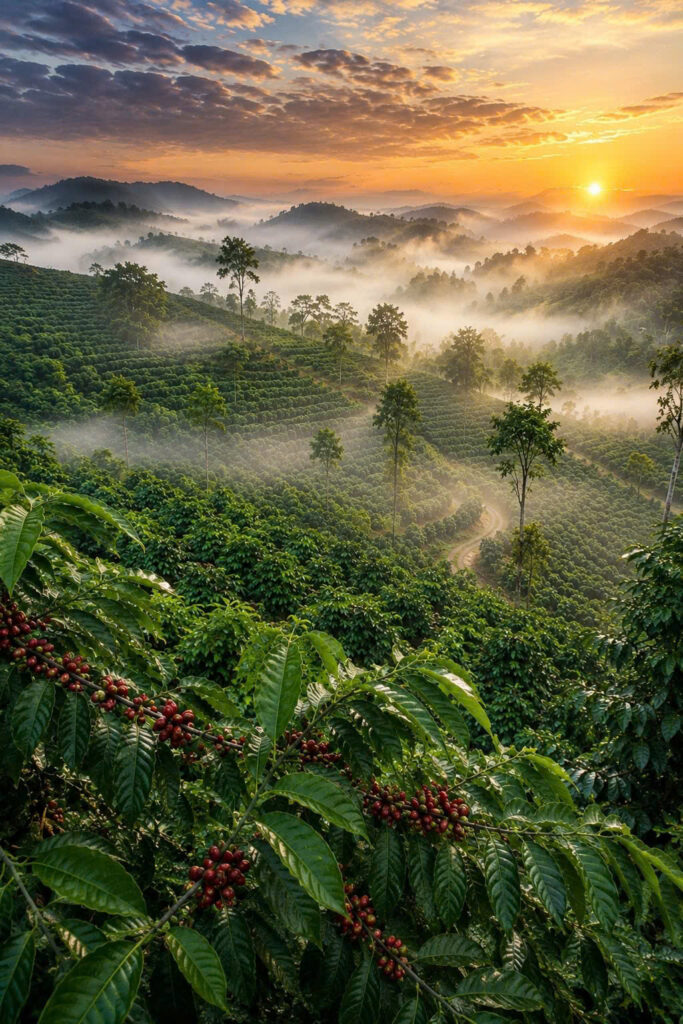
Vietnam’s Coffee Highlands (Source: Collected)
How Robusta Became Vietnam’s Signature Coffee
While coffee was grown throughout the 20th century, the true explosion of Vietnamese Robusta coffee happened after 1986. Following the Đổi Mới (economic renovation) reforms, the Vietnamese government heavily encouraged the expansion of coffee farming to boost the economy.
The strategy was a monumental success. Within a few decades, Vietnam transformed from a modest producer into the second-largest coffee exporter in the world (and the absolute undisputed king of Robusta). This economic boom didn’t just bring wealth; it cemented Robusta as the everyday fuel for the working class, shaping the modern Vietnam coffee culture we see today.
The Unique Taste of Vietnamese Robusta
If you are used to light-roast Arabica, the first taste of a Vietnamese Robusta can be a shock to the senses.
The flavor is intensely deep. You will immediately notice heavy notes of dark chocolate, roasted nuts, caramel, and a distinct earthy cocoa finish. Because it is so full-bodied and lacks the sour acidity of Arabica, it stands up perfectly to strong mixers. This is precisely why it pairs so flawlessly with sweet, thick condensed milk. The bitterness of the Robusta and the creamy sweetness of the milk create a perfectly balanced, decadent harmony. It is also the ideal base for an intense espresso blend or a deeply refreshing iced coffee.
- Vietnam Coffee Culture: From Sidewalk Stools to Hidden Cafes
- Ocean View Cafes in Quy Nhon: 5 Best Spots for Sunset Drinks
The Art of Brewing with a Phin Filter
You cannot talk about Vietnamese coffee traditions without talking about the phin filter. This simple, stainless steel or aluminum drip device is the heart of the Vietnamese coffee experience.
- Step 1: Ground coffee. A generous scoop of coarse-ground, dark-roast Robusta is placed into the chamber.
- Step 2: Hot water. A small amount of near-boiling water is poured in to let the grounds “bloom” and expand, followed by filling the chamber to the top.
- Step 3: Slow drip. The water slowly percolates through the metal press, falling drop by gravity-fed drop into the glass below.
- Step 4: Enjoy. You stir in your condensed milk and pour it over a massive cup of ice.
The phin is more than just a brewing tool. It forces you to wait. That slow, mesmerizing drip-drip-drip creates a mandatory pause in your day, defining the unhurried, reflective nature of Vietnamese coffee drinking.
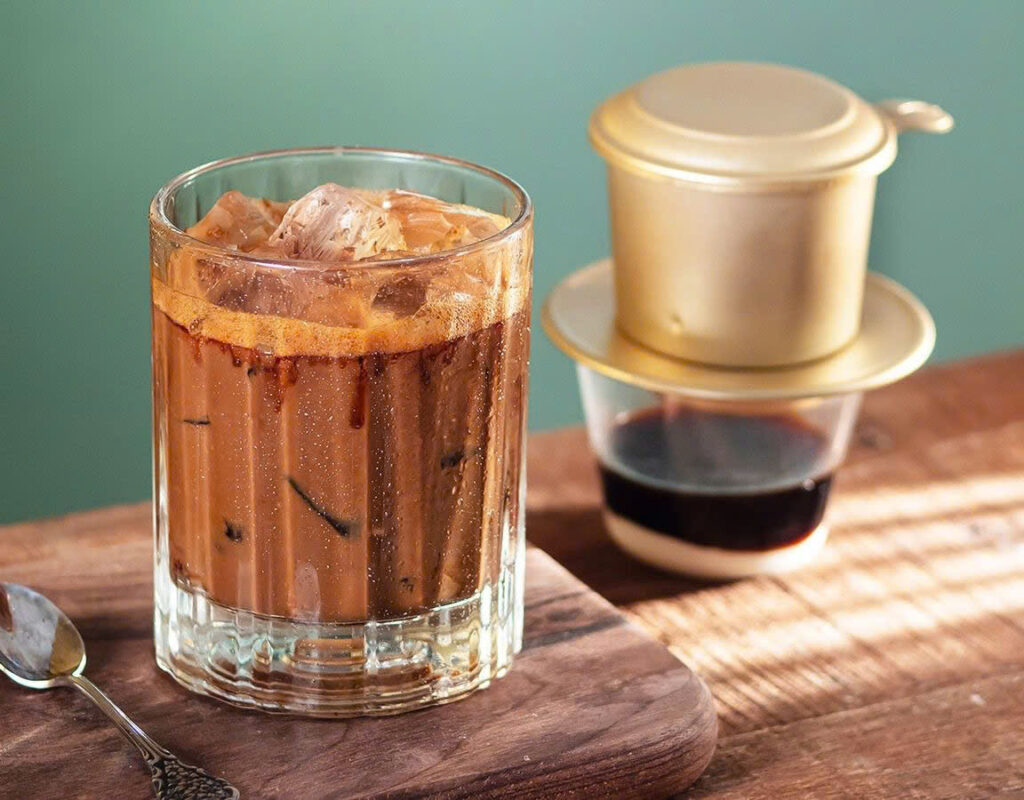
Traditional Vietnamese Phin Coffee, brewed with a traditional phin filter. (Source: Collected)
Vietnamese Coffee Drinks Made with Robusta
This versatile bean is the foundation for some of the world’s most creative coffee beverages:
- Ca Phe Sua Da (Iced Milk Coffee): The iconic classic. A potent shot of dripping Robusta mixed with sweetened condensed milk and poured over ice.
- Egg Coffee (Cà Phê Trứng): A Hanoi specialty where robusta is topped with a rich, airy meringue made from whipped egg yolks, sugar, and condensed milk. It tastes like liquid tiramisu.
- Coconut Coffee (Cà Phê Cốt Dừa): A tropical, slushy blend of coconut milk, condensed milk, and ice, paired with a sharp shot of black coffee.
- Salt Coffee (Cà Phê Muối): A rising star that originated in Hue, featuring a layer of salted cream that perfectly cuts the bitterness of the coffee and the sweetness of the milk.
- Black Coffee (Cà Phê Đen): For the purists. A straight, icy shot of brewed Robusta, usually served with a little sugar to take the edge off.
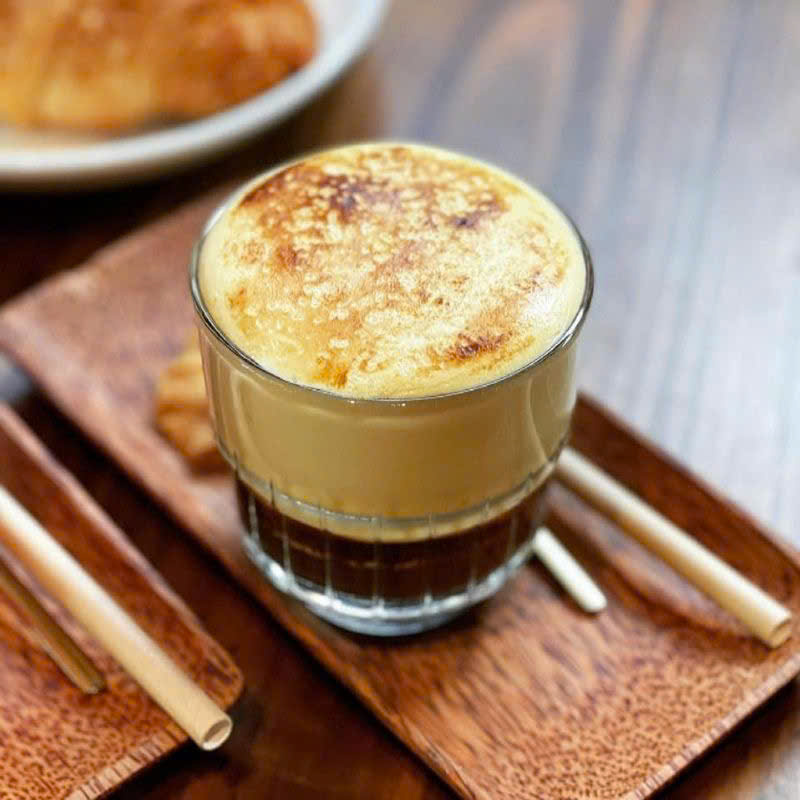
Vietnamese Egg Coffee – A Unique Flavor and Brewing Tradition (Source: Collected)
Why Visitors Fall in Love with Vietnamese Coffee
Tourists don’t just fall in love with the strong flavor; they fall in love with the ritual.
Vietnam coffee culture is entirely intertwined with street life. It is about sitting on a tiny stool on the sidewalk, feeling the morning breeze, and watching the chaotic ballet of motorbikes flow past. It is about slow mornings, long conversations with friends, and the communal atmosphere of neighborhood cafes. It is an experience that engages all your senses simultaneously.
How to Enjoy Robusta Like a Local
Want to drink your coffee like a true Vietnamese local? Follow these simple rules:
- Drink it in the morning: Start your day early, around 6:30 AM, before the heat sets in.
- Use a phin: Always opt for the traditional slow drip over a machine-brewed cup.
- Try it black first: Before stirring in the milk, take a tiny sip of the black coffee to appreciate the raw, earthy power of the Robusta bean.
- Sit outside: Find a café with outdoor seating. The street view is half the experience.
- Don’t rush: Never drink Vietnamese coffee on the go in a paper cup. Sit down, wait for the drip, and sip it slowly.
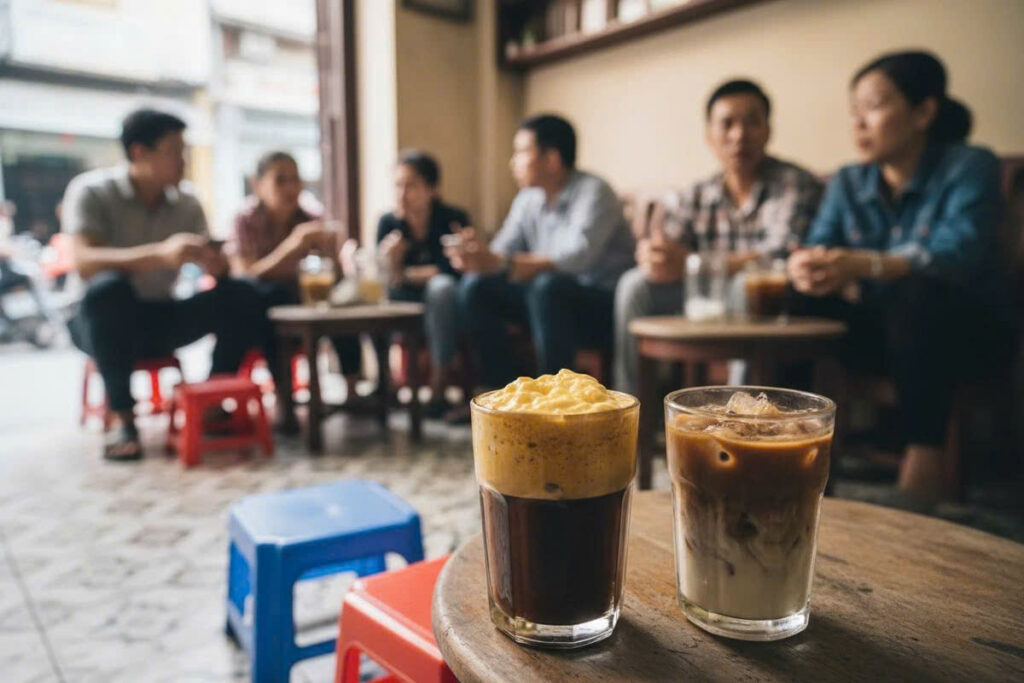
Vietnam’s Iconic Street Coffee Culture (Source: Collected)
Where to Experience Authentic Vietnamese Coffee
You don’t need to search for high-end boutique roasters to find great coffee here. The best experiences are usually found in neighborhood cafés, family-run coffee shops hidden down narrow alleys, and traditional coffee houses near local markets.
Whether you are enjoying the cool, misty mornings in the Central Highlands or exploring the coastal charm of Quy Nhon, Binh Dinh, you are never more than a few steps away from a fantastic cup.
Conclusion
Every cup of Vietnamese Robusta tells a story, not just about coffee, but about history, resilience, agricultural innovation, and the simple beauty of everyday life.
While visiting Vietnam, don’t just order a coffee to wake up. Take a seat on a small plastic chair, wait for the slow drip of the phin, and take a moment to savor the rich, complex story behind every single cup.
If you are planning an adventure to explore the misty coffee hills of the Central Highlands or the stunning coastal roads of the central coast, our local team at THICHTOURS can help you design an unforgettable journey, complete with all the authentic coffee stops along the way.